












I recently attended a conference at an American West Coast university to speak about how allies are coping with the Donald Trump presidency. As expected, the Canadian and Western European participants were mostly angry and downcast. Many of them considered the President an unpredictable, capricious and destructive leader. Those from Eastern Europe, Asia and the Middle East agree the administration is a difficult one to deal with. But they also saw rare opportunities and not only unique risks when it comes to Trump’s transactional approach.
What explains the marked differences between them? It has a lot to do with political and social culture, how insecure they feel when it comes to their geostrategic situation, and attitudes to hard power and American power most of all.
Anti-Americanism & Trump Derangement Syndrome
Much of the commentary in Canada and Western Europe is about the foolishness and irrationalities of Trump. The latter’s supporters would dismiss much of it as Trump Derangement Syndrome which refers to an intense and relentless obsession with demonizing all aspects of the President’s personality, motivations and policies. I won’t go down this rabbit hole. But it is undeniable many Western European and Canadian elites had a scorn of America even before Trump arrived on the political scene.
In 2007, Andrei Markovits published a book entitled Uncouth Nation: Why Europe Dislikes America. He argues that in the halls of Western European academia and elite society, America was constructed as a dark, savage and violent place from the beginning of its founding as a republic – an unenlightened outland. From then to the current day, America has served as the morally and culturally inferior ‘other’ to Western Europe. That America is richer and more powerful only serves to emphasize the European charge that American society, values and institutions are brutalist in nature and the country relies too much on military power and the old ways of realpolitik for influence.
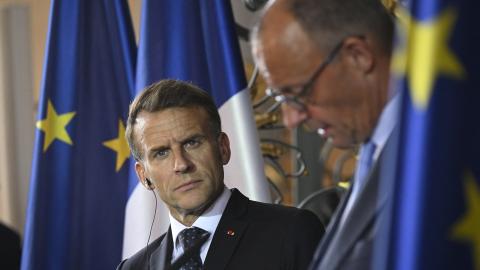
The point is that Western Europe sees itself as not just the progenitor of the Enlightenment but the custodian of a more civilized and ordered post-World War Two order. Its officials might admit that global institutions such as the World Trade Organization and the various United Nations agencies have their flaws. But these flawed institutions are all that is preventing the world from falling back into disorder or else a harsher Hobbesian order. That Western Europe has an outsized role and influence in many global institutions is not something to be apologetic about. After all, according to Western Europeans, the normative elements of the Brussels Effect have brought far more benefit and civility to the world than harm.
As a parallel note, Canadian and Americans are neighbours. However, commit the faux pas of mistaking a Canadian for an American and you will be quickly and sternly corrected. To be sure, Trump has gone to extraordinary lengths to insult Canada which makes it difficult for any Canadian to take a more charitable or nuanced view of his presidency. But even if Trump had not embarked on this unnecessary path, Canadians do tend to view themselves as more agreeable citizens of the world than Americans. Besides, Trump’s America First perspective which argues that the pursuit of liberal internationalist principles and ideological crusades has diminished American material power and social cohesiveness only serves to reaffirm to many Canadians that they are different to America and Trump is a political leader from another moral universe.
The scorn is reciprocal. Trump’s 2025 National Security Strategy claims that it wants to encourage the restoration of “Europe’s civilizational self-confidence and Western identity” for the sake of the latter’s own prosperity and security. White House insiders frequently raise the issue of what they see as European and Canadian indulgence and entitlement.
On indulgence, and putting the Eastern European and Baltic States aside, Western Europe has prioritized the creation of a vast and permanent welfare state. Currently, the Western European countries spend between 24-32 percent of GDP on public social spending such as pensions, health, unemployment benefits and disability allowances. France, Italy, Austria, Finland, Belgium, Spain and Germany lead the pack on this measure. For comparison, the OECD average for public social spending is just over 20 percent of GDP.
Administration figures, including Vice President JD Vance, frequently criticize Western elites for implementing what they believe to be recklessly generous immigration policies that degrade social cohesion and national purpose. The former argues that Diversity, Equity and Inclusion or DEI policies supported by Western progressive elites is wreaking havoc and the precursor to civilizational and moral decline.
On entitlement, the Trump administration links the alleged malaise of these Western nations to their refusal or inability to bear a greater burden for their own security. As a current senior administration figure said to me earlier in the year: Canada can be Canada because it is shielded by the United States. Meanwhile, Europe has a GDP about ten times larger than Russia but cannot provide for its own security because it has been emasculated by progressive utopian causes for decades. It is reliant on American protection even as it sneers at our power and values.
Non-Western Allies
The Trump administration does not have the same cultural and moral beef with Asian and Middle Eastern allies. None have gone down the same progressive path to any similar extent. From the other side, there are fewer attempts in Asia or the Middle East to ridicule America First or delegitimize the return of Trump.
The differences are not only a matter of society and political culture. Strategically, Asian and Middle Eastern allies begin from a very different place. For starters, there are networks of overlapping bilateral agreements but no genuine multilateral security institutions in these two sub-regions. America deliberately constructed bilateral alliances outside of Europe rather than a collective security regime such as NATO.
Moreover, specific American obligations are not institutionalized nor clearly defined. It is up to each incoming administration to declare what might be offered or covered under the bilateral alliance. Even then, there is immense flexibility for presidents to decide what scenarios warrant American protection and when allies ought to be left to fend for themselves.
The result is that American alliances in these two-subregions have a far stronger transactional basis to them than in Europe. With every incoming administration, there is immediate pressure for these allies to demonstrate anew their value and loyalty to America. Without a collective security agreement, the definition of good statecraft and diplomacy for these non-Western allied governments is to maximize the security coverage they will receive under the deliberately ambiguous terms of the alliance.
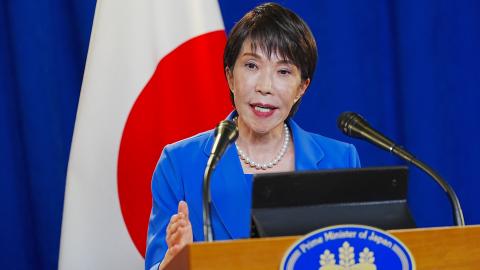
In short, the relationship with America for them is always about ceaseless negotiation rather than institutional obligation. This means that allies in Asia and the Middle East were far more ready and prepared to roll with the punches and deal with an unorthodox and unpredictable administration than was Western Europe. Moreover, the better they dealt with Trump on the latter’s preferred terms, the more benefits and privileges they stood to secure, if need be, at the expense of other American allies and partners. From the early days of the second term Trump period, countries such as Israel, Saudi Arabia, Turkey and Japan took a proactive approach to not only ingratiating themselves with the incoming President but exploring new strategic, military and economic arrangements that would only be possible with an American administration willing to dramatically reset the terms of engagement and obligation.
There is another factor common regarding allies that have done better with Trump. It is that they see no alternative to American hard power which they believe is increasingly disproportionately. Europeans prefer the older rhetoric of a benign liberal internationalism still advocated by many Democrats and traditional Republicans of a powerful America voluntarily placing constraints on itself to underwrite equal privileges for all allies.
These other allies might wish that too but are accepting that the 1990s and 2000s was a happy aberration. With China as a growing menace in Asia and heavily armed neighbours such as Iran threatening them in the Middle East, their brave new world is this: there is no substitute for American hard power and they will make the best out of an alliance system that is becoming ever more hierarchical under Trump. By this, one means not only that America calls the shots but that it has arbitrary privileges and exclusive rights and will make demands of allies that they must abide by. In return, those who excel at this new allied statecraft will receive enhanced benefits and protection. In contrast, Western Europeans consider this an affront and are finding it extremely difficult to work within this emerging hierarchical arrangement.
The Australian Decision
Where is Australia in all this? We yearn for not just the America of the 1990s and 2000s but the world of that period. The wiser ones amongst us know it is not coming back.
Incidentally, the peak of middle power influence and activism was this same period when America was unchallenged as the world’s only superpower which gave smaller powers latitude to create in an environment devoid of major geopolitical threats. That world is gone, as are the ideal conditions for middle-power activism. The disruption and danger to order and stability caused by Xi Jinping, Vladimir Putin, Kim Jong-un and the leaders in Iran preceded Trump and will persist after the latter is no longer the President. Which is why Canada’s Mark Carney’s call for middle powers to band together against America is so delusional and dangerous.
Many Australians have sympathy for Carney’s position but confront the brutal reality of an expansionist and revisionist China changing facts on the ground at rapid pace. Which means talk of a more independent foreign policy doesn't make sense. We do not have an alternative to reliance on American hard power and all it can offer regardless of who inhabits the White House.