
View Full PDF
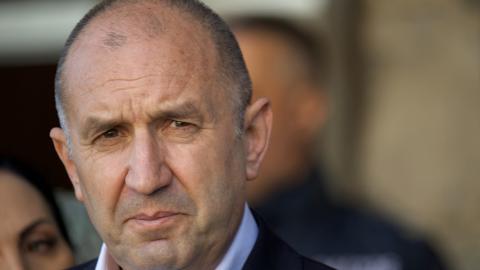
Prime Minister Rumen Radev’s decisive victory in the April 19 parliamentary elections ended six years of political instability in Bulgaria, which had seen eight elections and seven prime ministers in five years, and gave him essentially full executive control over the country. His Progressive Bulgaria (PB) coalition—a mixture of center-left, nationalist, and populist parties that he founded in March—holds a clear majority in the National Assembly, which portends stable government over at least the next four years. Former Vice President Iliana Iotova stepped into the presidency, which he held from 2017–25, and is leading the polls in her bid for the presidential election on October 25. No party has governed Bulgaria alone since Ivan Kostov was prime minister from 1997–2001, and no single elected politician has held such sway in the country since communism collapsed in 1989.
This concentration of power prompted much speculation and not a little trepidation about where Prime Minister Radev will take Bulgaria, an important North Atlantic Treaty Organization ally, partner, and friend of the United States. Will he fix the corruption, state capture, and rule-of-law problems that have plagued the country, contributed to the fall of previous governments, and propelled him to power? Will he deal differently with NATO, the European Union, Russia, Ukraine, Communist China, and the United States than he did while serving as president from 2017–25, especially as the prime minister position is considerably more powerful?
At the one-hundred-day mark after Prime Minister Radev took office on May 8, his approach to these key issues is much clearer. He has made some moves on corruption, state capture, and rule-of-law issues, or what he calls Bulgaria’s “oligarchic governance model,” but on foreign and security policy, he remains the complicated partner he was during his presidency.
While Radev was president, Bulgarian prime ministers pursued mixed policies on NATO, EU, and US-Bulgaria priorities, with some (e.g., Kirill Petkov, Boyko Borissov) more positive on these files than others (e.g., Stefan Yanev, Galab Donev). Prime Minister Petkov pushed to nationalize and sell the Lukoil Burgas refinery, provided critical military aid to Ukraine, dismissed his defense minister for calling Russia’s war an “operation,” and expelled 70 Russian embassy employees for espionage. Other governments deployed generally positive rhetoric, while doing more to accommodate Russian or oligarch interests. As president, Radev opposed some of these policies but could not block all of them. Now that he controls all levers of government, he is doubling down on his past preferences, which will complicate efforts to put wins on the NATO, EU, and US-Bulgaria scoreboards.
Past as Prologue
As president, Radev never challenged Bulgaria’s membership in NATO. He regularly expressed pride about graduating from the Air War College in Alabama, where he is on the wall of fame, and flying F-16s out of Maxwell Air Force Base. He never questioned Bulgaria’s membership in the EU and acknowledged its benefits.
Behind these general positions, however, Radev regularly took issue with NATO and EU approaches to Russia and Ukraine, as well as with key elements of the US-Bulgaria relationship. The parliament had to override his veto of the 2019 F-16 purchase while he pushed for the Swedish Gripen. In July 2023, he clashed publicly with Ukrainian President Volodymyr Zelenskyy during his visit to Sofia and opposed efforts by technocratic governments to support Kyiv. In May 2024, he ostentatiously traveled to Budapest to meet with Hungarian Prime Minister Viktor Orbán while the NATO Parliamentary Assembly was meeting in Sofia. In July 2024, he boycotted the NATO seventy-fifth-anniversary summit in Washington over differences regarding NATO support for Ukraine. For years he supported arrangements that perpetuated dependence on Russian energy sources and opposed expanded NATO naval operations in the Black Sea. He blocked a NATO Air Policing mission for Bulgaria, even as the air force he formerly led had few airworthy planes. He extended funding for aging MIG-29s and declined to purchase air-to-air missiles for the F-16 fleet.
Radev also opposed key EU priorities. He questioned sanctions against Russia, arguing they are ineffective and harmful to the Bulgarian economy. He maintained that EU efforts to support Ukraine were “doomed.” He strongly opposed the launch of EU accession talks for North Macedonia on the grounds that the rights of the Bulgarian minority are insufficiently guaranteed—a position, however, that enjoys cross-party consensus. He instrumentalized Euroskepticism in the population by proposing a referendum—a demand by the pro-Russia Vazrazhdane party—on adopting the euro even after he had approved it.
While Radev was publicly critical of “Brussels elites,”privately he sought to reassure them that he is, at heart, a committed European. His aides tell NATO embassies in Sofia that his rhetoric is a response to pro-Russian sentiment in the population and that he does not intend to advance Moscow’s interests. For years, however, he used the authority of the presidency to normalize Kremlin narratives, undermine support for Ukraine, and lend legitimacy to positions that should have remained on the political margins. In fact, pro–Vladimir Putin views do not exceed 25 percent of the population, and his approach masks a policy he himself furthered.
This pattern of behavior earned Radev a reputation as one of the weaker links in NATO and the EU, although he never challenged consensus positions as directly as Orbán did. Radev’s support for Russian interests was more subtle. He argued that he just wants to keep Bulgaria out of the war, promote “peace,” and pursue Bulgaria’s national interests.
Critics trace Radev’s behavior back to his nomination as the Bulgarian Socialist Party (BSP) candidate for president in 2016. The Wall Street Journal in 2017 reported that this was a result of a Russian influence operation aimed at placing a person sympathetic to Moscow in the presidency ahead of the TurkStream pipeline project—which Putin needed in order to bypass Ukraine before launching his full-scale invasion—complete with a detailed election plan from Moscow. While BSP leaders and others reject this allegation, his rhetoric has dovetailed regularly with Russian interests, even if it did not go as far as a former Russian ambassador to the EU, who in 2007 expressed hope “that [Bulgaria] will be our special partner, a kind of Trojan Horse in the EU.” On the other hand, former Russian Prime Minister Mikhail Kasyanov has stated that Russia has had a special focus on Bulgaria for years and that Moscow was surprised at how “Bulgarians overfulfilled the program.”[1]
Radev Since his Presidency
After resigning from the presidency in January and during the election campaign, Radev sent clear signals that he would continue his past foreign policy approaches. The few interviews he gave were to pro-Moscow YouTubers like Martin Karbovski and outlets like Berliner Zeitung, which some Sofia insiders refer to as “Berlinskaya Pravda” because of its pro-Russia editorial line. In the closing hours of the campaign, he reiterated that “Crimea is Russian,” a comment he had made more than once in recent years, defending this position as “realistic” and “not pro-Russian.” He urged Russian imports to resume to Europe, opposed a defense agreement with Ukraine, and signaled that he would recalibrate relations with the EU. He also pledged to take robust action against corruption, state capture, and rule of law.
In his election night address, Radev stressed that Bulgaria would stay on its European path but called for more “critical thinking,” “pragmatism,” and less moralism. He said he would not block major EU decisions, including negotiations for Moldova’s and Ukraine’s accession to the EU, but reiterated his firm stance on North Macedonia.
Prime Minister Radev made his senior appointments largely from among members of the seven cabinets he approved from 2021–26. Sofia insiders consider his ministers generally second- or third-tier figures without the power base to challenge him. Of his four deputy prime ministers, Ivo Hristov is primus inter pares, covering strategy and communications. Sofia-based observers view this former television journalist as an ideologue and “shadow foreign minister,” given his wide responsibilities and pro-Russian reputation.[2]Deputy Prime Minister and Finance Minister Galab Donev opposed Bulgaria’s cut-off from Gazprom in 2022. Foreign Minister Velislava Petrova-Chamova, whom Radev tasked with pursuing what he calls his “pragmatic” foreign policy, has a PhD in microbiology from Cambridge University. Interior Minister Ivan Demerdzhiev is experienced, while Minister of Justice Nikolay Naydenov is largely unknown, raising questions about how he will dismantle the oligarchic structures that have gained such influence in the state. Radev’s long-serving aide, Nikolay Koprinkov, is chief of his political cabinet and has a reputation as something of a fixer with ties to oligarchs. Former bodyguard Stancho Stanev is acting director of the State Agency for National Security, prompting speculation about how that critical agency will be run. Radev’s replacement of all 28 regional governors consolidated his control of governing institutions outside Sofia.
Corruption and State Capture
Prime Minister Radev has moved slowly on the anti-corruption file. Shortly after his swearing-in ceremony in May, he took the symbolically important step of withdrawing state-funded security from Magnitsky-sanctioned oligarch-turned-politician Delyan Peevski and former Prime Minister Borissov, both of whom large parts of the population regard as corrupt. Radev’s PB party, however, did not support an opposition proposal to create a commission to investigate Peevski’s assets, probe discrepancies between his declared income and his actual standard of living, and examine potential violations of the Global Magnitsky Act. PB members of parliament abstained, arguing that it would be “a talking shop,” which killed the initiative. Nevertheless, on July 31, Interior Minister Demerdzhiev submitted a report to the Court of Auditors on this very issue. The court said it expects a report in three months. Meanwhile, Peevski remains a member of parliament and is protected from criminal prosecution while in office under Article 72 of the Bulgarian constitution, unless parliament waives the protection.
The government also reestablished an Anti-Corruption Commission on May 29, whose independence is hotly debated. In its first session, which ended in late July, parliament passed laws on counteracting corruption among persons holding public office and accountability for the prosecutor general. The government has also arrested several persons for money laundering and worked with Serbian authorities to detain former Bulgarian Development Bank chief Stoyan Mavrodiev while his extradition for embezzlement was being prepared.
While the government undertook these steps primarily to unlock some €1.4 billion in EU transfers, including COVID-era Recovery and Resilience Plan (RRP) funds that were suspended for rule-of-law reasons, they also show voters that the government is taking some action on issues on which they want to see results.
Foreign Policy
Prime Minister Radev has clearly indicated that he will take a more independent line on foreign and security policy than he displayed as president, especially on issues relating to Russia, NATO, the EU, and the United States. His public statements and travel indicate that he will seek maximum freedom of action within allied institutions as he tacks between the post-1989 poles of Bulgarian foreign policy—NATO, the EU, Russia, the United States, and Turkey—rather than siding clearly and unmistakably with the West.
Radev’s first speech to parliament highlighted sovereignty, realism, and a more “pragmatic” foreign policy. This term has become his mantra and reflects his search for flexibility rather than aligning fully with anyone on anything. He also signaled interest in a “new security architecture” in Europe, a formulation that would allow the pursuit of avenues favorable to Russia. Radev confirmed this when his defense minister announced a cut-off of arms supplies to Ukraine on June 9 after his predecessors had sent 13 packages of aid, excluding commercial deals.
At the June 18 European Council, Radev said he would oppose sanctions that would negatively affect Bulgaria’s economic interests. Commenting that “the era of the crusades is over,” he blocked the twenty-first sanctions package until it dropped three high-value Russians: Russian Orthodox Church Patriarch Kirill; oligarch Vagit Alekperov, part-owner and former chief executive officer of Lukoil, which still technically owns, but does not control, the only refinery in Burgas; and Iskander Makhmudov, an Uzbek-Russian oligarch who controls Transmashholding, whose subsidiary Metrovagonmash has supplied trains for the Sofia metro.
Radev signaled ambivalence regarding key regional security formats: the Three Seas Initiative (3SI) and the Bucharest 9 (B9). He did not send President Iotova to the 3SI summit on April 28, instead sending his ambassador instead. Nor did he send her to a Bucharest 9–Nordic allies summit on May 13, sending his ambassador to NATO instead. He declined to support a Council of Europe tribunal for Russian President Vladimir Putin for his war crimes against Ukraine, arguing that this would make sense only if he were captured, if Ukraine defeated Russia, or if he were to capitulate.
Radev’s first foreign trips sent further messages about his priorities. By visiting Berlin and Paris before Brussels and calling on Belgian Prime Minister Bart De Wever before NATO Secretary General Mark Rutte and European Commission President Ursula von der Leyen, he signaled that these major institutions were not highest on his list of priorities. Von der Leyen reminded him after his election win that Brussels was waiting to see concrete anti-corruption steps before the EU could release frozen funds and that there was much work to do in this respect. Berlin remains Sofia’s key European reference point on the principle always with Germany, never against Russia, attributed to World War II–era Tsar Boris III. This stance was also evident during the almost 10 years Borissov was prime minister.
Prime Minister Radev has visited Paris twice, indicating that France will be a top priority. During the first visit, on June 26–27, he focused on maintenance, lifecycle, safety, and nuclear fuel supplies from Framatome for Unit 6 of the Kozloduy Nuclear Power Plant. This confirmed that France, which is closer to Russia on nuclear energy issues, is a player in a space where the United States had been leading. On July 8, Russian Ambassador to Bulgaria Eleanora Mitrofanova confirmed that nuclear cooperation at Kozloduy has declined. Radev expressed appreciation for France’s efforts on North Macedonia’s EU accession while reiterating that Skopje must meet the French compromise conditionalities that are integrated into the negotiation framework.
Radev continues to express weak support for Ukraine. In Berlin he reiterated his call for a diplomatic solution to the war. His meetings with President Zelenskyy on the margins of the European Council summit on June 18 and at the NATO summit in Ankara on July 7 signaled interest in keeping channels of communication open and cooperating on energy and drones, but also made clear that there would be little Bulgarian assistance. He attended the June 25–26 Ukraine Recovery Conference in Gdansk, Poland, and pledged to support Ukraine’s reconstruction, which was more about Bulgarian industrial involvement after the guns fall silent. There he stressed that the “war of attrition, destruction, and devastation must end.” He did not participate in the Eastern Flank summit taking place in Gdansk at the same time. Two weeks later, he endorsed a NATO summit declaration containing language critical of Russia, and said Bulgaria would support Ukraine financially “within its means,” explaining that Sofia had no weapons to spare but offering to repair military equipment. He also called for reducing the risk of escalation and for the West not to seek total victory over Russia.
During his second visit to Paris for Bastille Day, Radev announced Bulgaria’s withdrawal from the Coalition of the Willing (CoW), which at the time was holding a meeting that he skipped. The next day, the Ukraine–Southeast Europe summit declaration contained standard language on Russian aggression and listed his foreign minister as a signatory. Radev publicly intervened to say Bulgaria had not endorsed it. The Foreign Ministry tried to clean up the mess by saying it did not sign the declaration because the text was non-binding, informal, and went beyond the EU framework. The foreign minister later told parliament that Bulgaria had never been a CoW member in the first place.
These reversals confirm that Radev will endorse NATO language but is highly sensitive to language critical of Russia, especially in sub-alliance formats. Bottom line: support for Ukraine remains soft, while commercial arms sales continue.
Looking Ahead
Corruption and State Capture. Prime Minister Radev has clearly heard voters’ concerns about governance, corruption, and state capture. Bulgarians demand clean and transparent government. They will judge him primarily on these issues, which is why he regularly repeats his call to dismantle the “mafia-oligarchic model” and why he stresses his “victory of morality” and “hope over distrust.” Voters, however, are looking for results on the big fish, especially Peevski, who is almost universally considered the center of the web of state capture and will be Radev’s litmus test on the corruption file.
Opposition leaders have said that if Radev tackles corruption and state capture, they will support him. They have made clear, however, that if there is no quick progress on these issues, they will mobilize protests involving tens of thousands of people and subject Radev to the same popular pressure that he put on previous governments as president. His actions in the coming months will indicate whether he is beholden to corrupt entities or others and whether he is as clean and determined as the image he seeks to convey.
Radev has delivered enough on these files for the EU to release most of the €1.4 billion in withheld funds. Recently adopted legislation checks many EU boxes, and the European Commission has given Bulgaria until August 31 to address remaining concerns. Progress on appointing a new prosecutor general has been slow, and the target has slipped to year-end.
NATO and the EU. Prime Minister Radev is pursuing a multi-track approach to NATO and the EU. There is no reason to doubt his pledge to meet NATO’s 5 percent defense commitment, but he is unlikely to reach it as quickly as other member states. He does not oppose Ukraine’s EU membership but does not support fast-tracking accession negotiations.
While Radev is implicitly taking Russian interests into account and has not publicly laid down markers vis-à-vis Putin, he has kept a certain distance from Moscow. On August 12, Ambassador Mitrofanova called for a restoration of “at least a normal bilateral dialogue,” because Russia had no contact with Bulgaria during the first 100 days of Radev’s premiership. The Russian Foreign Ministry praised his rhetoric as “more restrained” with its new tone and “rational elements.” Moscow views the prime minister’s actions as sending “a positive signal,” such as his emphasis on Bulgarian national interests, calls for the EU to reconsider its approach to Ukraine, warning about the risks of seeking military victory, and insistence on pursuing a diplomatic solution. However, Russia also said it was “too early to speak of a return to mutually beneficial Russian-Bulgarian cooperation.”
For years, differences over how to characterize Russia have prevented Bulgaria from adopting a National Security Strategy (NSS), and Radev has shown no sign of seeking to do so. If his government were to publish one, it would be surprising if it identified Russia as an unfriendly state. Meanwhile, Russia’s NSS in 2021 and 2022 said that Bulgaria was unfriendly, and Russian spokeswoman Maria Zakharova recently said that Bulgaria had not turned toward Moscow and should not continue supporting Kyiv.
All this indicates that Sofia is balancing and hedging, with Prime Minister Radev acting in ways that favor all of Bulgaria’s major partners but fully satisfy none. Some scholars call this a “dual policy,” as Radev sends one message in Brussels and elsewhere and other messages at home. Some of his members of parliament call it “multi-layered diplomacy.” Still others call it “multi-voiced,” as senior officials say different things to different audiences. Opposition leaders call his maneuvering between partners “political schizophrenia.”
In any case, the government is unlikely to cancel the 10-year defense agreement with Kyiv that Acting Prime Minister Andrey Gyurov signed on March 30, but it is doubtful that Sofia will offer much support. Radev never tires of stressing that his primary focus is Bulgaria’s finances and ensuring there is no economic harm from EU sanctions. If no recent Bulgarian governments have enforced restrictive measures against sanctioned Russians with property or assets in the country, Radev is unlikely to do so either. This loophole remains wide open.
Prime Minister Radev is not acting fully like “Putin’s proxy,” as some critics speculated, or like a “Trojan horse,” but he does serve some Russian interests. His policy of pragmatism on relations with Moscow makes him a weaker link in NATO than Bulgaria was while he was president. His public references to following the “European path”—not the “EU path”—underscore a selective attitude toward Brussels as well, but his room for maneuver narrowed after Bulgaria entered the eurozone on January 1. The European Central Bank and the European Commission now have greater influence over the country’s economy. Sofia stands to benefit much from the EU Security Action for Europe (SAFE) defense program, so he will be reluctant to look that gift horse in the mouth. The economy has bright spots: its debt-to-GDP ratio is 32 percent, and it has the highest real wage growth in the EU. But the European Commission has warned Bulgaria about the 5.7 percent deficit in the budget Sofia adopted on July 30, and Radev needs the EU to be on his side.
Would Radev undermine NATO efforts to maintain collective deterrence? Would he remain neutral during a confrontation or refuse to heed an Article 5 event? He shows a strong preference for having it both ways—to be both in and not fully in—and for Bulgaria to occupy space between East and West. Questions remain about how reliable he would be in a crisis.
Another Viktor Orbán? Speculation that Prime Minister Radev will be another Viktor Orbán misses the mark. He accommodates Russian interests and blocks some EU measures, but he has neither the supermajority in parliament to change the constitution nor the stature or ambition to play the role Orbán played as the leader of Europe’s patriots. Sofia does not depend as much on Russian energy, and his foreign minister is not on speed dial with Russian Foreign Minister Sergey Lavrov.
Radev is also not an ideologue. Instead, he behaves opportunistically while focusing on Bulgaria, and has more of a military mindset than that of a twenty-first-century retail politician. His popularity has decreased somewhat after a few months in power. His budget would face major pressure if the European Commission were to make an example of him for blocking EU actions. He has prioritized reforms to unlock EU funds, and he has not confronted the EU as directly as Orbán did.
Another Robert Fico? Parallels to Slovak Prime Minister Robert Fico are closer but also do not fully fit. On the surface, both pursue foreign policies that meet minimal alliance commitments but do not model alliance policies. Both have reduced state support for Kyiv and have a stricter approach to its EU aspirations while maintaining active political and economic ties with Moscow. Because Bulgaria and Slovakia are part of the eurozone, the EU plays a greater role in their economies than in Hungary, which rejected the euro. Radev, however, does not deploy Fico’s aggressive rhetoric and cultural themes. He has also not been as hostile to the media. Unlike Fico, he has stayed away from Russia, last visiting Moscow in 2019.
Instead, Radev is charting his own course. He is a unique player in a unique country and is pursuing his and what he interprets to be Bulgaria’s interests in a unique way by acting independently, balancing, hedging with partners, and bearing the hallmarks of a more transactional approach to foreign affairs.
United States. Radev has also sent mixed messages on relations with Washington. He signaled to President Donald Trump a harder line on bilateral issues during their first call on May 20. Radev had criticized his predecessor, Prime Minister Zhelyazkov, for offering use of Bulgarian airports for US Middle East operations before Washington had formally asked. Radev told Trump that US aircraft could stay until June 30—denying the US request for July 31—and told the media he had made any extension beyond that contingent on the United States urgently granting Bulgarians access to the Visa Waiver Program (VWP) for tourist and business travel, which has long been a Bulgarian goal. This was a blunter message than the United States has typically heard from Bulgarian leaders, and it was also an impossible demand that the US could not legally meet, as Sofia did not qualify for the VWP.
Prime Minister Radev reversed this decision on July 20, asking parliament to approve US military use of the remote Bezmer Air Base until October 1. On July 22, parliament voted overwhelmingly to approve up to eight KC-135 tankers and 250 US personnel to use the facility. On July 24, following Radev’s meeting with Energy Secretary Chris Wright, the US Department of the Treasury’s Office of Foreign Assets Control (OFAC) extended, until August 22, a license allowing companies not subject to US sanctions to negotiate with Lukoil to acquire its foreign assets. This gives the strong impression of transactional diplomacy.
Bulgaria also took the unusual step of assuring Iran that it was not a party to the war. Foreign Minister Petrova called her Iranian counterpart on July 30 to say it was “out of the question” that direct actions would take place from Bulgarian territory. She added that no offensive weapons would be deployed, that Sofia would take no hostile action against Iran, and that the country was simply honoring its 2006 bilateral defense cooperation agreement with the US. The deployment “in no way means a change in Bulgaria’s approach toward Iran.” These assets were used in an operation against Iran, despite warnings from Tehran that Bulgaria was complicit in “aggression and war crimes.” The defense minister assured parliament that the aircraft did not make Bulgaria a party to the hostilities. Washington also committed to minimizing the risk to Bulgarian national security in response to warnings from Tehran. Defense Minister Stoyanov confirmed on August 25 that the tanker aircraft departed Bulgaria permanently on August 21.
Energy will be a key test, particularly civil nuclear cooperation. Radev knows the Trump administration prioritizes energy security and would be foolish to block ongoing initiatives, especially after successive Bulgarian governments for years slow-rolled attempts to diversify energy sources away from Russia—the Gas Interconnector Greece–Bulgaria took more than 10 years to complete. Given Radev’s penchant for steps that favor both East and West, he could green light some projects and delay other cooperation. Work on the two AP-1000 reactors at the Kozloduy Nuclear Power Plant continues, although he replaced the entire board and promised a more critical approach. Work on the Vertical Gas Corridor is proceeding apace.
Russian pressure to return control over the Lukoil Burgas refinery to Moscow is enormous, and any further accommodation of those interests would increase the Kremlin’s already major malign influence in the country. In late July, Russia extended its control over Lukoil to prevent the company from reverting to its parent, Lukoil International, which is under US and UK sanctions. The government also declared other Lukoil fuel facilities to be national security–related assets to maintain control and prevent turbulence in energy supply. Bulgaria will therefore remain a battleground between Russian and non-Russian energy players for access to European markets for years to come.
There will be more impetus and activity in the bilateral relationship assuming the US Senate confirms the Trump administration’s June 1 nomination of former Florida State Representative Douglas Holder as ambassador. Bulgaria should also name an ambassador to the US, as it has been without one since April 2025.
Given the sanctions against current and former Bulgarian figures for corruption, OFAC will also play an important role in the bilateral relationship. The office could, for example, revisit the derogation it granted the Lukoil Burgas refinery. The move could place Bulgaria in a situation similar to Serbia’s, which OFAC forced to close a major refinery.
One open question regarding US-Bulgaria relations is the extent to which President Trump will engage with Prime Minister Radev. His July 24 Truth Social post thanking Radev for the aircraft basing decision put Bulgaria on the White House map. During his first term, Trump showed personal interest in Prime Minister Borissov, and he could engage more robustly with Radev. The prime minister’s basing decision gives him credit in the White House, especially as other allies were not initially accommodating on the US military using bases on their territory for Middle East operations.
It is now clearer where Prime Minister Radev is going. Bulgaria remains an important treaty ally, partner, and friend, but he will be complicated on foreign policy, defense, and other priorities, as he was during his presidency. How far he will go on other US and alliance priorities, like clean and effective government, remains to be seen. His penchant for triangulating, tacking, balancing, and hedging remains a challenge. This will make it more difficult to put wins on scoreboards, as with other treaty allies. But NATO, the EU, and the United States have other complicated allies, and it can be done.