



This interview was originally published in Japanese, which can be read here.
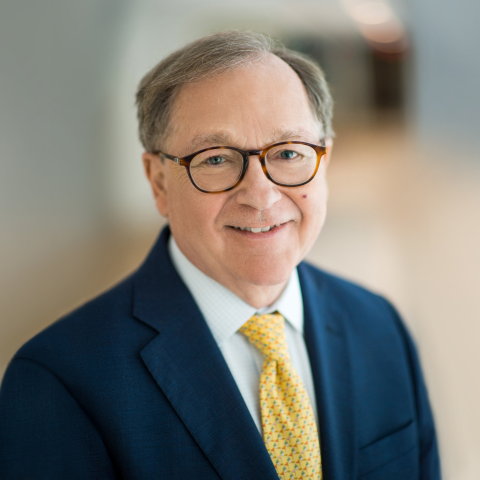
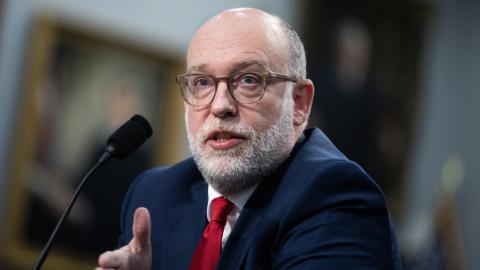
Ahead of the upcoming U.S. midterm elections in November, American politics is being shaken by the rapid rise of left-wing forces. How does Kenneth Weinstein, Japan Chair at the Hudson Institute and Senior Advisor at the Brunswick Group, interpret the future course of U.S. politics? (Reporting and editing by Kazumoto Ohno)
Will the Republicans Maintain Their Senate Majority?
According to former Deputy Chief of Staff to the President Karl Rove, while the Democrats are highly likely to retake the House of Representatives in the November midterm elections, the Republicans are likely to maintain their Senate majority. Historically, the president’s party tends to lose seats in midterm elections, so there is certainly a good chance the Democrats will retake the House—but what about the Senate?
Weinstein: I believe the Republicans will retain their Senate majority. Michigan will likely be the key. I believe Mike Rogers, my former colleague at the Hudson Institute, has a strong chance of winning the Senate race. His opponent holds extreme views and advocates positions that are incompatible with the views of the vast majority of mainstream voters, including Democrats in Michigan.
As for other battleground states, in Maine, Republican Senator Susan Collins will likely hold onto her seat. In North Carolina, however, the Republicans could lose their seat. There is a similar risk in Texas, though I believe the Republicans are ultimately likely to retain their seat there. Still, it will certainly be a close race.
If the Republican Party were to lose control of either the House or the Senate, to what extent would Mr. Trump’s ability to govern actually be constrained?
Weinstein: Many of the policies President Trump has implemented have been carried out via executive orders, which do not require congressional approval. Barack Obama and Joe Biden also governed using similar methods. Therefore, the constraints are unlikely to be as significant as is generally imagined.
The real focus will be on what kind of “investigations” the Democrats will attempt to conduct. They are likely to launch all sorts of investigations—into the president’s past appointments, his own activities, and the activities of the Trump family. As a result, President Trump will have to devote a great deal of time to justifying himself and mounting a defense, which is likely to hinder his ability to advance his policies.
The Rising “Democratic Socialists of America (DSA)”
For example, with figures like Abdul El-Sayed, who won the Democratic primary in Michigan for the Senate race, it appears that the left wing of the Democratic Party is gaining momentum in the U.S. What are your thoughts on this?
Weinstein: It’s true that the Democratic left has won seats in Congress in New York and New Jersey, and has secured the nomination in Michigan as well. They have also secured nominations in states like Colorado.
The “Democratic Socialists of America (DSA),” the largest socialist organization in the U.S. and the group to which New York City Mayor Zoran Mamdani belongs, appears to be gaining momentum. However, I believe even the Democratic Party—which is generally considered to be relatively close to the DSA—is finally beginning to realize what the DSA is really like. One of the DSA’s co-chairs made remarks in a Fox News interview about abolishing the Supreme Court and the Senate. Even among mainstream Democrats, I suspect there is a growing sense of skepticism regarding the DSA’s platform.
In other words, the Democratic Party is divided.
On social issues such as DEI (Diversity, Equity, and Inclusion), abortion, civil rights, and transgender rights, the Democratic Party takes a stance that is far to the left of the views held by the majority of Americans. On the other hand, the DSA focuses on economic issues and criticism of Israel. Regarding these economic and foreign policy issues, there isn’t as much internal division within the Democratic Party as there is on social issues. That is where the DSA’s strength lies.
However, the number of Democrats who harbor doubts about the DSA is likely to increase in the future. There have been periods in American political history when the left has led the Democratic Party. Examples include McGovern’s securing of the Democratic nomination in the 1972 presidential election and Henry Wallace, who became Roosevelt’s vice presidential running mate in 1940 and later served as vice president. However, since Americans are not socialists, these movements eventually lost momentum and faded away.
What is particularly interesting is that the DSA receives almost no support from blue-collar workers or African Americans—especially those in the working and middle classes. The DSA phenomenon originated from specific discourses at elite universities and is primarily found among young people aged 20 to 25 living in major cities. Many of them are the children of extremely successful individuals, yet they harbor resentment toward the existing system and toward their own highly successful parents. This can certainly be described as a highly unusual social phenomenon.
On the other hand, while the Democratic Party was once the party of labor unions and blue-collar workers, it has now transformed into the party of highly educated elites on the coasts. Consequently, the Republican Party has become the party that garners support from blue-collar workers, such as manual laborers and hourly wage earners.
MAGA Will Continue After Trump
Is the MAGA movement one that depends on Mr. Trump, or has it evolved into a sustainable political movement independent of him?
Weinstein: I believe this movement will endure even after Mr. Trump is gone. Mr. Trump has had an enormous impact on changing the nature of political debate in the United States, and that impact has spread to the Democratic Party as well. Let me remind you that when Jake Sullivan, the Biden administration’s National Security Advisor, proposed a “foreign policy for the middle class,” he was incorporating Trump’s view of foreign policy—namely, the idea of avoiding overseas involvement unless it is closely tied to U.S. national interests or the interests of the middle class. Therefore, I believe MAGA is a highly enduring movement that has become independent of Trump as an individual.
Of course, there is no doubt that Mr. Trump remains the leader of this movement. However, he has also demonstrated a flexibility not typically seen among many MAGA supporters. For example, he has shown a willingness to take a step back, in a sense, regarding the strict enforcement of immigration laws advocated by then-Secretary of Homeland Security Kristi Noem.
While the MAGA movement is inherently non-interventionist in nature, Mr. Trump will make the decision to actually intervene if he sees an opportunity to do so overseas. In other words, although he founded MAGA and remains its symbolic figurehead, he is not an isolationist. However, there are some MAGA supporters who hold stronger ideological views than Mr. Trump and do not necessarily agree with his perspectives.
So, are you saying that after Trump, the Republican Party will never return to its former conservative self?
Weinstein: Yes, it won’t go back to the way it was. It is no longer the Republican Party of the George W. Bush or Mitt Romney era. The party has changed. It has become a party that places greater emphasis on blue-collar workers and takes a more skeptical stance toward U.S. intervention abroad. It is also a party that strongly urges its allies to take responsibility for their own defense. That said, divisions will likely emerge within the Republican Party. In fact, among the congressional caucuses, there is a clear divide between those who support the president’s actions toward Iran and those who do not. I believe these divisions will continue in the future.
The Two Years Following the Midterm Elections
What aspects of foreign policy should we pay the most attention to during the final two years of President Trump’s term? Please share your perspective from both the U.S. and Japanese viewpoints.
Weinstein: We should pay attention to the nature of U.S. engagement with countries around the world and the extent to which U.S. military power will be strengthened. I believe President Trump is prioritizing the strengthening of U.S. deterrence and focusing on creating a situation where China cannot take action against the United States. However, there are four areas I am particularly watching.
First, of course, is Iran. How will the situation resolve itself? Will the nuclear program continue, and will the current regime remain in place? And what will become of the strategic importance of the Strait of Hormuz? If the president’s intentions are realized, oil and natural gas from the Middle East will be transported via pipelines rather than through the Strait of Hormuz. If that happens, the Strait of Hormuz may become nothing more than a mere “inlet” for Iran, of no global significance. Although there is also the Houthi naval blockade, it would be preferable if shipments could be made via the Red Sea.
The second issue is the situation in Russia and Ukraine. In recent months, Ukraine has clearly held the upper hand in the war against Russia. The number of Russian casualties continues to rise. The expanding involvement of North Korean forces on the Russian side indicates that Putin’s military strategy has collapsed and is unsustainable. If Ukraine continues to maintain its advantage in terms of technology, finances, and other factors, the likelihood of some kind of agreement being reached between Russia and Ukraine will increase; at the same time, certain factions within Russia may begin plotting to oust Mr. Putin.
The third issue I am watching is the situation in Cuba. President Trump has made no secret of his intention to bring an end to the Castro regime there. I believe the obvious solution for this is to adopt the same approach used in Venezuela. In other words, install a potential ally from within the regime. That person should be someone who can moderate the regime’s actions, adopt a more conciliatory stance toward the United States, and, in particular, show a willingness to curb ties with China and Russia.
The changes that have taken place in Venezuela are remarkable. Venezuela was once China’s closest ally in South America, its largest purchaser of Chinese weapons, and a hub for the “Belt and Road” Initiative as well as a site for Chinese satellite ground stations. But now, Venezuela has firmly joined the U.S. camp. This is a major blow to Xi Jinping. Therefore, if some form of regime change can be achieved in Cuba, it would be a major victory for the President Trump.
Since President Trump began his second term, there have been numerous instances in Latin America where center-right candidates have won elections. These represent major shifts. Examples include Peru’s Fujimori, and significant changes are also taking place in countries like Bolivia. Furthermore, these shifts bring substantial benefits to the United States and Japan in areas such as the mining of rare earths and critical minerals.
And finally, the fourth—and of course, the greatest—challenge is China. President Trump took office pledging to drastically raise tariffs on China as a means to corner the country and weaken its economy. However, China has countered this with a full-fledged strategy. They have adopted an extremely pragmatic strategy, threatening to cut off the supply of rare earths—a move that could deal a devastating blow to our automotive industry. Consequently, President Trump decided on a policy of avoiding confrontation with China for the time being. This means adopting a strategy of weakening China in the long term while maintaining a conciliatory stance in the short to medium term. The transition of power in Venezuela is a prime example of this. Furthermore, the blow dealt to the core of the Iranian regime was undoubtedly a significant setback for China. After all, Iran had been a strategic partner for 25 years, allowing China to settle transactions in its own currency and procure oil and gas at prices below market value.
Therefore, the challenges ahead are to strengthen our supply capacity for critical minerals in cooperation with Japan and other allies, and to identify and preemptively counter other areas where China is attempting to exert a “chokehold” on us. By doing so, we can secure a more advantageous position in negotiations with China.
It is also extremely important for U.S. allies and partner nations to strengthen their own defense capabilities. The more Japan, the Philippines, Indonesia, Taiwan, and others act to ensure their own national security and deepen their cooperation, the stronger our position toward China will be. The key is whether we can maintain an extremely delicate balance: on the one hand, “weakening China to the point where it cannot take action against Taiwan, the Philippines, Japan, or the United States,” while, on the other hand, “not destabilizing it to the extent that Xi Jinping is forced to act to protect his own leadership.” At the very least, Japan should increase its defense spending in line with Mr. Trump’s policy. This is absolutely essential and serves as a prerequisite for everything else.
“Soft Power” of the United States and China
There is growing debate that the United States is losing its “soft power”—which refers to trust and influence within the international community, as opposed to “hard power,” meaning military and economic strength—but what are your thoughts on this view?
Weinstein: I still believe the United States continues to wield immense influence over the world. This is evident in everything from technology companies like Apple and other major brands to movies and cultural activities. It is true that opportunities to exercise soft power in the political sphere have diminished, and there has been a growing shift toward hard power. This downward trend in soft power has been ongoing since the conflicts in Iraq and Afghanistan.
However, the United States remains the most prominent nation in the world; it continues to attract many immigrants, draw capital from abroad, and be the place where the most creative talents eagerly seek to work. Therefore, the United States is not losing its global influence. It is certainly true, though, that there are challenges we must address moving forward.
On the other hand, is China enhancing its soft power? Or is it simply benefiting from the erosion of trust in the United States?
Weinstein: China operates in a world entirely different from that of the United States. This is because it has a centralized government and can allocate resources at will. It can project a unified, positive image of itself more effectively than the United States, where the media is regulated and there is freedom of the press. After all, American media outlets are generally critical of the president.
It is true that there are aspects in which China is expanding its soft power, but China is also taking actions that undermine that power. For example, in Africa, there are growing complaints about Chinese companies producing fabric locally and selling it on the global market. Even in countries like the Philippines, China’s reputation is far from good. Needless to say, it is not well-liked in Taiwan, and the same is true here in Japan. Its aggressive diplomatic stance, known as “Wolf Warrior diplomacy,” also comes at a significant cost. China has no intention of pursuing “win-win” diplomacy in the sense of mutual benefit. For them, “win-win” means they win twice.