






Since Russia launched its full-scale invasion of Ukraine in February 2022, the European Union has developed its most comprehensive sanctions regime ever. Today, sanctions remain the main—albeit not the only—foreign policy instrument available to EU member states and their allies to counter Russia’s war effort and support Ukraine.
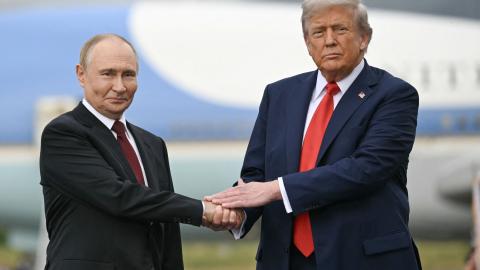
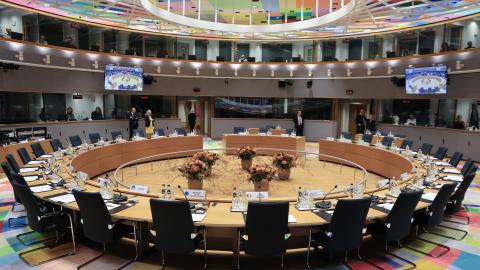
While President Donald Trump’s diesel deal with Russian President Vladimir Putin grabbed most of the international headlines, the EU last Monday moved in the opposite direction, further expanding its sanctions regime by adopting the largest round of sanctions designations since 2022. These new designations specifically target Russia’s military-industrial complex, covering nearly 1,600 individuals and entities—including 826 Russian companies and 743 individuals serving as their chief executive officers. This latest round brings the total number of individuals and entities listed under the EU sanctions regime aimed at protecting Ukraine’s territorial integrity to nearly 4,600.
The measures focus on mid-tier suppliers that form the backbone of Russia’s defense industry, generating combined annual revenues of at least €20 billion and employing more than 250,000 people. The designated companies supply critical components for some of Russia’s most advanced weapons systems, including missiles, drones, and aircraft. The EU imposed additional sanctions on 77 individuals involved in the illegal elections to the so-called Russian State Duma held in September 2026 in occupied Ukrainian territories. It also sanctioned three individuals and four entities linked to North Korea, notably those who facilitated cooperation between Moscow and Pyongyang as part of North Korea’s weapons programs.
Beyond these new designations—which entail travel bans and financial restrictions, including asset freezes and a prohibition on making funds or economic resources available to listed individuals and entities—EU foreign ministers also discussed further measures to maintain pressure on Russia’s war economy. These include tightening measures against sanctions circumvention, particularly through the shadow fleet of vessels used to evade oil sanctions; expanding sectoral sanctions targeting Russia’s financial and banking system, which would form part of the EU’s twenty-second sanctions package since 2022; imposing additional restrictions on Russian diplomats; and reducing the number of visas issued to Russian nationals. Discussions will continue in the coming weeks and are expected to lead to further decisions.
This latest expansion of EU sanctions is a direct response to Russia’s continued escalation of its aggression against Ukraine, particularly its recent military campaign deliberately targeting civilian infrastructure and inflicting severe suffering on the civilian population. As EU High Representative Kaja Kallas stated on Monday, “This is not the time to ease pressure on Moscow but to increase it.”
The question of whether sanctions are effective is as old as sanctions themselves. And after nearly five years of war, it is legitimate to ask, Do sanctions work? According to the EU Council’s sanctions guidelines, “restrictive measures are imposed by the EU to bring about a change in policy or activity by the target country, part of country, government, entities or individuals.” By this standard, sanctions against Russia have not yet achieved their stated objective.
Nevertheless, economic research broadly suggests that sanctions have helped prevent Russia from gaining a decisive advantage in its war of aggression against Ukraine. They have constrained Russia’s ability to finance and equip its military, reduced Moscow’s energy export revenues, restricted Russian access to advanced Western technologies and industrial inputs, and isolated Russian financial institutions. Sanctions have significantly increased the economic cost of the war for the Russian regime. According to official EU estimates, Western sanctions have cost the Russian economy €1.3 trillion since the full-scale invasion began in 2022.
No one knows whether a threshold exists beyond which President Putin would consider the war too costly and agree to enter negotiations. But even without any certainty that such a tipping point exists, sanctions are imposing high costs on the Russian regime—and the pressure should therefore be sustained and intensified.
The effectiveness of economic sanctions, however, depends also on the degree of coordination among the countries imposing them. While Washington and Brussels operate under distinct legal frameworks and rely on different policy instruments, closer alignment undoubtedly increases their collective economic leverage, reduces opportunities for sanctions circumvention, and strengthens enforcement.
Against this backdrop, the United States’ decision to suspend restrictions on Russian oil imports, along with President Trump’s announcement that Russian diesel deliveries would be permitted, disappointed European leaders, particularly after the signing of the Lindsey O. Graham Sanctioning Russia and Iran Act of 2026. Although Europe is not without its own contradictions regarding energy imports from Russia—EU countries continue to import substantial volumes of Russian liquefied natural gas, generating billions of euros in revenue for Moscow—a fundamental difference exists between managing the phase-out of an inherited energy dependency and deliberately reopening restricted trade. The US decision eases existing restrictions and risks signaling a broader normalization of economic relations with Moscow, at a time when transatlantic pressure should be maintained.
Regardless of what happens during the midterms, Brussels should be ready to engage Washington the day after the vote if for no other reason than to maximize the impact of its own sanctions. Amid the political changes sweeping Europe, which are perennial in one election cycle or another, the EU Council’s latest decisions make clear that Europe remains committed to supporting Ukraine in the face of Russian aggression.