


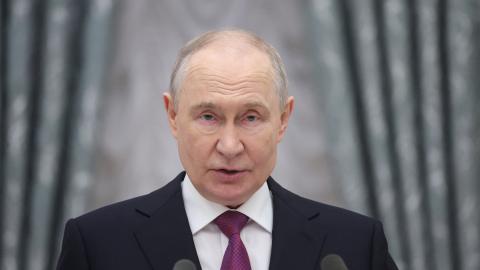

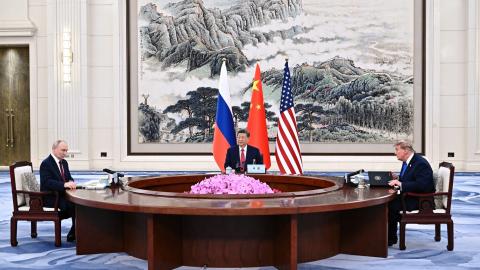
Hours after Donald Trump, Xi Jinping, and Vladimir Putin issued their Declaration toward Peace in Shenzhen, Russian missiles and drones struck Ukraine’s electricity infrastructure. Speaking in Washington on Friday, Trump discussed his separate talks with Putin and said he believed the Russian president wanted to end the war. Asked what security guarantees Ukraine could expect in such a settlement, he replied: “I don’t want to talk about security guarantees because we got to get a deal first.” For Kyiv, however, the sequence raises a more fundamental question: how can a Ukrainian president agree to end a war without some guarantees that Russia won’t reignite the conflict?
That contrast captures both the promise and the presumption of the Shenzhen Summit. The leaders of the three nuclear powers have compelling reasons to talk directly since each possesses the capacity to threaten the security of the others. Yet this is not a relationship of three equal powers. Russia’s growing dependence on China sits alongside its continued nuclear status and military capacity. The significance of the trilateral meeting lies less in what the three leaders agreed on than in the fact that it took place at all.
Its symbolism is considerable, but its substantive outcome appears limited. The joint declaration establishes no specific commitments, resolves none of the underlying conflicts, and defines no negotiating framework. It may nevertheless have value in giving direct political expression to dialogue among the three powers. Whether that dialogue can produce anything more than diplomatic symbolism remains an open question.