








This interview was originally published in Japanese, which can be read here.
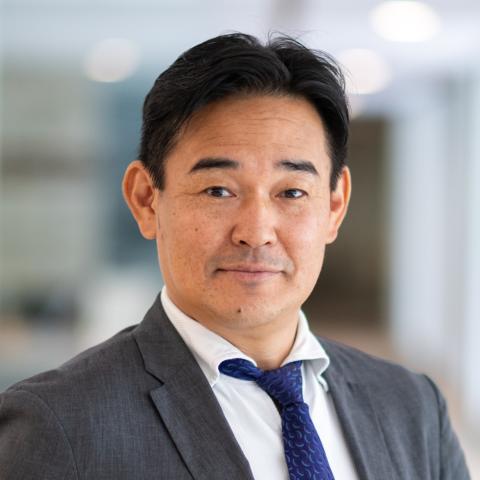
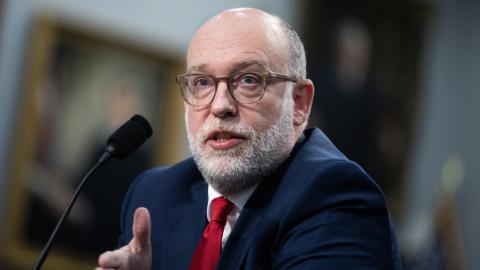
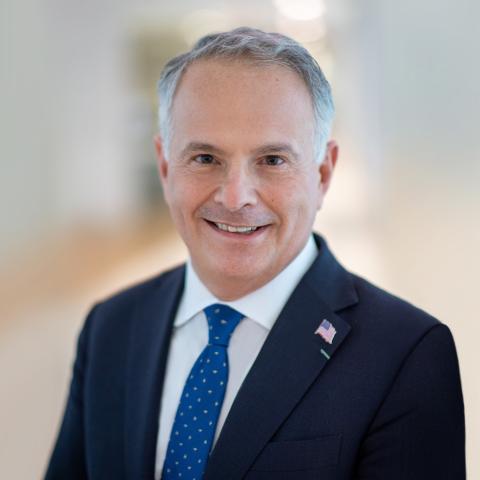
With one year nearly passed since the Takaichi administration took office and a cabinet reshuffle imminent, how do experts in foreign and security policy—who are well-versed in Japan—view the administration’s performance to date? We spoke with Kenneth Weinstein, Japan Chair at Hudson Institute—a U.S. conservative think tank—and Senior Advisor at the Brunswick Group. (Interview and composition by Kazumoto Ohno)
Prime Minister Takaichi and Former Prime Minister Abe
How do you evaluate Prime Minister Sanae Takaichi’s performance so far?
Weinstein: I think she has made a very strong start in the areas of defense and security. She has raised defense spending to 2 percent of GDP and established a new intelligence agency (the National Intelligence Service) based on the Cabinet Intelligence and Research Office. These are extremely significant steps that bode well for Japan’s future. She is also prioritizing cooperation with allies and partner nations in the region—as evidenced by the announcement of the revised “Free and Open Indo-Pacific Strategy”—which is equally important.
At the same time, she is increasing her presence as a global leader. She has built a strong relationship with President Trump, and as far as I can tell, she has a closer relationship with him than any other world leader. In Europe as well, she has forged strong ties with leaders such as German Chancellor Friedrich Merz and Italian Prime Minister Giorgia Meloni.
Furthermore, in Japan—where female CEOs and female board members are extremely rare—it is significant that she has demonstrated that women can exercise leadership. Margaret Thatcher was viewed more as a “conservative leader” than as a “female leader,” but I think it is significant that Prime Minister Takaichi is recognized as both.
What are your thoughts on the sharp drop in the Takaichi administration’s approval ratings this summer?
Weinstein: It is perfectly natural for approval ratings to decline from an extremely high level in the 70s. More importantly, while the Chinese side attempted to use Prime Minister Takaichi’s parliamentary response regarding a “Taiwan contingency” as leverage to undermine her popularity, this backfired completely. The Chinese side likely intended to slow down the Japanese economy through measures such as restricting tourism to Japan, suspending imports of Japanese seafood, and other hardline actions; however, these moves ended up boosting her popularity rather than damaging it. For these reasons, I view her as a “strong leader.” While she is open to dialogue, she maintains a resolute stance and absolutely refuses to back down on non-negotiable issues. I think she is an excellent leader.
Prime Minister Takaichi is seeking to carry on the legacy of the late former Prime Minister Abe, particularly on issues such as constitutional revision. How would you compare her leadership skills to those of Mr. Abe?
Weinstein: Prime Minister Takaichi is, in a sense, in a fortunate position given that the Komeito Party has withdrawn from the coalition government. Mr. Abe was forced to navigate a very difficult balancing act: keeping the Komeito Party satisfied and within the coalition while also coordinating with lawmakers within the LDP. On the other hand, the situation has changed significantly now, and by welcoming the Japan Innovation Party as a coalition partner, Prime Minister Takaichi has been freed from those constraints. The Japan Innovation Party is likely to secure cabinet posts in the next cabinet reshuffle. This puts her in a position to implement policies that Mr. Abe was unable to realize.
That said, she is undoubtedly continuing along Mr. Abe’s path. Mr. Abe possessed the strategic foresight and intuition to propose the “Free and Open Indo-Pacific” vision. He was the one who mapped out the roadmap for his successor to follow, and she is reaping the benefits of that. Given the completely different historical contexts, it is difficult to make a simple comparison of their respective leadership skills, but it is certain that she has made an excellent start on the roadmap Mr. Abe laid out.
Challenges in “Communication”
There is also a view that the Takaichi administration is spending too much political capital on issues such as amending the Imperial House Law and establishing a new crime of desecrating the national flag, rather than on issues directly related to the daily lives of the public.
Weinstein: Governing in Japan always means managing a coalition government. It is necessary to take into account both the right and the left and to unite a broad base of support. Therefore, I personally cannot comment on the merits of the issues regarding the Imperial House Law or the national flag.
However, I believe the underlying message of her arguments is that Japan should take greater pride as a nation. For nearly 80 years since the end of World War II, Japan has repeatedly “reflected” on and “apologized” for its history, maintained a cautious stance toward strengthening national defense, and has been unable to take pride in its national flag even when it is flown. She is arguing that now is the time to change that situation. Now is the time for Japan to take pride in itself as a nation and to confidently assert its position to the world. I highly value that perspective.
What does Prime Minister Takaichi need to do to restore her approval ratings to the levels seen immediately after the general election and maintain a long-term administration?
Weinstein: Since Prime Minister Takaichi has a solid coalition base in the Diet, I believe she will remain in power for the long term, but I think one of the challenges lies in communication. Regarding economic policy, I feel she could have made a more forceful case for its necessity.
I believe Prime Minister Takaichi is an extremely rare figure among Japanese politicians. This is because she comes from a very ordinary family. She didn’t graduate from the University of Tokyo, nor was her father a member of the Diet. Precisely because of this, she possesses an instinctive ability to understand how ordinary Japanese people feel. Going forward, it will be important for her to travel more widely across the country and spend more time interacting directly with ordinary people. The key will be how she conveys her message in a way that demonstrates her firsthand understanding of the hardships faced by the public—such as the long commutes many endure—based on her own experiences. To more effectively convey her commitment to standing with the people, I believe it is crucial for her to experience these things directly and to trust the feelings she gains from those experiences.
The “Nuclear Umbrella” and Japan’s Defense Capabilities
Regarding the future of Japan’s national security, Defense Minister Shinjirō Koizumi recently stated, “While this is a very difficult issue to discuss, the topic of nuclear weapons cannot be avoided.” This appears to signal a shift away from the stance of treating discussions on nuclear weapons as taboo. Depending on the direction of the discussion, is there a risk that it could actually undermine trust in the U.S. “nuclear umbrella”?
Weinstein: I believe it is a welcome development that Japan is discussing all possible options for the future. In fact, President Trump also touched on this very issue early in the 2016 election campaign. He made remarks suggesting he would accept Japan and South Korea possessing nuclear weapons. Although he faced fierce criticism for this, I believe it is perfectly natural for Japan to engage in discussions regarding nuclear weapons.
Eighty years have passed since the end of the war, and the profound scars left by Hiroshima and Nagasaki are, naturally, deeply etched in the hearts of the Japanese people. However, the issue is how to view a “future Hiroshima” or a “future Nagasaki,” and I believe the Japanese public and politicians need to engage in frank discussions on this matter.
I am not saying that Japan should possess nuclear weapons. Nuclear weapons are expensive and difficult to maintain. Theoretically, Japan might benefit more from strengthening its conventional military capabilities more effectively and rapidly. Take submarines, for example: the Japan Maritime Self-Defense Force’s Soryu-class submarines boast outstanding performance, and at this stage, Japan likely has no need for nuclear-powered submarines.
I also believe Japan needs to discuss the “nuclear umbrella.” Under President Trump, I have no concerns whatsoever regarding the “nuclear umbrella.” President Trump is a president who prioritizes deterrence above all else and intuitively understands what is necessary in a crisis. As we have seen, he is not afraid to use military force. It would be a different story if, hypothetically, a Democratic president from the left—one who is conciliatory toward China—were to take office, but I do not believe we are in such a situation at this point.
Japan does have the technological capability to develop nuclear weapons, doesn’t it?
Weinstein: In a very famous study conducted in 1962, Herman Kahn, founder of the Hudson Institute, stated that Japan could develop a nuclear weapon in six months. He became famous at the time for being the first to predict that Japan would become the world’s second-largest economy, but he also argued that it was only natural and a well-known fact that Japan possessed that capability. The issue shifts from the question of “capability” to that of “will” and “necessity.” While I cannot answer those questions myself, the coalition framework formed by the Liberal Democratic Party and the Japan Innovation Party includes numerous individuals with exceptional experience and expertise in defense matters—such as former Defense Ministers Itsunori Onodera, Gen Nakatani, and Minoru Kihara, as well as former Directors of the National Security Bureau. In a sense, it’s like the 1927 New York Yankees lineup—a roster of “power hitters” comprising former Ministers of Defense. I believe it is healthy for such highly capable individuals to engage in public debate. Through this, the public should be made aware of the costs and benefits involved. A system where decisions are made solely within the Ministry of Defense does not allow for genuine debate. It is necessary to involve the public in the discussion.
The Future of the U.S.-Japan Alliance
Do you believe the U.S.-Japan alliance has become stronger under the Takaichi administration
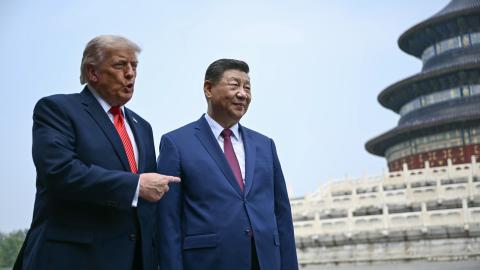
Weinstein: Without a doubt, yes. This was evident even during the intervention in the yen exchange rate. The U.S. places an extremely high priority on the alliance. For President Trump, there is likely no alliance more important than the U.S.-Japan Alliance. He clearly prioritizes the U.S.-Japan Alliance over NATO and European allies. He also defended Prime Minister Takaichi during the summit with Xi Jinping in Beijing, and he clearly values her advice, counsel, and friendship.
So, in terms of policy toward China, what else is needed to make the U.S.-Japan alliance a truly integrated deterrent?
Weinstein: At this stage, I recommend that Japan amend its Constitution. I believe the current Constitution, in which the U.S. played a major role in drafting, is no longer suited to the times. Now is the time to amend Article 9. It is also time for Japan to assume greater responsibility for its own national security. That responsibility includes alliance roles that are difficult to undertake as long as Article 9 remains in place. Of course, China will make all sorts of claims against Japan. However, I view Donald Trump as someone who will take a firm stance on Japan’s behalf when he meets with Xi Jinping at the White House in September. Furthermore, I believe that if Prime Minister Takaichi deepens cooperation with Europe and the Indo-Pacific region, China’s criticism will be ignored by everyone.
President Trump sometimes makes skeptical remarks about alliances with countries around the world. Should Japan be concerned about whether the United States will remain a reliable ally
Weinstein: Mr. Trump is someone who prefers to adopt a deliberately “restrained” stance in order to encourage allies and partner nations to take action on their own. While he took only the bare minimum of action regarding Ukraine, on the other hand, countries such as Germany, Denmark, Finland, Norway, and even Spain stepped up and began supporting Ukraine in ways that would not have been seen before. The same applies to Taiwan; he is trying to send the message that “your own national security is, first and foremost, your own responsibility.” Of course, if push comes to shove, the U.S. will provide support. In contrast, if a leader like President Biden repeatedly declares publicly that “under the treaty, we have an obligation to defend you,” it sends a signal to the people of Taiwan that “there’s no need to worry—we’ll take care of the problem.”
Therefore, in conclusion, Japan likely does not need to be overly concerned about its alliance with the United States in the short to medium term. However, in the long term, it will be necessary to pay close attention to trends among U.S. voters. If isolationist tendencies among voters strengthen, that could become a challenge. This would be especially true if someone who identifies as a “democratic socialist” were to rise to the top of the Democratic Party—though I do not anticipate that actually happening.