















Executive Summary
- Battlefield assessment. Drone and missile warfare dominated combat operations, while ground fighting remained largely static. Pokrovsk and Kostiantynivka were the principal flashpoints.
- Ukraine’s deep-strike campaign. Ukrainian strikes disrupted refineries responsible for nearly 30 percent of Russia’s refining capacity, as Kyiv aims to disrupt Russia’s military logistics operations and reduce Moscow’s energy revenue.
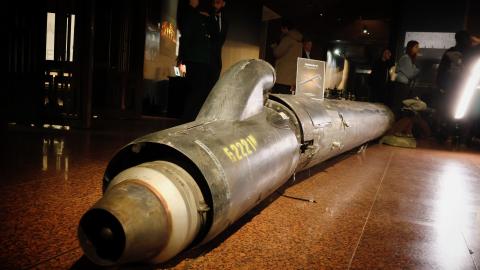
- Russia’s emerging drone threat. Ukraine unveiled new details about Russia’s Geran-5 K5-K, which combines drone technology with some cruise-missile capabilities and could further strain Ukrainian air defenses.
1. Battlefield Assessment
Last week, Russia and Ukraine sustained an intense operational tempo in the skies. Missile and drone warfare and air raids drove the conflict, as Ukrainian drone forces demonstrated the ability to strike more than 2,600 Russian targets in one day. According to Ukraine’s Unmanned Systems Forces, Ukrainian drone units hit nearly 18,000 Russian targets in the first week of November, including some 5,500 Russian military personnel.
Most notably, Ukrainian forces struck the Morozov Plant near St. Petersburg on November 9, reportedly damaging three production workshops. The plant, operated by Russia’s state-owned defense conglomerate Rostec, specializes in explosives and solid rocket propellants. The facility has also supported the Topol-M strategic missile program. Additionally, the Morozov compound reportedly supplies propellant for the 9M723 ballistic missile that Russia uses in its Iskander-M missile system. The attacks highlighted Kyiv’s efforts to disrupt Russia’s missile production at its industrial source.
Russian drone salvos also continued to strike Ukraine. Occupation forces launched at least 6,100 Shahed-type one-way attack drones, originally developed in Iran and subsequently adapted for Russian production, against Ukraine in October 2026. Ukrainian air defenses reportedly intercepted or suppressed around 5,200 of these drones, achieving an interception rate of 84 percent but failing to intercept nearly 1,000 drones.
Russia’s median attack involved roughly 150 drones. However, some official figures indicated that Ukraine intercepted more than 7,100 loitering munitions. Based on this interception rate, Russia may have launched as many as 8,500 drones in October.
Russia’s salvos reached particular intensity on the night of November 9–10, when Russian forces launched an Iskander-M ballistic missile and 162 unmanned aerial vehicles (UAVs) against Ukraine. These UAVs included nearly 100 jet-powered Shahed-type drones, conventional Shaheds, Gerbera drones, and Parodiya decoys. The attacks originated from multiple launch sites across Russia and occupied Crimea.
According to the Ukrainian Air Force, Ukrainian air defenses intercepted or electronically suppressed 135 of Russia’s drones, including 70 jet-powered variants. Ukraine recorded Russian strikes at 19 locations, while debris from intercepted drones fell at nine additional sites. The unusually high proportion of jet-powered drones, which accounted for nearly 60 percent of Russia’s total attack package, highlights Russia’s growing reliance on faster unmanned strike systems to challenge Ukrainian air defenses.
Kyiv continued efforts to mitigate Russia’s robotic-warfare threat. The Ukrainian military targeted drone control stations and several launch positions used to stage UAV salvos. Mushrooming drone warfare hubs operated by Rubicon, Russia’s specialized drone-warfare unit, remained high-priority targets for Kyiv.
Visuals from the battlefield also showed that the 412th Nemesis Brigade of the Ukrainian Unmanned Systems Forces struck a Russian drone-launch site at Donetsk Airport in occupied Donetsk. The 412th Nemesis has long targeted high-value assets in the Russian rear. The combat formation’s kill list includes 170mm-class Koksan North Korean heavy artillery pieces and Russian surface-to-air missile systems.
Sources identified the weapon Ukraine used in its attack on the Donetsk robotic-warfare nest as an FP-2 strike drone, produced by the Ukrainian drone and missile manufacturer FirePoint. The FP-2 is a critical mid-range strike asset. It boasts a preparation time of less than 20 minutes, which makes it a blitz-style attack weapon. Moreover, the FP-2 can be launched from truck-mounted launchers, boosting its battlefield flexibility.
Apart from developments in the drone and missile segments of the conflict, land warfare remained static, with no changes in battlefield geometry or to the conflict’s principal flashpoints. The operational tempo on the ground remained at medium intensity, with 180 to 200 tactical engagements each day. Pokrovsk and Kostiantynivka again bore the brunt of the fighting.
2. Ukraine Targets Russian Refineries
Ukraine intensified its long-range drone campaign against Russia’s oil infrastructure following the collapse of arrangements designed to halt attacks on energy facilities. Since late October, Ukrainian strikes have disrupted operations at nine of Russia’s 35 major refineries, including key installations in central Russia and the Volga region. These strikes have extended to targets as far as 1,100 miles from Ukraine.
According to industry sources, the affected facilities possess a combined processing capacity of approximately 300,000 metric tons, or 2.2 million barrels, per day, representing nearly 30 percent of Russia’s total refining capacity. However, this figure reflects the nominal capacity of the affected refineries rather than actual production losses. By this latter measure, Russia is estimated to have lost up to 200,000 metric tons per day of crude processing, down from the country’s late October processing rate of roughly 700,000 tons per day.
Moscow also continued to target Ukraine’s electricity grid, heating networks, and other essential energy facilities. By targeting Russia’s refining infrastructure, Kyiv seeks to undermine one of the Kremlin’s critical revenue streams, strain Russia’s domestic fuel supplies, and complicate its military logistics operations. Ukraine’s campaign also underscores the growing importance of critical energy infrastructure in the war.
3. What to Monitor
The Defense Intelligence of Ukraine revealed new details about Russia’s Geran-5 K5-K, a jet-powered drone that bridges the gap between low-cost attack UAVs and conventional cruise missiles. With a 620-mile range, a 200-pound thermobaric warhead, and cruising speeds exceeding 280 miles per hour, the platform could further strain Ukrainian air defenses. This report will closely monitor how Russia deploys this weapon against high-value targets and population centers in Ukraine.