

















In March, Canada’s Mark Carney addressed federal parliament. European Commission President Ursula von der Leyen followed soon after and became the first female international leader to do so.
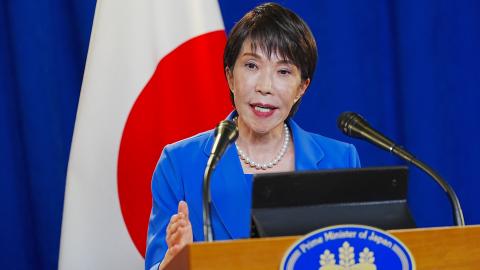
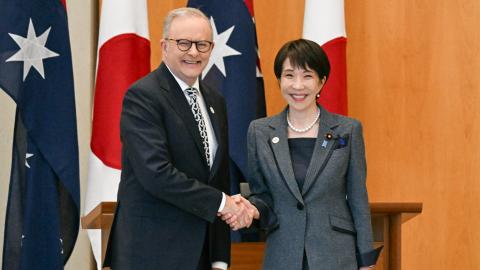
Perhaps it was a scheduling difficulty, but top priority and billing should have been given to Japanese Prime Minister Sanae Takaichi when she visited Australia in May.
Why Takaichi? Because prime ministers and the government they lead have a unique role in informing national conversation about regional and global affairs.
Australians already know that our relationship with Japan is in rude health. But fewer are aware that under Takaichi, Japan is undergoing a foreign policy revolution that is very much in Australia’s interest. For this reason, Japan needs and deserves better public support from our government.
When China imposed a cascading series of economic punishments against Australian exporters from 2020 onwards and subsequently issued a list of 14 grievances against Coalition government policies to justify these measures, Japan’s was the loudest voice defending Australia and expressing disapproval of these coercive actions.
Japan is now facing a similar situation. Chinese diplomats have even issued personal and threatening messages directed against Takaichi, including one by the Chinese consul-general in Osaka to “cut off” her “filthy head”.
Beijing has imposed restrictions and bans on selling key products to Japanese firms such as critical minerals and certain technologies. There are import bans on Japanese seafood and restrictions on Chinese tourists wanting to visit Japan. Arbitrary customs inspections of Japanese products have increased, as has the arbitrary detention of Japanese business people.
But there is more at stake than just the politeness of diplomatic reciprocity. The trigger for the confected Chinese rage was Takaichi responding to a question in the Diet by restating well-established policy that a Chinese military attack against Taiwan would threaten Japan’s core interests and trigger the latter’s right to collective self-defence. That is hardly a novel revelation.
The real reason Beijing is trying to make life difficult for Takaichi is that she is racing towards fulfilling the revolution in Japanese foreign policy that her political mentor Shinzo Abe started. Abe identified China as the greatest threat to not only Japanese security, but order and stability in the region more broadly. Deterring and constraining an authoritarian and expansionist China was identified as the primary strategic objective.
Moreover, Abe saw Japan as the indispensable American ally. Without a rearmed and strategically proactive Japan, distant American forces would find it difficult if not impossible to prevent an eventually Chinese military and violent breakout.
This Abe perspective is now the orthodox one, including in Australia. It is the reason American, Japanese, Philippine and Australian forces accept that deterring China is their most urgent strategic objective.
Takaichi is moving quickly. She is increasing defence spending to more than 2 per cent of GDP ahead of time. More than that, she is building up Japan’s military industrial base, accelerating the production of affordable autonomous systems and developing high-tech and long-range strike weapons such as hypersonic missiles and guided systems which can hit targets in the Chinese mainland. This is severely complicating Chinese military planning.
In short, under Takaichi, Japan is preparing for war. She is doing so because that is the best chance for collective deterrence to succeed. It is only China and countries such as North Korea that see Takaichi’s Japan as a source of instability and disruption. In policy and practice, Australia is fully behind this Japanese reimagination of its postwar role in the region.
Unlike Carney, von der Leyen delivered a useful and clear-eyed message in her address to our parliament when she observed that Australia’s geographical distance no longer shielded us from an advancing China and Russia.
Each day, Takaichi’s Japan confronts the brutal reality of an advancing and coercive China, more so than virtually any other country. Beijing is seeking to dampen international support for Takaichi and trying to win the strategic narrative in identifying Japan rather than China as the destabilising and dangerous variable in our region.
It is why not giving Takaichi the grandest of platforms in Parliament House is an opportunity missed. There have been smaller opportunities also allowed to pass. For example, the gala dinner to celebrate the 50th anniversary of friendship between Australia and Japan at Parliament House last month was attended by Foreign Minister Penny Wong, with Prime Minister Anthony Albanese delivering a video message. Maybe another scheduling conflict, but the absence of our prime minister was noticed in Tokyo.
Notwithstanding these missed opportunities, it is undeniable that the relationship between the two countries is in rude health. That’s no reason for complacency. It can be sensible and measured.
The Australian prime minister wading into awkward strategic issues and offering more public support to a brave Japanese government would make a difference to national awareness and inform conversation about what is really happening in our region.