




















On June 30, 2024, the leadership of Indonesian Jemaah Islamiyah (JI), one of Southeast Asia’s largest jihadist groups, formally announced the dissolution of the organization. JI declared its recognition of the legitimacy of NKRI (Negara Kesatuan Republik Indonesia, or the Unitary State of Republic of Indonesia), pledged to uphold the state constitution, and committed to revising its ideology away from extremism. The leadership also announced the formation of a committee tasked with reforming its education curriculum and materials.[1] This significant and surprising development caught both terrorism experts and many of its own members off guard.[2] The ideological shift followed two decades of sustained, relentless pressure from Indonesian counterterrorism authorities.
Following the pronouncement, and with the support of state authorities, JI leaders embarked on a nationwide tour to meet with members and provide theological justification for this ideological reorientation. A key outcome of this effort was the publication of a book titled At Tathorruf, by Para Wijayanto,[3] JI’s last emir prior to dissolution.[4] The book serves as the primary doctrinal reference for JI’s internal transformation and is intended to guide its members away from their jihadist past and toward a new future.
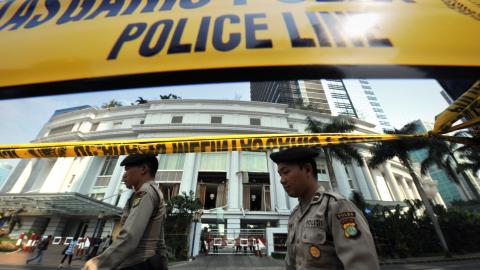
JI has its roots in the Darul Islam (Islamic state) movement, which emerged in the context of Indonesia’s anti-colonialist movement in the 1940s. Abu Bakar Baashir and Abdullah Sungkar founded JI in the early 1990s and became its first leaders. The organization emerged as a significant militant Islamist network and was responsible for several major terrorist attacks in Indonesia.[5] These include the bombing of the Philippines embassy in Jakarta (August 2000), the Christmas Eve bombing of churches across Indonesia (December 2000), the first Bali bombings that killed over 200 people (October 2002), the JW Marriott bombing in Jakarta (August 2003), the Australian embassy bombing in Jakarta (September 2004), the second Bali bombing (October 2005), and the coordinated JW Marriott and Ritz-Carlton bombings in Jakarta (July 2009).[6]
Given JI’s pivotal role in shaping regional terrorism and the seemingly profound nature of its recent ideological transformation, At Tathorruf stands as a crucial primary source for comprehending both the historical development of JI and its prospective trajectory. Wijayanto originally wrote it in Bahasa, Indonesia, and published only a limited number of copies for public circulation. It is difficult to obtain through ordinary public bookstores, which suggests its target audience is JI members themselves—both inside and outside prisons.
By presenting this work to a wider English-speaking audience, this article aims to equip security practitioners, policymakers, and scholars with essential insights into the group’s potential behavior, which carry significant implications for the terrorism landscape across Southeast Asia. Moreover, it seeks to stimulate further academic inquiry, critical analysis, and research engagement with the text, thereby contributing meaningfully to the broader literature on counter-extremism, deradicalization, and the strategic evolution of jihadist movements.
The article first provides a detailed summary of the book’s six chapters and underscores seven key points from the book that are poised to guide and influence JI members following the organization’s dissolution:
- JI’s acknowledgment of its terrorist acts coupled with an official apology
- The rationale underpinning the group’s dissolution
- A return to orthodox Sunni traditions
- Full endorsement of the Indonesian state (NKRI), its constitution, and the Pancasila (the official state ideology consisting of five principles: belief in the One and only God, civilized humanity, national unity, deliberative democracy, and social justice)[7]
- A clarification of the true meaning of jihad
- A corrective approach to the practice of takfir[8]
- The centrality of tarbiyah (education) and dawah (proselytization) in shaping future conduct and ideology
Overview of At Tathorruf
The book is structured into six chapters, each addressing a distinct facet of JI’s past extremism and the theological arguments behind its ideological shift.[9]
The first chapter introduces four phenomena attributed to JI—extremism, terrorism, radicalism, and violence—then groups them under the term extremism.[10] It identifies approximately 50 manifestations of extremism,[11] analyzes its root causes,[12] and proposes two models of resolving them within JI.[13] The chapter emphasizes the importance of acquiring the right knowledge to remedy any doctrinal misunderstanding.[14] It offers eight attitudinal changes and highlights three success factors necessary for ideological reform.[15]
The second chapter elaborates on the first solution—a return to the Sunni tradition as the authoritative framework in understanding Islam.[16] It highlights the theological influence of Ibn Taimiyah, whom JI members highly revere and respect, as instrumental to its internal transformation.[17] The chapter articulates the right conception of iman (faith) as the foundation for correcting the misapplications of takfir (the act of declaring another Muslim an infidel)[18] and lists four important Islamic sciences necessary to ensure the correct application of Sunni intellectual traditions in addressing the problem.[19]
The third chapter addresses takfir directly, presenting it as a second major area requiring reform.[20] It systematically explains various aspects of takfir and lays down 15 guiding principles for legitimate takfir.[21] Based on the principles, the chapter repudiates the practice of declaring takfir toward general Muslims outside JI, political leaders, civil servants, and police and armed forces, deeming such declarations theologically incorrect.[22]
The fourth chapter provides theological justification for recognizing and embracing NKRI as a legitimate polity for Indonesian Muslims. In contrast to JI’s former vision of Darul Islam, this chapter argues that many elements of NKRI align with sharia (Islamic law) principles, even if the Indonesian state does not explicitly label them as sharia principles per se.[23]
The fifth chapter strengthens the legitimacy of NKRI by presenting 36 points through the lens of siyasah shar`iyah (Islamic public administration and policymaking doctrine).[24] This chapter emphasizes the necessity of upholding, preserving, and defending NKRI.
The sixth and final chapter synthesizes the preceding arguments, offering a new theological rationale for JI’s dissolution and its revised ideological outlook. It acknowledges JI’s past connection to extremism and terrorism,[25] provides a theological basis for JI’s dissolution,[26] and concludes with 42 points affirming the legitimacy of NKRI and its constitution. It also calls on JI members to be good citizens.[27]
Highlights
At Tathorruf raises seven important issues that may provide further insight into JI’s past record and its future trajectory.
Admission and Apology
The book explicitly acknowledges JI’s connection to acts of terrorism, as mentioned in the brief overview of JI above,[28] while qualifying these acts as perpetrated by a small minority of members and never endorsed by the leadership.[29] This position—that JI’s leadership has inspired but not directly planned attacks—is consistent with statements by Ali Imron, one of the terrorists convicted of the first Bali bombing, and several researchers have noted it in their analyses of JI’s internal dynamics.[30] Nonetheless, JI leadership accepts moral responsibility, citing the sheltering of wanted members who were on the run and the group’s uncooperative stance with authorities.[31]
The book also acknowledges JI’s links to specific terrorist individuals, including the trio of Bali bombers (Imam Samudra, Amrozi Nurhasyim, and Ali Ghuron), as well as Nordin Mat Top (a Malaysian JI bombmaker whom an Indonesian police counterterrorism unit killed in a September 2009 shootout in Central Java), Dr. Azahari (a Malaysian JI bombmaker whom Indonesian counterterrorism police killed in a November 2005 shootout in East Java), and Hambali (JI’s former military chief, whom authorities arrested in Thailand in March 2003, currently held at Guantanamo Bay).[32] The book also acknowledges that JI had cooperative ties with al-Qaeda while insisting that it operated as an independent entity and was never under al-Qaeda’s direct command.[33] However, scholars remain divided regarding the links between these two groups: Some, such as Zachary Abuza and Rohan Gunaratna (the second author of this piece)[34] have depicted JI as al-Qaeda’s de facto Southeast Asian affiliate,[35] while analysts from the International Crisis Group have stressed JI’s autonomy and argued that the group’s focus was regional instead of global jihad.[36]
According to the book, a critical factor in the development of JI’s earlier extremist ideology was the negative influence of da`wah Najdiyyah—a dawah (proselytization) movement from the Najd region of the Arabian Peninsula founded by Muhammad Abdul Wahab, famously known as the Wahabis[37]—and its fusion with the ideas of Hasan al-Banna’s Egyptian Muslim Brothers (al-Ikhwan al-Muslimun).[38] Wijayanto makes special mention of one book for its impact on JI’s extremist ideology: al-Jami` fi Talab al-`Ilm al-Sharif (The Compendium in Pursuit of Noble Knowledge), which was authored in 1993 by Sayyid Imam bin `Abd al-`Aziz (also known as Dr. Fadl), a leader and ideologue of the Egyptian al-Jihad Organization (Tanzim al-Jihad).[39]
While Wijayanto attributes acts of terrorism to only a minority within JI, he concedes that extremism is a reality among its members.[40] One example is the General Guide for the Struggle of al-Jama`ah al-Islamiyah (Pedoman Umum Perjuangan Al-Jama’ah Al-Islamiyah) – commonly known under its acronym PUPJI. As JI’s guiding document, PUPJI outlines the group’s radical vision of establishing an Islamic state in Indonesia, which it used to justify labeling NKRI a thagut entity (i.e., a false idol) that it must bring down by jihad.[41] The book’s extensive list of 50 manifestations of extremism may be read as an implicit theological self-critique and correction.[42] Another example is the application of takfir toward government leaders, civil servants, police, and military personnel, which, in effect, legitimizes violence against such individuals.[43] Wijayanto dedicates two chapters to addressing this gross misuse of takfir: one explains the concept of true iman (faith) according to Sunni traditions as the foundation of determining valid takfir,[44] while the other is dedicated solely to various issues concerning misguided takfirs and principles to correct them.[45] Finally, Wijayanto notes the influence of Ibn Taimiyah’s theological works among JI members. He rationalizes the extensive use of Ibn Taimiyah’s writings to reform JI’s earlier ideology and redirect it along a new trajectory.[46]
The above admissions are significant. Wijayanto’s transparency debunks conspiracy theories that were rife among JI circles and sympathizers. For example, some alleged that JI was a fabricated organization created to discredit Islam and Muslims and that foreign intelligence agencies orchestrated the first Bali bombing in 2002 for that purpose. For example, Abu Bakar Baasyir, who was then the second emir of JI, claimed the CIA caused the attack by deploying a “micro nuclear bomb”—an assertion that gained traction among segments of both the Indonesian public and certain elites.[47] By confronting such false narratives, the book creates an opportunity to address the inclination toward conspiratorial thinking that remains pervasive in Muslim societies and may hamper counter-extremism efforts.
A formal apology from the JI leadership for their past misdeeds, including acts of terrorism and the propagation of radical ideology that harmed both the Indonesian state and the broader interests of Islam, affirms these admissions. The leaders direct their apology toward the government, the public, and the victims of attacks by JI members.[48] As a demonstration of sincerity and remorse, JI has outlined a series of corrective actions: revising its ideological framework, reviewing the curriculum and education materials of its pesantren (Islamic boarding schools), surrendering its remaining weapons, and urging wanted members to surrender.[49] JI leaders appear to be firm in their commitment to implementing these measures, many of which were already in progress at the time Wijayanto was writing At Tathorruf. The head of Special Detachment 88 (D88), the counterterrorism branch of the Indonesian police, has praised JI’s dedication and acknowledged their ideological shift, noting that Wijayanto has volunteered to testify as a witness in court trials of JI members and personally provided D88 with information about the identities of key JI figures, the organization’s structure, and the locations of weapons caches known to him. Acting on these disclosures, authorities recovered and secured a range of weapons and related materials from several locations across Central Java, Lampung, East Java, South Sulawesi, and Central Sulawesi.[50] Indonesia’s national police commissioner has also echoed this praise and urged the former militants to become model citizens.[51]
Reasons for Dissolution
The leadership’s decision to dissolve JI in 2024 represents one of the most unexpected developments that experts in the field of counterterrorism and counter-radicalization have observed. This surprising move was not an inevitable outcome of ideological reform or strategic shift. It is indeed plausible that many JI members, who lived covertly and had minimal direct contact with the leadership, found the announcement quite startling. The question of why they took this action looms large for internal members and external observers alike. Wijayanto’s book offers partial answers through his theological arguments for the permissibility and necessity of dissolution.
We can discern four main arguments that Wijayanto makes for the theological permissibility of dissolution in the book:
- JI’s original vision to establish an Islamic state in Indonesia, based on the premise that Indonesia was un-Islamic, secular, or a thagut entity, no longer holds. The leadership now affirms NKRI as a theologically legitimate polity for Muslims, considering its historical and sociopolitical context (more on this below).[52]
- JI’s association with extremism and terrorism has irreparably tarnished its reputation, rendering the organization a liability not only for its members but also for the wider Indonesian Muslim community.[53]
- The continuation of JI constitutes a major darar (harm) to Islam and the Muslim ummah (community), which sharia obliges Muslims to eliminate. This is based on the fiqh (Islamic jurisprudence) maxim that requires elimination of harm and prohibits harm to oneself and others.[54]
- While JI’s dissolution may cause negative consequences, which its members may regard as darar under sharia, it ultimately represents the lesser of two evils. In other words, the harm from JI’s continued existence is greater than the potential harm from its dissolution. Furthermore, the benefits of dissolution outweigh the potential harms dissolution entails. The book cites other fiqh maxims to support this judgment: Preventing harm takes priority over acquiring benefits, enduring harm may be acceptable to secure greater benefits, and specific harm may be tolerated to repel general harm. Examples of general harm include the arrests of hundreds of JI members and the resulting hardship for their families and communities, the ongoing pressure that JI members feel from law enforcement after two decades, and the damage their work inflicted on the public image of Islam in Indonesia and on Indonesian Muslims. Wijayanto argues that these harms warrant dissolution of JI despite any limited harms that the dissolution might also produce.[55]
Return to Sunni Traditions
A key highlight of the book is the call for a return to Sunni traditions. The book does not define Sunni (Ahl al-Sunnah Wa al-Jama`ah). However, it does make clear that JI needs to recalibrate the earlier theological stance it stipulated in PUPJI, which gives clear preference to Salafism in the understanding and practice of Islam.[56]
The book downplays JI’s earlier orientation by constantly using the word Sunni to the extent that the word Salafism is hardly present. However, Wijayanto extensively cites Ibn Taimiyah’s works as tools to navigate this ideological recalibration. He offers utilitarian reasons for this, noting that JI members revere Taimiyah’s writings and would therefore be most receptive to calls for reform that are couched in the late theologian’s teachings.[57]
This approach is not an indication of a clear break from Salafism as PUPJI defines it. Rather, it suggests a more inclusive and open understanding that regards Salafism as part of Sunni traditions.[58] The open stance contrasts with that of large segments of Indonesian traditionalist Muslim scholars, particularly those within Nahdhatul Ulama, who view contemporary Salafism and Ibn Taimiyah as outside the realm of Sunni traditions.[59] This difference raises important questions pertaining to JI members’ integration into Indonesian society after its dissolution.
Nonetheless, by emphasizing the need to return to a Sunni tradition, albeit one that includes the Salafism of Ibn Taimiyah and the like, the book makes the case to extremist JI members that their past understanding of Islam is incompatible with Sunni traditions or has deviated from such traditions in certain elements. In either case, Wijayanto makes the case that theological realignment is necessary and a return to Sunni traditions is a path forward. Nonetheless, questions remain as to what this ideological realignment will look like in practice, as detailed in the penultimate section of this article.
Reasons for Embracing NKRI, Its Constitution, and Pancasila
The decision to embrace NKRI, its constitution, and the Pancasila ideology represents a significant shift for JI. Half the book is dedicated to this subject, which is discussed across three chapters and summarized into 42 points of justification.[60] The move radically alters JI’s original raison d’être—to establish an Islamic state in Indonesia as a contribution to the global revival of the Islamic caliphate via violent jihad. Embarking on this path included making i`dad (preparation for armed jihad).[61] It led to the formation of JI’s military wing, combat training with camps established both locally and in foreign lands, and the involvement of JI members in armed conflict in Indonesia, Afghanistan, Syria, and the Philippines, ultimately leading JI to connect with al-Qaeda and transnational terrorism.
Due to space constraints, this article does not delve into all 42 justifications. The following are the 10 most important and illuminating.
1. Lack of a Prescribed Form of Governance. The book recognizes the concept of the nation-state model on which NKRI was founded. It argues that Islam does not prescribe a specific form of Islamic government. As such, the matter is open to ijtihad (independent reasoning). Islam allows for ideational flexibility. Therefore, Muslims should welcome creative and innovative ideas and not regard them as forbidden innovations (bid`ah). Since political governance is a worldly matter, the relevant fiqh maxim that regulates it should be “permissibility, unless there is proof of prohibition.” There is consequently no theological proof prohibiting Muslims from using the nation-state concept as a framework for political governance.[62]
2. Lack of a Mandate for a Caliphate. According to Wijayanto, khilafah (the caliphate) is not a divinely mandated form of governance. While its historical loss remains a lamentable tragedy, Muslims are under no theological duty to revive it. Given contemporary realities, the khilafah’s return is very unlikely. Instead, the nation-state is the most practical, viable, and realistic alternative. A nation-state may not be the most ideal form of governance, according to Wijayanto, but that does not mean Islam prohibits it. As a realistic and practical religion, Islam recognizes “traditions, norms, and conventions as a valid source of law and fatwa [decree],” as the fiqh maxim stipulates, applicable to a nation-state.[63] This represents a major departure from a core jihadist ideological premise: that restoring the caliphate is a binding religious obligation and the ultimate objective of Muslim struggle. By treating the caliphate as historically significant but not theologically mandatory, and by recognizing the legitimacy of the nation-state, Wijayanto undertakes a significant ideological shift that weakens a key doctrinal justification for legitimizing jihadist militancy.
3. Muslim Fragmentation Throughout History. Wijayanto argues that the fragmentation of Muslim communities is neither a modern phenomenon nor abhorred by Islam. Muslims have been politically divided since the first century of Islam, beginning with the replacement of the Umayyad Caliphate in Damascus by the Abbasids in Baghdad, while a branch of the Umayyads continued to rule Andalusia for 300 years thereafter. Since then, the fragmentation has continued. Classical Sunni scholars regarded the existence of various independent and autonomous Muslim kingdoms as a reality of the time and legitimized it for practical reasons. The same reasoning is applicable today: Muslims should regard political plurality among their nation-states—including NKRI—as a legitimate norm.[64] This perspective reflects the shift toward embracing the wider Sunni scholarly tradition rather than the narrower interpretive framework often associated with Salafism.
4. NKRI Is Theologically Legitimate. Building on the above points, Wijayanto contends that NKRI has strong theological foundations and JI members should accept it as a legitimate alternative to the classical form of Islamic government.[65]
5. NKRI Unites Indonesia under Muslim Domination. The book revisits the withdrawal of the controversial clause in the 1945 Jakarta Charter (akin to Indonesia’s declaration of independence) that had required the implementation of sharia for Muslim citizens,[66] thus avoiding any explicit attempt to make NKRI an Islamic state. It calls on JI members to consider Indonesia’s 1945 pre-independence context: The ulama (Islamic scholars) and Muslim political parties of the time, such as Masyumi, were grappling with multiple challenges, particularly external threats of Dutch reoccupation after the surrender of the Japanese imperial army and the need to preserve the national unity amid diverse faiths, cultures, and ideologies. They viewed the removal of the initial clause in 1945 as a strategic concession to preserve NKRI’s cohesion.
Wijayanto regards the adoption of NKRI as consistent with sharia, which permits tolerating a less-than-ideal form of governance. According to him, NKRI sans the Jakarta Charter’s clause on sharia achieves a greater good by uniting the vast Indonesian archipelago under a nation-state that Muslims dominate. Had the clause on sharia remained in the Jakarta Charter, Indonesia would have faced a serious risk of failure: Non-Muslim Indonesians might have been unwilling to be part of Indonesia under such terms, and territories with non-Muslim majorities might have seceded, triggering conflicts and facilitating Dutch intervention.[67]
6. De Facto Sharia Is Compatible with Islam. The book cautions against the simplistic classification of NKRI as totally un-Islamic or thaghut simply because it does not explicitly recognize sharia as the law of the land. The book points to elements of the NKRI that are consistent with sharia, although not explicitly labeled so. The majority of Indonesian laws are congruent with the traditional ta`zir (the authorities’ discretionary power). The constitution recognizes equal citizenship regardless of faith and belief. It is similar to the Medina Charter of the Prophet Muhammad, which established a multi-religious community based on shared rights and responsibilities. Similarly, the Pancasila, despite the absence of an overtly Islamic terminology, is compatible with Islamic teachings as long as it is not interpreted in a manner that contradicts Islam and applied for the purpose of marginalizing it.[68]
7. The Ulama Has Never Denounced NKRI. The book asserts that no mainstream ulama has ever denounced NKRI as un-Islamic. This affirms the long-standing acceptance of NKRI by the broader Islamic scholarly establishment since independence.[69] The point is particularly significant as a repudiation of earlier jihadist positions, which often dismissed or ignored the authority of mainstream scholars when their views conflicted with militant interpretations. By explicitly invoking the consensus of established ulama, the book signals a notable shift toward recognizing the legitimacy of the broader Sunni scholarly tradition as a source of religious authority.
8. Democracy Resembles Syura. The book challenges its earlier rejection of democracy, arguing that democracy is the closest alternative to syura (consultation) in Islam. Matters of syura are subject to ijtihad when determining the most practical and suitable form in accordance with place and time. Democratic mechanisms and institutions, such as pemilu (general elections), pilpres (presidential elections), pilkada (provincial elections), and the Majlis Perwakilan Rakyat (People’s Representatives Council, the Indonesian equivalent of a parliament), are modern applications of syura. This point represents one of the key ideological departures from JI’s prior view, which abhorred democracy because it attributed legislative power to people rather than God.[70]
9. The Prophet Prefers Dawah over Force. While the book remains committed to JI’s rejection of secularism as a philosophical worldview, it advocates a nonconfrontational, non-militant, and pragmatic approach. This approach begins with a recognition of secularism among Muslim societies globally. Deep-rooted problems are better addressed through effective dawah and public education of Muslims, instead of forceful change or imposition. This approach is closer to the Prophet’s way and the Quranic injunction that gives preference to dawah with “wisdom, kind advice, and debate in the best manner.”[71]
10. Nationalism Is Not Prohibited. The book addresses JI’s rejection of nationalism, which it once viewed as anathema to Islam. It argues that nationalism unites the people and therefore does not inherently oppose Islamic principles, noting that many of the Prophet’s companions maintained their tribal identities after converting to Islam without any reprimand from the Prophet. Nationalism is abhorrent only if it leads to group fanaticism that denigrates or harms others. The book warns against any prejudicial view of nationalism as anti-Islamic because it misrepresents reality. A nationalist can simultaneously be a devout Muslim, friend, and partner in promoting shared goals.[72]
The above arguments are not new within Indonesian Islamic discourse. Nahdhatul Ulama and Muhammadiyah, the two largest Muslim organizations representing millions of Indonesians, have affirmed them since independence in 1945. Both affirmed the Pancasila when all Muslim organizations made it obligatory as their sole ideology in 1985. Many contemporary Muslims scholars also hold these positions.[73] What is significant is not the arguments themselves but JI’s formal willingness to embrace them, signaling a shift from its previous extremist views.
Practice of Jihad
Wijayanto does not advocate for the absolute abandonment of armed jihad. Rather, he calls for a return to the traditional understanding of Sunni scholars, which defines jihad as more than armed struggle and strictly regulates the use of force. Waging war and carrying arms remain permissible only as defensive measures in response to aggression against Muslims, and Muslims can declare and practice these measures in Indonesia only under the right authority.
The book declares that it is not permissible to wage armed jihad against the Indonesian government for the purpose of establishing an Islamic state or correcting social vices. It provides three core justifications. First, the new JI vision recognizes NKRI as a valid polity for Indonesian Muslims. Second, since Muslims constitute the majority of the population, Indonesia is considered a Muslim nation, and Muslims cannot wage armed jihad against fellow Muslims. Third, such actions would constitute a forbidden rebellion against authorities in the Sunni tradition, even against corrupt and unjust rulers, due to the harms of such action being greater than the benefits.[74]
In addressing what JI members may perceive as shortcomings of the Indonesian state—whether governmental or societal—the book limits them to peaceful dawah, nonviolent social activism, and participation in democratic political processes.[75] At the same time, it continues to express a commitment to armed jihad, if necessary, for the purpose of defending oppressed Muslims outside Indonesia.[76] This position leaves ambiguity regarding JI’s future orientation. If the commitment to external jihad becomes central to JI’s renewed mission, it could provide a pretext for maintaining military preparedness. Even if the group no longer directs its animosity toward the Indonesian state, a jihad-centered organizational culture could persist within JI. Many segments of Indonesian societies and authorities may therefore continue to harbor suspicion toward JI members, which may hinder their reintegration into society.[77]
Practice of Takfir
While Wijayanto does not acknowledge the full extent of the takfir problem among JI members, he treats the issue with considerable gravity. He identifies takfir as the first problem to address and devotes a full chapter to it,[78] including a detailed formulation of 15 guiding principles to govern its use, indicating the need for a high degree of caution and restraint.[79] The book’s emphasis on the gravity of this practice aligns with broader findings in various studies on the takfiri nature of Muslim extremist groups.[80] Takfir is a fundamental issue that remains central to radicalization, and analysts must address it as a key component of any credible effort to counter extremist ideological frameworks.
Importance of Tarbiyah and Dawah
Historically, JI was part of the tarbiyah movement in Indonesia in the early 1980s. Tarbiyah was characterized by cadre programs that systematically train and develop Muslims to be dawah activists. These are often conducted through small study circles known as usrah, as influenced by the Egyptian Muslim Brothers. Throughout the 1980s, the movement managed to grow its influence underground amid Suharto-era restrictions and avoided political activism. In the 1990s, it had established influence over many intra-university student organizations and discussion forums. It accommodated various Islamic religious strands, from traditionalists to modernists, and was flexible on political questions.[81] After the fall of Suharto’s New Order regime in 1998, some tarbiyah activists founded an Islamist political party, the Justice Party (PK), which they renamed the Prosperous Justice Party (PKS) in 2002. While these political parties hold conservative agendas on social issues, they prioritize electoral gains through pragmatic links with secular parties. Today the tarbiyah movement remains relevant by continuously shaping current trends in dawah and Islamic socio-religious movements and by mobilizing members through offline and online initiatives.[82]
Wijayanto indicates that tarbiyah played a formative role in cultivating JI members’ dedication to the group’s cause and broader Islamic mission. It contributed to the group’s internal resilience during two decades of adversity while under intense pressure from law enforcement agencies. In the post-dissolution period, Wijayanto regards tarbiyah as an important instrument to reframe JI members’ mindsets and facilitate ideological transformation. The efforts JI is taking in reviewing the curriculum, textbooks, and other educational materials within its pesantren underscore this important pedagogical turn.
Insights
JI’s ideological shift is not merely a denunciation of the terrorist acts that some of its members committed, nor is it simply a tactical disengagement from violence. Rather, it represents a fundamental reorientation of the group’s strategic vision. Most significantly, JI now theologically recognizes the legitimacy of the Indonesian nation-state (NKRI), the constitution, and Pancasila. Consequently, it deems armed jihad an impermissible means of achieving political or societal change.
On the Islamism–jihadism spectrum (i.e., passive/quietist Islamist, social activist Islamist, democrat Islamist, non-democrat Islamist, and violent jihadist),[83] this repositioning reflects not only a transition from violent jihadism to nonviolent Islamism but also a movement further toward the center of the spectrum. JI’s stance now resembles that of contemporary Islamist actors participating in democratic politics, such as PAS (Islamic Party) in Malaysia, PKS in Indonesia, and Jamaat-e-Islami in Pakistan. Remarkably, it appears even more moderate than another Indonesian Islamist group, Hizbut Tahrir Indonesia (HTI), which rejects violence but continues to oppose the nation-state system, democracy, and nationalism as Western constructs incompatible with Islam.[84]
Although such ideological transformations are not unprecedented among former extremist groups, their significance should not be understated. Historically, JI has been the most lethal terrorist organization in Indonesia. Its withdrawal from militancy therefore represents a major development for national security and a potentially important milestone in counterterrorism efforts.
Following JI’s June 2024 announcement, many observers adopted a cautious stance, questioning whether the shift was genuine or merely a tactical response to organizational weakening. Some analysts also raised concerns about the possibility of splinter groups emerging from disenchanted members who remained committed to the original doctrine that the PUPJI articulated.[85] However, developments in the subsequent year provide grounds for a more positive assessment. JI leaders have actively promoted the new direction through nationwide outreach to their members, a process that began prior to the official announcement of dissolution and continues today. The organization has also fulfilled commitments to surrender hidden weapons caches and initiate reforms in its pesantrens and educational institutions in coordination with the authorities. Notably, there have been no major terrorist incidents by rogue members or arrests of breakaway factions since the announcement, contrasting with other cases in which splinter groups attempted attacks to signal defiance.
Positive assessments have also emerged from practitioners and scholars. The head of D88, in his memoir JI: The Untold Story, expresses cautious optimism about the organization’s transformation based on his two decades of engagement with JI.[86] Zachary Abuza similarly argues that JI’s disbandment and ideological shift appear largely genuine and potentially irreversible, though he notes that the group’s denunciation of violence “has not been robust enough.”[87] Similarly, Solahudin—an Indonesian researcher and journalist who has authored two books on JI[88]—views the group’s ideological change as broadly consistent with patterns of collective deradicalization seen elsewhere.[89] He draws on Omar Ashour’s study of militant Islamist groups in Egypt and Algeria, which identifies four variables that can lead jihadist organizations to abandon violence: state repression, charismatic leadership, social interaction, and selective inducement.[90] He argues that all four are present in the JI case. State repression and deradicalization initiatives, which D88 primarily carried out, constitute the first level and enabled the emergence of the other variables—charismatic leadership, social interaction, and selective inducement. Without this initial pressure, the latter factors likely would not have developed. Solahudin also highlights differences in political context. Ashour’s cases occurred under authoritarian regimes in Egypt and Algeria, while JI’s transformation took place within Indonesia’s democratic system under legal oversight. Solahudin concludes that combining measured repression under rule of law with rehabilitative programs creates more favorable conditions for collective deradicalization.[91]
Nevertheless, the formal dissolution of JI does not necessarily dissolve the relational bonds among its former members. Shared experiences in pesantren, training camps, overseas conflicts, and kinship networks have forged enduring ties of ukhuwwah (brotherhood).[92] While JI leaders may have nullified the bai`ah (oath) their members pledged to them,[93] these networks persist. Rather than being viewed solely as a security risk, they can serve as channels for continued engagement, enabling authorities to disseminate JI’s revised ideological position, maintain communication with former members, and anticipate potential challenges.
Moreover, militant jihad has not been the sole definer of JI’s identity. Its doctrinal texts, including the PUPJI, emphasized dawah as a foundational priority and framed armed struggle as a later stage.[94] This suggests dawah activism is deeply embedded in the movement’s organizational culture. A plausible trajectory, therefore, is the emergence of a new and open organization centered on dawah, in which former members—and possibly new participants—engage voluntarily through initiatives that former JI leaders direct or that the state facilitates. The character of such an organization, however, remains uncertain. The group could still adopt a hardline Islamist orientation in its dawah or political strategies, similar to the now-proscribed Front Pembela Islam, despite its public endorsement of NKRI and Pancasila and its rejection of violence; these do not eliminate all potential concerns.[95] Continued adherence to Salafi doctrinal orientations may also generate tensions with Indonesia’s traditionalist Muslim organizations, which have historically expressed opposition to local Salafi movements. While many Salafi institutions have contributed positively to Indonesia’s religious landscape, theological disagreements could develop into social friction if leaders do not carefully manage them. Given JI’s historical baggage, prudence requires continued vigilance and proactive measures in the reintegration process.
At present, it would be prudent to give time and support for JI’s leaders to institutionalize new organizational behavior.[96] Their ongoing nationwide engagement with members involves sustained internal dialogue and doctrinal revision, including reexamining concepts of iman, correcting the misuse of takfir, and reassessing interpretations of jihad within mainstream Sunni frameworks. Such theological recalibration is a demanding process that may require considerable time—perhaps even generational change.[97]
Ashour’s framework of collective deradicalization suggests that durable transformation requires change in three domains: ideology, organizational structure, and social behavior. Achieving wasatiyyah (moderation) ultimately requires not only ideological revision but also acceptance of democratic norms—particularly pluralism and the peaceful transfer of power—and their demonstration through participation in social and political life. In the case of JI, the post-dissolution phase remains in its early stages. While the ideological shift is significant, whether the organization—or its former members—will evolve into a genuinely moderate and mainstream actor will depend on their behavior in Indonesia’s sociopolitical sphere in the years ahead. Much will hinge on whether their future engagement is constructive rather than confrontational, inclusive rather than exclusionary, and persuasive rather than coercive. The trajectory will likely become clearer once the current phase of internal reform gives way to broader social and political participation.
Conclusion
The dissolution of Jemaah Islamiyah (JI) represents a rare and significant development in the study of militant movements and ideological disengagement. As At Tathorruf reflects, the transformation that JI has undertaken appears to involve more than a tactical adjustment. Instead it signals an effort to reframe the organization’s ideological foundations and strategic outlook. By renouncing armed struggle in Indonesia, recognizing the legitimacy of NKRI, and advocating engagement within the existing political order, the organization seeks to redefine its role within Indonesian society.
The process through which this shift emerged also offers important insights. The sheer scale of the intellectual effort behind the book—which Wijayanto produced while in detention—together with its extensive references and the nationwide engagement and outreach it later generated, demonstrates a substantial effort at theological recalibration within JI. Wijayanto acknowledges that his detention created opportunities for constructive interactions with personnel from D88, which contributed to his ideological reevaluation.[98] According to his account, the unit facilitated aspects of his personal research by providing books, resources, and access to local scholars as he reassessed the organization’s earlier doctrinal positions. In a related account, the head of D88 notes that the agency runs deradicalization programs for terrorism detainees, though he does not elaborate on their specific design or implementation. Together, these developments highlight how sustained engagement, intellectual reflection, and access to alternative scholarly perspectives can contribute to ideological change.[99]
More broadly, the JI case reinforces an important insight in terrorism studies: While multiple factors—organizational, political, and social—drive radicalization, religious theology remains a central driver and resource in both radicalization and deradicalization processes for ideologically motivated movements.[100] The Indonesian experience suggests that effective counter-extremism strategies may require a combination of consistent law-enforcement pressure and credible ideological engagement capable of addressing the doctrinal foundations of militant activism.
At the same time, JI’s transformation remains in its early stages. Whether the organization will ultimately evolve into a hardline but nonviolent movement or gradually transition toward a more mainstream posture remains uncertain. Questions also persist regarding the implications of its evolving ideological orientation within Indonesia’s diverse Islamic landscape as well as the potential impact of its stance on armed conflicts beyond Indonesia’s borders. These uncertainties underscore the importance of continued monitoring and sustained engagement as the post-dissolution trajectory unfolds.
Finally, the issue of transitional justice for victims of JI’s past attacks remains unclear. Many survivors continue to grapple with the physical and emotional trauma that the bombings caused, making forgiveness difficult despite the organization’s proclaimed transformation.[101] At the same time, some victims have expressed a willingness to move forward, forgive, and cautiously welcome signs of change.[102] This underscores the complex moral and social challenges of reconciliation after decades of violence, issues that the Indonesian government will need to confront and address as part of any broader effort to consolidate the gains from JI’s ideological transformation.[103]
The JI experience demonstrates that ideological trajectories within militant movements are not necessarily fixed.[104] Under certain conditions—combining sustained institutional pressure, internal reflection, and meaningful intellectual engagement—pathways toward disengagement from violence can emerge.[105] For scholars and practitioners alike, the case offers valuable insights into the dynamics of collective deradicalization and the complex processes through which militant organizations may reconsider and transform their ideological commitments.
Endnotes
- Institute for Policy Analysis of Conflict, Is This the End of Jemaah Islamiyah?, IPAC Report No. 96 (Jakarta: IPAC, 2024), 1–3, https://understandingconflict.org/en/publications/IPAC-report-96-is-this-the-end-of-Jemaah-Islamiyah. ↑
- Aqil Hamzah and Wahyudi Soeriaatmadja, “Ex-JI Members in S-E Asia Should Abide by Dissolution, Says Terror Group’s Former Chief,” The Straits Times, October 30, 2024, https://www.straitstimes.com/asia/se-asia/former-ji-members-in-s-e-asia-should-abide-by-dissolution-former-chief-of-terror-group; Sentot Prasetyo, JI: The Untold Story – Perjalanan Kisah Jemaah Islamiyah [History and destiny of Jemaah Islamiyah] (Jakarta: Kompas-Gramedia, 2024), 405–10. ↑
- Para Wijayanto, At Tathorruf (Ekstremisme, Terorisme, Radikalisme dan Kekerasan) Penyebab & Solusi [Extremism, terrorism, radicalism and violence: cause & solution] (Para Wijayanto, 2025). ↑
- Wahyudi Soeriaadmatja, “Defunct Terror Group JI on Nationwide Tour to Get Ex-Members to Surrender and Stand Down,” The Straits Times, September 9, 2024, https://www.straitstimes.com/asia/se-asia/defunct-terror-group-ji-on-nationwide-tour-to-get-ex-members-to-surrender-and-stand-down. ↑
- Kumar Ramakrishna, Jemaah Islamiyah, ISIS and Beyond: Tracking the Evolving Challenge of Violent Extremism in Southeast Asia (2001–2025) (Singapore: World Scientific, 2025), 11–16, 21–24, 29–31; International Crisis Group, Indonesia Backgrounder: How the Jemaah Islamiyah Terrorist Network Operates, Report No. 43 (Jakarta/Brussels: ICG, 2002), https://www.crisisgroup.org/rpt/asia-pacific/indonesia/043-indonesia-backgrounder-how-jemaah-islamiyah-terrorist-network-operates. ↑
- Wijayanto, At Tathorruf, 824–25; Prasetyo, JI, 11–20. ↑
- See Britannica, “Pancasila,” last updated October 22, 2023, https://www.britannica.com/topic/Pancasila. ↑
- Takfir is the practice of declaring a Muslim or group of Muslims apostate and is highly controversial in Islam, although militant Salafi-jihadist groups embrace it to varying extents. ↑
- Muhammad Haniff Hassan and Rohan Gunaratna, “Book Review: Extremism, Terrorism, Radicalisation and Violence: Cause & Solution by Para Wijayanto,” Perspectives on Terrorism 20, no. 1 (March 2026): 166–70, https://pt.icct.nl/article/book-review-extremism-terrorism-radicalisation-and-violence-cause-solution-para-wijayanto. ↑
- Wijayanto, At Tathorruf, 2, 823–25. ↑
- Wijayanto, At Tathorruf, 7–9. ↑
- Wijayanto, At Tathorruf, 70–82. ↑
- Wijayanto, At Tathorruf, 82–101. ↑
- Wijayanto, At Tathorruf, 94–6. ↑
- Wijayanto, At Tathorruf, 86–99. ↑
- Wijayanto, At Tathorruf, 102. ↑
- Wijayanto, At Tathorruf, 102–4. ↑
- Wijayanto, At Tathorruf, 104–118. ↑
- Wijayanto, At Tathorruf, 119–20. ↑
- Wijayanto, At Tathorruf, 164. ↑
- Wijayanto, At Tathorruf, 167–232. ↑
- Wijayanto, At Tathorruf, 235–36. ↑
- Wijayanto, At Tathorruf, 238–89. ↑
- Wijayanto, At Tathorruf, 511–821. ↑
- Wijayanto, At Tathorruf, 825. ↑
- Wijayanto, At Tathorruf, 825–31. ↑
- Wijayanto, At Tathorruf, 831–34. ↑
- Wijayanto, At Tathorruf, 824–25; Prasetyo, JI, 11–20. ↑
- Wijayanto, At Tathorruf, 822. ↑
- Aisyah Llewellyn, “Jemaah Islamiyah Breakup: Bali Bomber Fears Disgruntled Ex-Members May Join ISIS,” Benar News, January 24, 2025, https://www.benarnews.org/english/news/indonesian/bali-bomber-warns-ex-ji-joining-isis-01242025140032.html; David Gordon and Samuel Lindo, Jemaah Islamiyah, AQAM Future Project Case Study Series no. 6 (Center for Strategic and International Studies, 2011), https://www.csis.org/analysis/jemaah-islamiyah; Solahudin, JI Sampai NKRI: Deradikalisasi Kolektif Jemaah Islamiyah [JI to the Republic of Indonesia: The collective deradicalisation of Jemaah Islamiyah] (Jakarta: Komunitas Bambu, 2025), 2–3, 11–21. ↑
- Prasetyo, JI, 375–78, 382–87. ↑
- Wijayanto, At Tathorruf, 825. ↑
- Prasetyo, JI, 137–54. ↑
- See a brief profile of Gunaratna at S. Rajaratnam School of International Studies, https://rsis.edu.sg/profile/rohan-gunaratna, accessed April 22, 2026. ↑
- Zachary Abuza, Militant Islam in Southeast Asia: Crucible of Terror (London: Lynn Reiner, 2003), 122, 155; Rohan Gunaratna, Inside Al Qaeda (New York: Columbia University Press, 2002), 192, 246. ↑
- Bernard Gwertzman, “Jones: Personal and Financial Ties Between al Qaeda and Jemaah Islamiyah,” interview of Sidney R. Jones, Council on Foreign Relations, September 4, 2003, https://www.cfr.org/interview/jones-personal-and-financial-ties-between-al-qaeda-and-jemaah-islamiyah. ↑
- Wijayanto, At Tathorruf, 11, 70–7-5, 102, 104., ↑
- Wijayanto, At Tathorruf, 70. ↑
- Wijayanto, At Tathorruf, 73, 824. ↑
- Wijayanto, At Tathorruf, 824. ↑
- Wijayanto, At Tathorruf, 385, 825–26; Jemaah Islamiyah, PUPJI—The Sequence of the Struggles Guidelines (II): General Guides for the Struggle (Majlis Qiyadah Markaziyah, 1996), 14, https://archive.org/details/Pupji-GeneralGuidelinesForTheStruggleOfJamaahIslamiyah. ↑
- Wijayanto, At Tathorruf, 3–69. ↑
- Wijayanto, At Tathorruf, 9–18, 236, 385, 465–73, 746–53. ↑
- Wijayanto, At Tathorruf, 104–63. ↑
- Wijayanto, At Tathorruf, 164–237, 824. ↑
- Wijayanto, At Tathorruf, 70–74, 102. ↑
- “CIA Used ‘Micro Nuclear Bomb’ in Bali: Bashir,” Sydney Morning Herald, August 30, 2006, https://www.smh.com.au/world/cia-used-micro-nuclear-bomb-in-bali-bashir-20060830-gdoa4r.html; Jane Perlez, “Indonesians Say They Suspect C.I.A. in Bali Blast,” New York Times, November 7, 2002; Greg Fealy, “Conspiracy Theories in Post-Bomb Indonesia,” Inside Indonesia, July 29, 2007, https://www.insideindonesia.org/editions/edition-7433/tall-tales; Shofwan Al Banna Choiruzzad, “Within a Thick Mist: Conspiracy Theories and Counter Terrorism in Indonesia,” International Journal of Social Inquiry 6, no. 2 (2013): 96–116. ↑
- Hamzah and Soeriaadmatja, “Ex-JI Members in S-E Asia”; Prasetyo, JI, 371–78. ↑
- Wijayanto, At Tathorruf, 830–31; IPAC, Is This the End of Jemaah Islamiyah?, 1–3. ↑
- See Prasetyo, JI, 380–81, 391–95, 401–3, 430–36. ↑
- “Indonesia Jemaah Islamiyah: Reduced Sentences for Those Who Collaborate in the Dissolution,” PIME AsiaNews, December 23, 2024, https://www.asianews.it/news-en/Jemaah-Islamiyah:-reduced-sentences-for-those-who-collaborate-in-the-dissolution-62171.html. ↑
- See Jemaah Islamiyah, PUPJI, 29. ↑
- Wijayanto, At Tathorruf, 825, 830. ↑
- Wijayanto, At Tathorruf, 828–31. ↑
- Wijayanto, At Tathorruf, 829. ↑
- Jemaah Islamiyah, PUPJI, 13. ↑
- Wijayanto, At Tathorruf, 70–74, 102. ↑
- Wijayanto, At Tathorruf, 102–4. ↑
- Muhammad Arif, “Ideological Dispute Between Purist Salafis and Islam Nusantara in the Indonesian Islamic Discourse: Jurgen Habermas’ Perspective on Discourse Theory,” in Transnational Islam and Muslim Politics: Policies, Identities, and Ideologies, ed. Ahmet Köruğlu and Baptiste Brodard (Istanbul: Istanbul University Press, 2024), 42–44, https://doi.org/10.26650/B/SS30AA25.2024.003.003. ↑
- Wijayanto, At Tathorruf, chapters 4–6. ↑
- Jemaah Islamiyah, PUPJI, 15. ↑
- Wijayanto, At Tathorruf, 140–42, 528–37, 606–10, 634–36, 648, 780–85. ↑
- Wijayanto, At Tathorruf, 138–39, 643–51, 664–66, 672–73, 780–85. ↑
- Wijayanto, At Tathorruf, 547–56, 666–73. ↑
- Wijayanto, At Tathorruf, 831–34. ↑
- The Jakarta Charter (Piagam Jakarta) was a foundational political document that members of Indonesia’s preparatory committee for independence drafted on June 22, 1945. It formed the initial preamble to the future constitution and articulated the philosophical basis of the new state. Most notably, it included a clause requiring Muslims to abide by Islamic law (“with the obligation for adherents of Islam to carry out Islamic law”), which reflected efforts to accommodate Islamic aspirations within the emerging republic. On August 18, 1945, the clause was removed to preserve national unity in Indonesia’s religiously plural society. The charter nevertheless remains historically significant in debates about Islam’s constitutional role in Indonesia. See Reddy Suzayzt and Advento C. Saudale, Which Becomes The Core of the Contents of the Jakarta Charter and Its Changes, VOI, September 16, 2025, https://voi.id/en/news/502195. ↑
- Wijayanto, At Tathorruf, 238–43, 248–50, 252–62, 288–96, 301–2, 307–12, 406–20, 526–28, 562–64, 643, 739–40, 744–46, 757–60, 772–80, 826. ↑
- Wijayanto, At Tathorruf, 334–44, 385–94, 421–22, 485–98, 511–19, 525–26, 578–79, 643, 710–28, 739–40, 744–46. ↑
- Wijayanto, At Tathorruf, 10, 764–67, 772–73. ↑
- Wijayanto, At Tathorruf, 605–10, 619–24, 634–36, 784–801. ↑
- Wijayanto, At Tathorruf, 557–60, 802–7. ↑
- Wijayanto, At Tathorruf, 33–34, 808–15. ↑
- See Yusuf al-Qaradhawi, Fiqh al-Jihad: Dirasah Muqaranah Li Ahkamih Wa Falsafatih Fi Dhaw’ al-Qur’an Wa al-Sunnah, vols. 1–2 (Qahirah: Dar Wahbah, 2009); Yusuf al-Qaradhawi, Min Fiqh al-Dawlah Fi al-Islam (Qahirah: Dar al-Shuruq, 2001); `Ali Jum`ah, Al-Namazij al-Arba`ah Min Hady al-Nabiy s.a.w Fi al-Ta`aush Ma`a al-Akhar: Al-Usus Wa al-Maqasid (Qahirah: Dar al-Faruq, 2013); `Abd Allah bin Bayyah, al-Dawlah Al-Wataniyah Fil al-Mujtama`at al-Muslimah (Dubai: Muntada Ta`ziz al-Silm Fi al-Mujtama`at al-Muslimah, 2016). ↑
- Wijayanto, At Tathorruf, 33, 420, 486–87, 682–83, 705–9, 826–27; Prasetyo, JI, 20–25. ↑
- Wijayanto, At Tathorruf, 485–98. ↑
- Wijayanto, At Tathorruf, 407–22, 432–45; Prasetyo, JI, chapter 5. ↑
- Prasetyo, JI, 132–34, 145–53. ↑
- Wijayanto, At Tathorruf, chapter 2. ↑
- Wijayanto, At Tathorruf, 171–237. ↑
- `Abd Al-Rahman Bin Mu`allah Al-Luwaihiq, Al-Ghuluw Fi Al-Din Fi Hayat Al-Muslimin Al-Mu`asirah (Bayrut: Dar Al-Risalah, 1992), 251–346; Jamaal al-Din M. Zarabozo (trans.), Religious Extremism in the Life of Contemporary Muslims (Denver: Al-Basheer for Publications and Translations, 2001), 251–389; Muhammad Haniff Hassan, “The Danger of Takfir (Excommunication): Exposing Islamic State (IS) Takfiri Ideology,” in Countering Islamic State Ideology: Voices of Singapore Religious Scholars, ed. Muhammad Haniff Hassan and Rohan Gunaratna (Singapore: Pergas, 2021), 72–79. ↑
- Yon Machmudi, Islamising Indonesia: The Rise of Jemaah Tarbiyah and the Prosperous Justice Party (PKS) (Canberra: ANU Press, 2008), 61–67, 71–77. ↑
- Eva F. Nisa, “Social Media and the Birth of an Islamic Social Movement: ODOJ (One Day One Juz) in Contemporary Indonesia,” Indonesia and the Malay World, 46, no. 134 (2018): 24–43, https://doi.org/10.1080/13639811.2017.1416758. ↑
- Muhammad Haniff Hassan and Walid Jumblatt Abdullah, “Shades of Islamism: A Critical Analysis,” Hudson Institute, November 11, 2025, https://www.hudson.org/religious-freedom/shades-islamism-critical-analysis-muhammad-haniff-hassan-walid-jumblatt-abdullah; Graham E. Fuller, “The Spectrum of Islamic Politics,” in Islamism: Contested Perspectives on Political Islam, ed. Richard C. Martin and Abbas Barzegar (Stanford, CA: Stanford University Press, 2010), 51–56; Adam Zeidan, “Islamism,” Britannica, last updated February 27, 2026, https://www.britannica.com/topic/Islamism. ↑
- “Democracy in Peril: Have Americans Lost Faith in Elections?,” Hizbut Tahrir, November 29, 2022, https://www.hizb-ut-tahrir.org/index.php/EN/nshow/5051 ; Hizbut Tahrir, Hizbut Tahrir (Beirut: Dar Al-Ummah, 2010), 20, 30–39, and 53–60, https://www.hizb-ut-tahrir.org/index.php/EN/bshow/1680/. See also Mohamed Nawab Mohamed Osman, Hizbut Tahrir Indonesia and Political Islam: Identity, Ideology and Religio-Political Mobilisation (London: Routledge, 2018). ↑
- Prasetyo, JI, 25–28; Nur Huda Ismail, “The Evolving Dynamics of Jemaah Islamiyah and Its Splinter Groups,” RSIS Commentary no. 90, S. Rajaratnam School of International Studies, July 8, 2024, https://rsis.edu.sg/rsis-publication/rsis/the-evolving-dynamics-of-jemaah-islamiyah-and-its-splinter-groups; Kumar Ramakrishna, “The Dissolution of Jemaah Islamiyah: Genuine Change or Tactical Switch?,” RSIS Commentary no. 105, S. Rajaratnam School of International Studies, July 29, 2024, https://rsis.edu.sg/rsis-publication/rsis/the-dissolution-of-jemaah-islamiyah-genuine-change-or-tactical-switch; Noor Huda Ismail, “Jemaah Islamiyah’s Affiliated Pesantrens: Legacy and Influence After Its Dissolution,” Counter Terrorist Trends and Analyses 17, no. 3 (2025): 19–25, https://rsis.edu.sg/ctta-newsarticle/jemaah-islamiyahs-affiliated-pesantrens-legacy-and-influence-after-its-dissolution. ↑
- See Wijayanto, At Tathorruf, 423–41. ↑
- Zachary Abuza, “Jemaah Islamiyah’s Disbandment Appears Irreversible – and Real,” Benar News, November 29, 2024, https://www.benarnews.org/english/commentaries/jemaah-islamiyah-militant-group-disbandment-looks-real-11272024102952.html. ↑
- See Solahudin, The Roots of Terrorism in Indonesia: From Darul Islam to Jema'ah Islamiyah, (Singapore: NUS Press, 2013), and Solahudin, JI Sampai NKRI. ↑
- Solahudin, JI Sampai NKRI, 213–18. ↑
- Omar Ashour, “Votes and Violence: Islamists and the Processes of Transformation,” ICSR: Developments in Radicalisation and Political Violence series (November 2009): 5–6; See also Omar Ashour, The De-Radicalization of Jihadists: Transforming Armed Islamist Movements (New York: Routledge, 2009). ↑
- Solahudin, JI Sampai NKRI, 229–32. ↑
- ICG, Indonesia Backgrounder; Noor Huda Ismail, “The Role of Kinship in Indonesia’s Jemaah Islamiya,” Terrorism Monitor 4 no. 11 (June 2, 2006), https://jamestown.org/the-role-of-kinship-in-indonesias-jemaah-islamiya. ↑
- Jemaah Islamiyah, PUPJI, 37; Prasetyo, JI, 394–95. ↑
- Jemaah Islamiyah, PUPJI, 15–16. ↑
- Kate Lamb, “Indonesia Bans Hardline Islamic Defender's Front Group,” Reuters, December 30, 2020, https://www.reuters.com/world/asia-pacific/indonesia-bans-hardline-islamic-defenders-front-group-2020-12-30. ↑
- Soeriaadmatja, “Defunct Terror Group JI.” ↑
- Wijayanto, At Tathorruf, 70–74, 102–4. ↑
- Prasetyo, JI, 419–22. ↑
- Prasetyo, JI, 392–96; Solahudin, JI Sampai NKRI, chapter 6, 226–29. ↑
- See Muhammad Haniff Hassan, “The Centrality of Counter-Ideology in Countering Jihadist Terrorism,” in Resilience and Resolve: Communities Against Terrorism, ed. Jolene Jerard and Salim Mohamed Nasir (London: Imperial College Press, 2015). ↑
- Aisyah Llewellyn, “Jemaah Islamiyah’s Disbandment Rings Hollow for Bali Bombing Families,” South China Morning Post, July 28, 2024, https://www.scmp.com/week-asia/politics/article/3272067/jemaah-islamiahs-disbandment-indonesia-rings-hollow-bali-bombing-families. ↑
- Llewellyn, “Jemaah Islamiyah’s Disbandment Rings Hollow”; Carmen Jacques, “Some Survivors Will Find Peace and Healing in Bali 2002 – but Others May Find the Series Triggering,” The Conversation, September 22, 2022, https://theconversation.com/some-survivors-will-find-peace-and-healing-in-bali-2002-but-others-may-find-the-series-triggering-189538; Reuters, “Indonesian Jailed for Bali Bombing Starts Coffee Business,” The Straits Times, June 4, 2025, https://www.straitstimes.com/asia/se-asia/indonesian-jailed-for-bali-bombing-starts-coffee-business; Amilia Rose and Chris Barret, “Bali Bomb Maker Breaks Down, Begs Forgiveness from Widow of Victim,” Sydney Morning Herald, September 28, 2022, https://www.smh.com.au/world/asia/bali-bomb-maker-breaks-down-begs-forgiveness-from-widow-of-victim-20220927-p5bldc.html. ↑
- Ana P. Santos, “What Happens to Survivors Years After a Terror Attack?,” Vice News, February 27, 2020, https://pulitzercenter.org/stories/what-happens-survivors-years-after-terror-attack. ↑
- See Faizal Patel, Rethinking Radicalization (New York: Brennan Center for Justice, 2011). ↑
- See Angel Rabasa, Stacie L. Pettyjohn, Jeremy J. Ghez and Christopher Boucek, Deradicalizing Islamist Extremists (Santa Monica: Rand, 2010), https://www.rand.org/pubs/monographs/MG1053.html, and Ellie B. Hearne and Nur Laiq, A New Approach? Deradicalization Programs and Counterterrorism (International Peace Institute, 2010), https://www.ipinst.org/2010/07/a-new-approach-deradicalization-programs-and-counterterrorism. ↑