










Japan, a country constitutionally bound to pacifism since World War II, is investing in its defense and contributing to regional security in ways that were previously unthinkable. Tokyo has nearly doubled its defense budget, purchased long-range missiles capable of striking military targets in China and North Korea, signed agreements that allow it to deploy its military overseas, stepped into combat roles in multilateral military exercises, and even lifted its prohibition on exporting weapons.
Japan’s current strategy benefits the United States. Tokyo is not moving away from its alliance with Washington or seeking strategic autonomy; instead, it is increasing the durability of U.S. power in the Indo-Pacific. The United States should be helping accelerate these reforms because a stronger Japan that is closely linked with other U.S. allies and partners in the region is essential to deterring a highly capable and assertive China. Japan is offering the United States a way to protect its vital interests in the Indo-Pacific at a much lower cost and with less risk than Washington would otherwise have to bear.
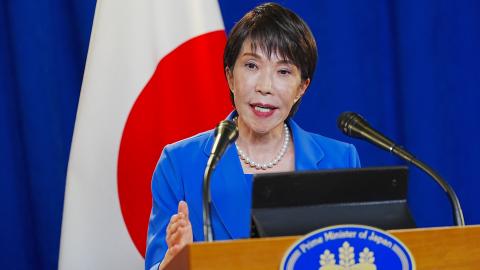
The United States, however, risks squandering this opportunity by not prioritizing its relationship with Japan. In November 2025, Japanese Prime Minister Sanae Takaichi made comments about defending Taiwan that led Beijing to launch a massive coercion campaign against Tokyo, including throttling its supply of heavy rare-earth minerals and suspending Japanese seafood imports. Despite Takaichi’s statements being in line with U.S. policy preferences, Washington chose not to forcefully stand up for her in public. Then, in May 2026, Washington informed Tokyo that because of the war in Iran, it was delaying the delivery of Tomahawk missiles that Japan had purchased more than two years earlier, and in August, Washington temporarily moved the only aircraft carrier permanently deployed outside the United States from East Asia to the Middle East.
For now, Japan has looked past these developments and is still investing in its partnership with the United States. It does not have any better alternatives to Washington. But the U.S.-Japanese alliance will not automatically endure forever, and the current U.S. approach could soon drive Japan to lower its ambitions for the alliance. The U.S.-Japanese relationship is nearing an inflection point, where complacency in Washington about the alliance and dismissiveness toward Tokyo could leave the United States with less power and influence across the Indo-Pacific. The United States needs to visibly demonstrate its desire for a more ambitious U.S.-Japanese alliance and expand economic and military collaboration with Japan before it’s too late.
Patrolling alone
For decades, the U.S.-Japanese alliance rested on a division of labor: the United States guaranteed Japan’s security and Japan channeled its national energy into economic reconstruction. This bargain, although asymmetric, satisfied both parties. The United States got a secure regional presence to contain Soviet power in Asia during the Cold War while also preventing a revival of Japanese militarism, and Japan obtained the security it needed to rebuild its shattered economy.
But a cascade of external shocks in the past two decades forced Japanese leaders to revisit this postwar bargain. In 2010, when tensions flared over the disputed Senkaku Islands (known in China as the Diaoyu Islands), Beijing imposed an informal embargo on rare-earth mineral exports to Tokyo, showing its willingness to weaponize supply chains and highlighting Japan's vulnerability to coercion. After U.S. President Barack Obama declared Syria’s use of chemical weapons to be a “redline” but did not enforce it, and as Washington did little to halt China’s militarization of islands and shoals in the South China Sea, Japan started to question the credibility of U.S. commitments. Russia’s invasion of Ukraine, in 2022, further demonstrated that great powers were willing to use force to redraw territorial borders. And in the wake of U.S. Speaker of the House Nancy Pelosi’s visit to Taiwan that same year, China’s aggressive live-fire military exercises made clear to Japan that a cross-strait conflict was no longer only a theoretical concern. Tokyo gradually concluded that it needed to invest in its own power and take more responsibility for protecting its interests.
Since 2016, Japan has pursued a strategy known as the “free and open Indo-Pacific,” which seeks to connect countries along the Indian and Pacific Oceans with a shared commitment to the rule of law, freedom of navigation, and free trade. As part of this strategy, Japan worked with the United States to revive the Quad—a partnership among Australia, India, Japan, and the United States—which has worked to improve the detection of illegal maritime activities and protect undersea cables. Since 2022, Japan has signed reciprocal access agreements with Australia, the Philippines, and the United Kingdom, allowing military personnel to train and operate in one another’s territory. These agreements laid the groundwork for further military cooperation. Earlier this year, Japan sent 1,400 troops to participate in combat roles for the first time in the annual U.S.-Philippine joint military exercises, where they fired a surface-to-ship missile from Philippine soil—another first in the postwar era. The possibility of revising Article 9 of Japan’s constitution, which renounces war and prohibits a traditional standing army, is no longer taboo in Tokyo.
Japan is also increasingly translating its industrial power into security partnerships. It is developing a sixth-generation fighter jet with Italy and the United Kingdom. In 2023, Japan launched an official security assistance program to provide military equipment and infrastructure to its partners, including giving coastal radar systems and patrol boats to the Philippines to help it track Chinese activity in the South China Sea. In 2026, Tokyo lifted its decades-long ban on exporting lethal arms and agreed to build three frigates for Australia and to jointly produce eight more.
Most significant, Japan has indicated that it is willing to play a more active role in U.S.-led efforts to deter a conflict over Taiwan. In November, Takaichi stated that a Chinese blockade of Taiwan could constitute a “survival-threatening situation” for Japan—a designation that would give Tokyo the legal authority to exercise collective self-defense and respond militarily. A solid majority of Japanese citizens supported Takaichi’s comments: they know that Japan cannot avoid such a conflict because Yonaguni, Japan’s westernmost island, is only 70 miles from Taiwan. That reality was brought home when Chinese missiles landed in Japan’s exclusive economic zone as part of the intimidation campaign Beijing launched after Pelosi’s 2022 visit to Taiwan.
To back up its rhetoric, Japan has upgraded its military infrastructure in the Ryukyu Islands, the territory closest to Taiwan. In 2024, Japan’s navy also transited the Taiwan Strait for the first time, and Tokyo procured 400 Tomahawk cruise missiles from the United States. In 2025, Japan established a permanent Joint Operations Command to unify its land, sea, air, and cyberspace domains under a single operational commander and to enable direct, real-time coordination with U.S. forces. By increasing its military might and complementing U.S. capabilities, Japan is aiming to preserve U.S. power in the region while deterring Chinese aggression.
Atrophy is not a trophy
The United States, however, has done little to publicly embrace Japan’s policy shift. It also has not taken steps that would calm a nervous region. In addition to delaying missile shipments to Tokyo and withdrawing its aircraft carrier from the region, the United States has scaled back or canceled joint military exercises with South Korea. It put a major arms sale to Taiwan on hold, and the war in Iran is likely to further delay the delivery of weapons that Taiwan has already purchased. At the Shangri-La Dialogue in Singapore, in May, Secretary of Defense Pete Hegseth omitted Taiwan from his remarks—the first time it had not appeared in such a speech in a decade—casting further doubt on the strength of U.S. commitments to Taipei. Some administration officials argue that Washington is merely trying to avoid unnecessarily infuriating Beijing. But rhetoric matters, especially since China wants to exploit signs of supposed American decline to make its rise to regional dominance appear inevitable.
Japan remains committed to its alliance with the United States and is still trying to strengthen it. But this should not breed complacency in Washington. Without sustained support from Washington, the U.S.-Japanese relationship will weaken, depriving the United States of its best partner in the world’s most consequential region. If U.S. President Donald Trump were to make major concessions to Beijing on Taiwan’s status, withdraw troops from South Korea, or refuse to defend the Philippines during a clash in the South China Sea, Japan would have no choice but to consider reorienting its foreign policy away from the United States.
An uncertain Tokyo would need to reassess many of its relationships, and it may seek closer ties with U.S. adversaries in ways that go against Washington’s interests. To reduce pressure on its northern flank and gain access to much-needed energy supplies, Japan would likely accommodate Russia by reducing support for Ukraine. Japan could also seek to improve its ties with the military junta in Myanmar to secure access to critical minerals and might even explore purchasing discounted Iranian oil. Most consequentially, absent U.S. leadership, Japan could pull back its support for Taiwan, leaving the island vulnerable to Chinese aggression.
If Japan felt it could no longer rely on U.S. extended deterrence, it would likely seek to develop nuclear weapons of its own. China, North Korea, and Russia, after all, each have large nuclear arsenals. Japan would feel compelled to make itself invulnerable to nuclear coercion. If Japan were to pursue nuclear arms, which it could do relatively quickly, South Korea would not be far behind, turning the region into a nuclear powder keg.
Japan would almost certainly embark on a massive conventional military build-up. China, assessing that Japan was exposed without U.S. protection but that its window to act might close as Japan increased its military power, would likely press its claims in the East China Sea, sharply increasing the risk of conflict. Without the United States acting as mediator, Japan’s cooperation with South Korea could also erode, leading Tokyo and Seoul to revert to their more traditionally antagonistic relationship.
If Japan also decided that it did not want to host as many U.S. forces, Washington would lose its best foothold in the region, diminishing its ability to project power in the Indo-Pacific and to ensure that vital markets remain open. Although the United States could base more forces on Guam or seek greater access in Australia, these are farther from places where conflict is likely to emerge—namely, Taiwan and the South China Sea—and would limit U.S. options for how to respond.
What’s good for tokyo is good for Washington
The United States should reward Japan’s faith in the alliance rather than ignore it. Washington can take steps to encourage Japan to continue in a strategic direction that benefits the United States, bolster deterrence at a time when doubts about U.S. commitments are growing, and send a powerful signal to China that its coercion of Japan will not succeed, in turn deterring Beijing from attempting to coerce other U.S. allies and partners. A strong U.S.-Japanese alliance will be critical to winning the long-term competition with China and securing U.S. interests in the Indo-Pacific, and Japan’s actions have made it easier for the United States to benefit from the relationship.
To start, the United States and Japan can work together to produce a wider array of cutting-edge weapons such as precision-guided missiles. This would simultaneously help Washington address its worrying shortages of critical munitions and provide a boost to Tokyo’s promising defense industrial base. U.S. and Japanese companies worked together to design and produce an anti-ballistic missile, and the two countries have also committed to pursue the joint production of U.S.-designed interceptors and advanced medium-range air-to-air missiles, weapons that are in short supply and are critical to a U.S.-led defense of Taiwan. In 2025, Japan exported to the United States interceptors it built under a licensing agreement; it could make more, but bottlenecks in U.S. supply chains for the necessary component parts have slowed production. The U.S. government can give Japanese companies licenses to manufacture more components domestically and to certify Japanese suppliers.
The United States and Japan also can more closely integrate the planning and execution of military operations, both to enhance deterrence and to enable more rapid decision-making if deterrence fails. They can start by making fuller use of Japan’s southwestern islands as a base of operations. U.S.-Japanese deployments in the Ryukyu Islands, which lie off Taiwan’s northeastern coast, complement U.S.-Philippine efforts in the Bashi Channel, the waterway to Taiwan’s south, creating the ability to deny Chinese maritime dominance on both flanks of Taiwan. The United States and Japan should establish a rotational U.S. military presence in Ishigaki, a major outpost in the Ryukyu Islands, where Japan’s Ground Self-Defense Force already has a camp equipped with a mobile antiship cruise missile unit.
Japan’s investment in its intelligence apparatus has made possible greater cooperation with the United States, too. In the past, intelligence sharing lagged behind other forms of U.S.-Japanese cooperation because Tokyo lacked a centralized intelligence agency and because its security clearance regime and cybersecurity practices did not meet U.S. standards. But in 2026, Japan established a National Intelligence Council and a National Intelligence Bureau, and it is working with U.S. firms to set up a top-secret cloud infrastructure, finally giving both parties greater confidence in sharing sensitive information. The United States can now create a viable path for Japan to join the Five Eyes intelligence-sharing partnership, which would enable it to receive more sensitive intelligence and pave the way for even closer U.S.-Japan operational planning.
U.S.-Japanese economic cooperation can also help both sides overcome weak points in their supply chains. China’s dominance of critical minerals and rare earths is a major vulnerability for both Washington and Tokyo. The two countries’ development finance institutions should establish a joint critical minerals fund to coinvest in mining, refining, and magnet-manufacturing capacity, which would accelerate both states’ efforts to eliminate their dependence on China. Energy cooperation can also be mutually beneficial: the United States is now the world’s largest natural gas exporter, and Japan has world-class import terminals, storage, and gasification infrastructure to turn liquefied natural gas into usable energy. Making Japan the transshipment and distribution hub for U.S. LNG into South Korea, Taiwan, and Southeast Asia would increase energy security for U.S. allies and partners and build a larger market for a key U.S. export.
The mixed signals that Washington is sending about the future of its alliance with Japan have raised questions throughout Asia about the future of U.S. power in the region. One way to allay fears that the United States is retrenching from the world’s most important region is to chart an ambitious course for its most critical alliance. For now, Japan has staked its future on the United States, but its continued course depends on the United States also choosing to loudly and publicly embrace Japan. Washington has a rare chance to elevate a critical alliance to new heights. If the United States allows the alliance to atrophy, however, Washington, Tokyo, and the region alike will suffer.