


















Executive Summary
On August 30, United States forces struck Iranian launchers that were reportedly preparing to deliver naval mines via rocket into the Strait of Hormuz. In response to these strikes, Iran’s Islamic Revolutionary Guard Corps (IRGC) retaliated against US military sites in Jordan, including Muwaffaq Salti Air Base.
- The August 30 exchange—starting from Larak Island and escalating to US bases in Jordan—shows that the conflict remains active and capable of rapid regional escalation.
- The Islamic Revolutionary Guard Corps’ missile and drone forces have suffered heavy attrition but have not disintegrated. Their order of battle, doctrine, discipline, and cohesion remain intact, with no significant defections or organizational fragmentation.
- Iran’s ballistic missile force will increasingly favor solid-propellant systems, while retaining liquid-propellant weapons for heavier, longer-range strikes and a credible retaliatory capability throughout a conflict. Separate industrial chains for solid- and liquid-propellant missiles, along with Iran’s limited launcher inventory, will shape the pace of recovery.
- Iran’s modular, dispersed drone enterprise can regenerate far more quickly than its missile complex. Future strike packages will combine inexpensive mass, jet-powered drones to suppress air defenses, cruise missiles to complicate engagement geometry, and ballistic missile salvos for speed and heavier effects.
- The battlefield is regional, but the industrial arithmetic is global. With interceptors in high demand in Ukraine, Europe, the Gulf, and the Indo-Pacific, disrupting the foreign supply and targeting networks that sustain Iran’s forces will be as important as destroying production facilities.
Below, Hudson Institute Senior Fellow Can Kasapoğlu provides the background for these attacks and assesses the current state of Iran’s ballistic missile and drone programs.
Background
Iran’s strikes against Jordan on August 30 were not the first instance of the Islamic Republic targeting the Hashemite Kingdom. Iran attacked targets in Jordan in early March, striking X-band radar sites that provide vital sensors for the Terminal High Altitude Area Defense (THAAD) system and the broader interception network that defends US and allied interests in the region. In its most recent salvos, Iranian footage suggests that the IRGC launched solid-propellant ballistic missiles—likely Kheibar Shekan—into Jordan to retaliate for US strikes against Iranian launchers on Larak Island, a small Iranian island off the coast of Bandar Abbas in the Strait of Hormuz.
According to visuals uploaded from Jordan, missile defense systems, likely the Patriot surface-to-air missile system, engaged Iran’s most recent attack. Tehran also claimed to have conducted missile strikes in the United Arab Emirates. Emirati authorities confirmed only that they had intercepted a drone and denied that Iran had targeted Al Minhad Air Base.
Following Iran’s strikes in Jordan, President Donald Trump posted an artificial intelligence–generated video to his social media accounts showing the destruction of Kharg Island, an island in the Gulf that provides a seaport through which Iran ships approximately 90 percent of its oil exports. An attack on the island would signal both a decisive expansion of the conflict and a transition from suppressing Iran’s missile and drone operations to attacking the economic foundation of the Islamic Republic. It could also increase the likelihood of Iranian retaliation against the water desalination plants of the Gulf Arab states.
From a defense-intelligence perspective, the central challenge in assessing Iran is not a shortage of accurate data, but the Joint Comprehensive Plan of Action (JCPOA), the 2015 nuclear deal that sought to limit Iran’s nuclear program in exchange for sanctions relief. While a nuclear-armed Iran would present a grave threat to world security, the JCPOA framework compressed the range of strategic debate over Iran into a technical discussion of centrifuges, enrichment levels, and breakout times. Iran’s ballistic missile ambitions, an essential element of any regional security framework, remained outside the scope of the agreement’s restrictions. Instead, the deal addressed Iran’s efforts to develop ballistic missiles only in separate communications from the United Nations and gave them much less attention than Tehran’s nuclear program. The JCPOA also paid little, if any, heed to Iran’s drone ecosystem.
As a result of these omissions, while policymakers watched the nuclear clock, the IRGC expanded, diversified, and operationalized a long-range strike deterrent centered on missiles and unmanned systems. Just last month, Russian military bloggers released visuals simulating an Iranian missile salvo targeting European territory. Over time, Iran has become an arms-maker that has provided Russia with an abundant supply of combat drones to support the Russian invasion of Ukraine. The Kremlin’s forces have employed variants of these drones for probing actions into the territory of North Atlantic Treaty Organization member states. Last March, the IRGC’s missiles even attempted to hit Diego Garcia, a base in the Indian Ocean operated by the United States and the United Kingdom.
This report will assess which of Tehran’s assets the US and its allies have destroyed, which have survived, and how rapidly Iran can regenerate its combat capabilities. The report will give particular attention to Iran’s ballistic and cruise missiles and aerial drones. It will also examine the state of Tehran’s forces across multiple variables, from order of battle and salvo-generation capacity to industrial bottlenecks and foreign supply chains, as well as wartime adaptations. The next edition of this series will cover the IRGC’s naval drones, naval mine warfare, fast-attack craft, anti-ship capabilities, and efforts to build a coercive architecture around the Strait of Hormuz.
Iran Reloads Its Ballistic Missile Warfare Capabilities
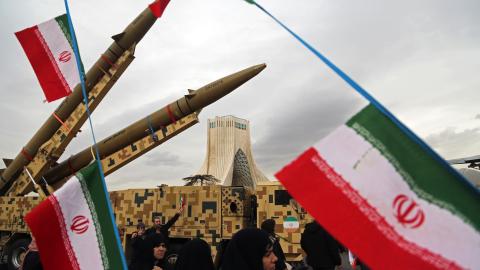
The IRGC entered the 2020s with the Middle East’s largest and most diverse missile arsenal, including as many as eight liquid-propellant ballistic missile designs and more than ten solid-propellant systems. By the middle of the decade, Israel and the Islamic Republic of Iran were fighting a long-range missile and drone war. This conflict, known as the Twelve-Day War, lasted from June 13 to June 24, 2025.
In that brief war, the air and missile defenses of the United States, Israel, and the Gulf Arab states cooperated in combat operations against more than 570 Iranian ballistic missiles. Reliable data indicate that these allies intercepted 270 of Tehran’s projectiles, while fewer than 50 Iranian missiles hit targeted military bases, populated areas, or critical infrastructure. Assistance from Europe and the Gulf Arab nations helped Israel successfully defend against over 1,000 Iranian drones.
Before the Twelve-Day War, Iran’s ballistic missile program was projected to grow exponentially and generate up to 8,000 ballistic missiles within three years. The Twelve-Day War offered a glimpse of how Iran could use such a ballistic missile inventory to overwhelm regional defenses through mass and systemic saturation. During the conflict, US forces launched over 150 THAAD “Talon” interceptors and 80 SM-3 interceptors, 70 percent of all the air- and missile-defense interceptor munitions used during the war and roughly 25 percent of the American THAAD interceptor magazine.
Additionally, during the Twelve-Day War, the US expended an unknown number of Patriot interceptors to protect Al Udeid Air Base in Qatar. Over the course of a year, Washington used roughly 200 SM-2 and SM-6 interceptors to counter missile and drone salvos launched by the IRGC-backed Houthi militia from Yemen. Replenishing the stocks of these munitions could take years.
During the recent rounds of combat, Iran has launched more than 2,000 ballistic missiles across the Middle East, including 580 against Israel and over 550 against the United Arab Emirates. Nearly 170 of these missiles penetrated regional defenses and struck their targets. Thwarted Iranian attacks were directed at NATO-allied territory in Türkiye and extended to the joint US-UK base at Diego Garcia in the Indian Ocean, some 2,500 miles from Iran. Open-source defense-intelligence assessments suggest that the IRGC’s dangerous, military-grade space program likely drove the innovations that enabled its attempted strikes on Diego Garcia.
The IRGC’s missile and drone forces have suffered heavy attrition but have not disintegrated. Their order of battle, doctrine, discipline, and cohesion remain intact. No high-level or major combat formation-scale defections took place.
Nonetheless, assessments differ regarding the current state of Iran’s long-range strike capabilities. The New York Times reported on May 12 that the IRGC’s missile forces may have retained 70 percent of the stockpile they possessed before the first US strikes of 2026. On May 14, however, Admiral Brad Cooper, the commander of US Central Command, told the Senate Armed Services Committee that the US military campaign had hit 90 percent of Iran’s defense technological and industrial base.
Assessing Iran’s Solid- and Liquid-Propellant Ballistic Missiles
The production of solid-propellant and liquid-propellant ballistic missiles relies on distinct industrial bases, supply chains, production cycles, and operational infrastructures. Therefore, the two systems present different vulnerabilities and indicators of recovery. Any serious assessment of Iran’s ability to regenerate its ballistic missile supplies must assess solid- and liquid-propellant projectiles separately.
The Operational Advantage of Solid-Propellant Missiles
Preparing to launch solid-propellant projectiles takes only minutes, rather than the hours required for a liquid-propellant missile. Iran’s wartime experience since 2024 reveals why this advantage has led Tehran to favor solid-propellant missiles. In April 2024, the Islamic Republic fired roughly 130 ballistic missiles, predominantly liquid-propellant Emad and Ghadr variants, alongside cruise missiles and drones.
The lengthy preparation time, stronger pre-launch signatures, and uneven reliability of these strategic weapons gave opposing air and missile defenses ample warning to prepare. By October of the same year, Iran had begun to launch more advanced Fattah-1 and Kheibar Shekan solid-propellant medium-range ballistic missiles against a narrower set of military targets. While Tehran had hardly made its liquid-propellant missiles obsolete, this evolving usage pattern reflects a concept of operations centered on faster preparation and reduced exposure to opposing defenses.
The Twelve-Day War reinforced that operational concept. Liquid-propellant Shahab-3, Ghadr, Emad, and Khorramshahr—the latter using a higher-end liquid propellant—missiles retain value for Iran because they can carry substantial payloads over long distances. But the fueling requirements and longer launch cycles of such projectiles reduce Tehran’s salvo rates and increase Iran’s susceptibility to surveillance and preemption, especially when compared with the solid-propellant Fattah-1, Haj Qassem, and Kheibar Shekan missiles.
Moreover, once Iran’s lack of air superiority exposed its airspace, its mobile Transporter Erector Launchers (TELs) proved especially vulnerable to US and allied preventive hunt in the skies. Some US combat aircraft have even followed Iranian launchers back to their storage sites and destroyed them. Iran’s limited launcher network—from road-mobile TELs to its hardened underground sites known as missile cities—has become a chokepoint for the Islamic Republic. While boosting battlefield survivability, this stressed outlook has constrained Tehran’s ability to generate sustained salvos, even when its missile stocks have remained substantial.
Iran’s prolific solid-propellant ballistic missile program dates to the 1990s. That work initially provided the Islamic Republic with a solid-propellant missile, Fateh-110, with later variants capable of carrying a roughly half-ton warhead up to 186 miles. The missile’s accuracy has steadily improved as Iran has manufactured higher-end variants. Common warheads and progressively larger composite boosters have turned Iran’s solid-propellant systems into an increasingly potent weapon.
The evolution of Iran’s solid-propellant systems illustrates this trend. Tehran’s 2015 Fateh-313 added a composite motor casing, advanced inertial navigation, and terminal guidance capabilities to a projectile that could carry more than a 750-pound payload up to 310 miles. The 2016 Zolfaghar could carry the same payload up to 450 miles. The externally similar Dezful followed these variants in 2019 and could reach some 620 miles, reportedly with an even more destructive warhead. Unveiled in 2020, the Haj Qasem, named after the IRGC commander Qasem Soleimani, who was killed by the United States in January 2020, extended the missile family’s range to over 800 miles. Iran has employed all the derivatives of its Fateh-110 baseline, including the Haj Qasem, during its recent clashes.
The Kheibar Shekan, a road-mobile, solid-propellant medium-range ballistic missile unveiled by the IRGC in 2022, marks the transition between the tactical and strategic segments of Iran’s ballistic missile inventory. The Kheibar Shekan reportedly possesses a range of approximately 900 miles and carries a 1,200-pound warhead. According to open-source assessments, the projectile can conduct maneuvers when homing in on a target, which stresses opposing air defenses.
Over the course of the current conflict between Iran and the US, the Kheibar Shekan has become the IRGC’s weapon of choice against American bases in the Middle East. Visuals from the after-impact wreckage of Kheibar Shekan missiles have offered a detailed view of the missile’s reentry vehicle, revealing a four-element controlled-reception-pattern antenna designed to receive signals from the Global Positioning System and Global Navigation Satellite System that are more resistant to jamming. The missile’s satellite-navigation architecture improves accuracy, while its visible thermal shielding protects the reentry vehicle during atmospheric descent.
The road-mobile, two-stage Sejjil-2 stands at the strategic end of Iran’s solid-propellant systems. This missile can reportedly carry a 3,300-pound payload over 1,200 miles. Tested between 2008 and 2011, the Sejjil-2 reappeared in 2021 with guidance improvements, though the projectile’s overall combat-readiness status remains uncertain despite some reports of its use in combat in 2026.
Industrial Bottlenecks in Solid-Propellant Production
No matter where they are produced, solid-propellant missile output is industrially concentrated and bottleneck-sensitive. This type of missile requires large planetary mixers, the heavy-duty industrial machines used to blend the ingredients needed to produce solid rocket fuel. Solid-propellant missiles also require controlled supplies of propellant precursors, casting and curing infrastructure, composite motor cases, guidance packages, and terminal seekers for certain advanced variants.
These are significant hurdles. China’s value to Iran’s efforts to recover its ballistic missile capabilities lies mainly in helping Tehran address serious industrial challenges. Reports of intercepted cargo originating in Chinese ports and of disrupted mixer shipments expose Tehran’s dependence on foreign machinery. It is no coincidence that the intercepted mixers produce the solid propellant Iran uses in its Fattah-1, Kheibar Shekan, Haj Qasem, and Sejjil families.
And while Iran’s solid-propellant missile-manufacturing architecture does use underground storage facilities, it also relies on multiple complex processes. Iran’s efforts to produce solid-propellant missiles connect chemical-precursor processing, propellant production, and rocket-motor integration with testing, storage, and dispersed deployment capabilities. Damage to any critical hub, particularly to specialized mixing equipment or testing infrastructure, can constrain this entire production chain. For the IRGC, therefore, rebuilding physical structures is easier than reconstituting controlled chemical flows, supplies of specialized equipment, quality-control processes, and skilled production teams.
This is where supplies of sodium perchlorate from China become strategically vital for the Islamic Republic. Iran can convert this chemical compound into ammonium perchlorate, the principal component used in solid-propellant systems. Tehran can then use this material to feed its industrial mixing and casting processes that produce complete rocket motors.
An estimated 1,000 tons of sodium perchlorate can yield roughly 960 tons of ammonium perchlorate, a supply sufficient for approximately 260 solid-propellant medium-range ballistic missiles. Available data on potential shipments of sodium perchlorate suggest that even two ships can carry up to 1,000 tons of sodium perchlorate in a single transfer. Roughly 10,000 tons of sodium perchlorate, therefore, could provide Iran with enough supplies of the chemical compound to regenerate almost its entire arsenal of ballistic missiles in kind.
Iran’s solid-propellant missile-manufacturing infrastructure is distributed across multiple compounds. These facilities include those at Khojir, also used to manufacture liquid propellant systems; Parchin, on the outskirts of Tehran; and Shahroud, approximately 215 miles northeast of the capital. Iran’s opponents have targeted all three complexes in prior conflicts. Following strikes during the Twelve-Day War, open-source satellite imagery revealed that the Islamic Republic had begun rapid reconstruction efforts at the sites. The pace of these efforts is strategically revealing. Iran’s ruling regime regards its missile enterprise as a central instrument of national power and is prepared to prioritize substantial resources for its regeneration.
Rebuilding Iran’s Liquid-Propellant Force
Reconstituting Iran’s liquid-propellant missile forces is not the mirror image of rebuilding its solid-propellant ballistic missile deterrent. Liquid-propellant regeneration depends less on the concentrated bottlenecks discussed above and more on restoring a distributed industrial and operational chain. This chain includes the production, storage, and handling of propellant, as well as engines and turbopumps, valves and feed systems, fuel tanks, airframes, guidance packages, test infrastructure, launchers, and ground-support vehicles. These variables determine how quickly Iran can turn its surviving missiles into combat-ready salvos. Airstrikes by the US and its allies can therefore impose real production latency and suppress Tehran’s launch capacity even when Iran’s inventories and underground facilities survive.
Satellite imagery intelligence suggests that such strikes damaged chemical-production facilities belonging to the Shahid Hemmat Industrial Group at Khojir, as well as the company’s liquid-propellant and launcher facilities at Hakimiyeh. Since Shahid Hemmat manufactures liquid-propellant missiles, engine and structural components, guidance systems, launchers, and support equipment, these strikes are important. For Iran, however, rebuilding structures is only the visible layer of its recovery efforts. The Islamic Republic is also attempting to restore its precision machinery, chemical-processing equipment, engine-testing capabilities, quality-control processes, and access to specialized components.
Operational regeneration presents a second problem for Iran. Available writings suggest that the country’s Emad and Ghadr missiles require lengthy fueling at launch positions, while Iran’s TELs must leave concealed shelters and enter exposed firing areas to launch. These signatures allowed surveillance and strike systems to attack the Islamic Republic’s launch operations during the Twelve-Day War and throughout clashes this year. Thus, Iran’s attempts to replenish its ballistic missiles must focus on fueling vehicles, launch-control systems, underground assembly points, dispersed firing positions, deception, and replacement TELs, rather than on additional missiles alone.
The foreign assistance Tehran receives to support these efforts will be divided by function. North Korean support for Iran has extended to valves, electronics, and ground-testing equipment. Iran’s Khorramshahr retains the design DNA of North Korea’s Musudan missile. China, for its part, offers the Islamic Republic industrial scale through the provision of chemicals, metals, electronics, machine tools, and sanctions-resistant procurement networks. Russia can contribute guidance and targeting capabilities, as well as lessons in wartime adaptation, although evidence of Russian liquid-engine transfers to Iran remains limited.
The Future of Iran’s Ballistic Missile Program
Iran’s missile warfare program will rely increasingly on solid-propellant missiles. These systems provide Tehran with advantages in faster launch cycles, greater prospects for concealment, launcher survivability, and effective salvo generation. But the Islamic Republic will still retain its liquid-propellant missiles for missions that require heavier payloads and long-range strike capabilities.
For example, the liquid-propellant Khorramshahr possesses a circular error probable, the standard measure of a weapon system’s precision and accuracy, of only 100 feet. The missile also boasts a heavy “shotgun” warhead that makes it a suitable choice against large base areas and population centers, as well as saturation attacks. The Ghadr and Emad, also liquid-propellant ballistic missile systems, depend more heavily on barrage volume, while the Shahab-3 utilizes area effects. These missiles reflect a long-standing Iranian preference, rooted in the Iran-Iraq War, for using missile salvos to offset conventional military disadvantages.
Iran’s newer systems reflect the same effort to combine destructive weight with survivability. The Sejjil uses a two-stage solid-propellant configuration. The Fattah-2 pairs a solid-propellant booster with a liquid-propellant, hypersonic Maneuverable Reentry Vehicle (MeRV).
The emerging force structure that drives Iran’s ballistic missile program is likely to rely more on solid-propellant missiles. But Tehran will likely preserve its liquid-propellant missiles as a strategic component for heavier-strike missions and to maintain a credible retaliatory capacity throughout a conflict, as well as Fattah-2 and similar exotic missiles in tests. This mix will also support deterrence within a conflict by preserving Tehran’s ability to threaten additional costs, sustain retaliatory pressure, and influence adversary escalation decisions even after absorbing substantial attrition.
Assessing the IRGC’s Drone Warfare Capabilities
The first week of Iran’s retaliation during Operation Epic Fury, the US-led campaign that began on February 28, 2026, confirmed that drones have become Tehran’s principal weapon of choice for sustained regional strikes. These munitions are inexpensive enough to allow Iran to maintain pressure on its adversaries and numerous enough to exhaust opposing defenses. Moreover, drones are expendable enough that Tehran can preserve its ballistic missiles for targets requiring speed or decisive effect.
According to available datasets and open-source tracking of the war, between March 1 and March 8, the United Arab Emirates absorbed 1,422 Iranian drones and 246 missiles. Saudi Arabia faced a similarly drone-centric campaign against its energy infrastructure and military hubs. Tehran also heavily targeted Bahrain and Kuwait because of their proximity and importance to America’s regional posture. Drones constituted 71 percent of all Iran’s strikes during these opening weeks. Tehran tailored its strike packages by country; missiles accounted for 49 percent of the munitions Tehran launched at Kuwait, and 68 percent of those it used to strike Qatar. Tehran’s drone and missile campaigns followed a two-stage design: an opening shock wave of 1,206 strikes, followed by a sustainable rhythm of 190 to 392 attacks per day, as saturation gave way to organized attrition.
Operation Epic Fury demonstrated an impressive ability to suppress Iran’s immediate drone-strike tempo. By the tenth day of the operation, US officials assessed that Iranian drone-launch activity was down 83 percent from its opening levels, alongside a roughly 90 percent decline in ballistic missile launches. Such a contraction is significant and indicates that sustained US-led attacks on Iranian launchers sharply disrupted the Islamic Republic’s ability to generate sorties, cycle through its launch infrastructure, and maintain its initial salvo rate.
Suppression of Iranian Weapons Is Not Destruction
In-depth writings underline that launch cadence is a flow variable, a quantity measured over a specific period rather than at a single moment. Iran’s launch cadence is not a direct measure of its remaining launcher inventory; an 83 percent decline in launches does not mean that 83 percent of Iran’s drones have been destroyed. Given the dispersed storage of Iran’s Shahed drone force, its simple rail-launch architecture and use of pickup trucks as rapid launchers, and its comparatively diffuse production network, Iran’s lower launch rates during the opening days of Operation Epic Fury could reflect many different operational decisions—from conservation and repositioning to tactical adaptation or degraded launch infrastructure.
The initial successes of Operation Epic Fury, therefore, resulted in the severe suppression of Iranian drone output. But those successes did not necessarily bring about an equivalent destruction of Iran’s underlying drone enterprise. Lessons from the Russian invasion of Ukraine suggest that while deep strikes targeting drone production sites and launchers can temporarily suppress a force’s operational tempo, degrading the industrial output of that same force over the long term can be more challenging.
How Iran’s Drone Force Is Adapting
Today, Iran is making a qualitative adaptation in its use of drones. This adaptation is most evident in the Hadid-110 system. First unveiled in 2025, this platform marks a doctrinal shift from slow, propeller-driven attrition drones toward fast, low-observable suppression weapons. An improved booster and jet reportedly allow the drone to reach speeds beyond 317 miles per hour, roughly three times as fast as a Shahed-136.
Moreover, a Hadid-110 can carry a 66-pound warhead at altitudes up to 30,000 feet. The drone’s principal role is not deep strategic bombardment but the suppression and destruction of enemy air defenses (SEAD/DEAD): attacking radars, command nodes, and naval air-defense sensors to open corridors for follow-on missile salvos. Although its limited range, infrared signature, and demanding sensor-to-shooter configuration constrain its widespread use, including by proxies, the Hadid-110 shows that Iran is diversifying the operational concepts behind its saturation efforts. Tehran is adding a faster spearhead designed to fracture an adversary’s defenses before its larger salvos arrive.
Iran’s efforts to rebuild and recover its drone capabilities present structurally different problems than those Tehran faces in its ballistic missile program. Whether powered by turbojets, pistons, or Wankel engines, Iran’s drones depend on GNSS-INS positioning modules, autopilots, flight computers, servo actuators, commercial electronics, composite airframes, warheads, fuse technology, and standardized integration. Yet these inputs are modular, often substitutable, and distributed across military organizations, universities, front companies, workshops, and foreign vendors. US and allied strikes can reduce Iran’s drone inventories and sortie rates but are less likely to erase the Islamic Republic’s design knowledge, supplier networks, or capacity for iterative adaptation.
Iran’s recovery of its drone capabilities will likely therefore be asymmetric. Tehran’s decentralized drone ecosystem can regenerate more rapidly than its missile production capabilities. Iran may regain drone mass within months, while missile rejuvenation will likely remain slower and more exposed to supply-chain disruptions.
Additionally, Iran’s broader military recovery is likely to be drone-heavy, with a more mature strike architecture eventually becoming missile-enabled. Wartime attrition has already pushed Iran from launching large, conspicuous drone waves toward initiating smaller, repetitive, dispersed attacks from a wider range of concealed positions. Tehran’s targeting has also become more selective, shifting toward airports, data centers, radar sites, fuel storage, port and telecommunications infrastructure, and exposed aircraft.
Iran’s rejuvenated drone portfolio will likely combine inexpensive mass with a select number of penetrators. Propeller-driven drones can impose persistence and exhaust defenses, while jet-powered variants can compress warning time. In a similar way, cruise missiles can complicate an opposing force’s engagement geometry, while ballistic missiles can provide speed and heavier effects.
China and the Drone Supply Chain
In Iran’s efforts to shore up its drone capabilities, China remains the Islamic Republic’s principal hardware lifeline. Beijing supplies Tehran with more than 60 percent of the electronics for its Shahed family of drones, as well as its navigation modules, optics, batteries, Computer Numerical Control equipment, and fiber-optic cable. China also gives Iran procurement cover through front companies and intermediaries. Even the Russian Shahed baseline, known as the Geran family, now employs an increasing number of Chinese components, including jet engines.
Russia contributes something different to Iran’s efforts. Moscow provides Tehran with combat experience, technical adaptations, and lessons drawn from years of Shahed operations in Ukraine. The United States and its allies should closely monitor any signs of cooperation between Russia’s Rubicon special drone-warfare group and the IRGC.
In analyzing supply chains, moreover, “Chinese-supplied” should not be confused with “Chinese-made.” Many of the electronics, engines, navigation components, batteries, and semiconductors found in Iranian drones originate in the United States, Europe, and Japan. These components then reach Iranian manufacturers through Chinese distributors and trading companies. China therefore functions simultaneously as an industrial supplier and a sanctions-evasion gateway. Beijing connects the Iranian regime to global dual-use markets while obscuring the provenance of dual-use components—as well as the end users and final destinations of the products it effectively launders.
The layered procurement architecture that China enables allows sanctioned Iranian entities to replace exposed intermediaries without having to reconstitute their entire supply chains. This dynamic makes the networks that Iran employs, rather than any single supplier within them, the principal source of its resilience. China’s support also extends beyond the supply chain into the Iranian kill chain. During Operation Epic Fury, MizarVision, a Chinese artificial intelligence and geospatial analysis startup, published AI-enhanced, tagged imagery of US military sites. Earth Eye, another Chinese entity, provided satellite imagery directly to Tehran. Chang Guang, China’s first commercial remote-sensing satellite company, reportedly collected imagery of US and allied facilities in response to Iranian requests for such information.
Thanks in part to Beijing, Tehran is already exploring multilayered connectivity through LTE/5G, radio-frequency links, mesh networks, satellite communications, and fiber-optic guidance. Cable-guided first-person view drones, already fielded by the IRGC and its regional proxies, offer Iran jam-resistant precision without dependence on large industrial facilities. The emerging Iranian drone-warfare deterrent is therefore likely to become leaner, more dispersed, and more resilient to electronic warfare.
Finally, Iran’s drone-heavy strike architecture will operate alongside its smaller but complementary cruise-missile force. Available assessments suggest that US and Israeli targeting choices that have prioritized Iran’s medium-range ballistic missile infrastructure and drones have left Tehran’s cruise missile arsenal comparatively less degraded. While these weapons are not the quantitative backbone of Iranian strike power, their value lies in changing engagement geometry through low-altitude approaches that complicate radar detection and defensive allocation. They remained relevant in Operation Epic Fury despite their lower profile: by March 23, for example, Iran had launched fewer than 30 cruise missiles alongside thousands of drones and ballistic missiles.
What to Monitor Moving Forward
Iran has not escaped the attritional impacts of Operation Epic Fury. But attrition has failed to destroy its missile and drone forces. Tehran’s inventories have been depleted, its infrastructure damaged, and its launch flows sharply suppressed. Yet Iran’s core order of battle has remained institutionally intact; the regime’s doctrine, discipline, and cohesion have survived; and no significant defections or organizational fragmentation have emerged within the IRGC. The IRGC has retained the command structures, technical knowledge, and operational culture required for regeneration.
The wars of the last two years have also exposed an increasingly offense-dominant and inherently unstable competition between offensive mass and high-tech defense investment. Iran can assemble drones and mixed-strike packages faster and more cheaply than the US and its allies can replenish expensive, state-of-the-art interceptors. This imbalance continues to characterize the ongoing conflict.
Ukraine and Europe more broadly remain major consumers of ballistic missile interceptors. The possibility of Russian military action against NATO’s European member states further increases demand for these defensive assets. The coming year will also bring the Davidson window to a close, a strategic benchmark introduced by the former head of US Indo-Pacific Command, referring to the 2021–27 period when China’s military is most likely to attempt to invade or seize Taiwan. Successful interceptions of drones or missiles today could therefore diminish a force’s readiness for the next conflict. No coalition possesses infinite magazines.
Finally, Iranian missile and drone regeneration efforts will proceed along different industrial curves. Tehran can recover its drone capacity through distributed production, whereas its solid- and liquid-propellant missile forces depend on distinct, more demanding supply and production chains. Reconstituting its forces without help from China, Russia, and North Korea would be exceptionally difficult for Iran to achieve.
The strategic task facing the US and its allies is therefore twofold: preserving the cohesion of their own coalition while fracturing the opposing coalition that enables Iran. Washington and its partners have much work to do. Destroying factories will remain insufficient to the task if the transnational network supplying Iran with its components, propellants, production expertise, and real-time, high-resolution targeting data survives.