Caption
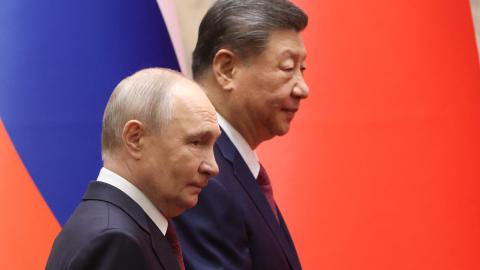
Russian President Vladimir Putin and Chinese President Xi Jinping enter the hall during a signing ceremony on May 20, 2026, in Beijing, China. (Getty Images)

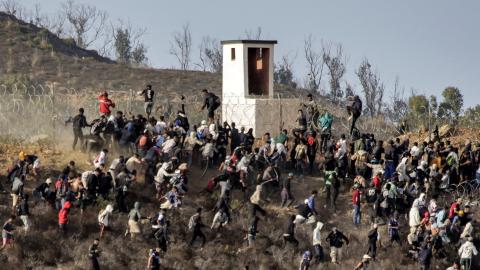
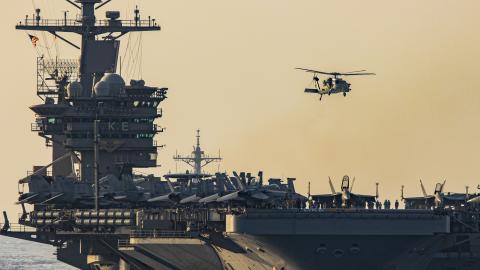
The conflict between the United States, Israel, and the Islamic Republic of Iran is not over, but it is already shaping a new future for the Middle East. From commercial flows and energy exports to shifting diplomacy, the region is adjusting to Operation Epic Fury in ways that will open up new diplomatic and economic relations, enable alternative trade routes, and shuffle political relationships. What might these changes look like, and how lasting will they be?
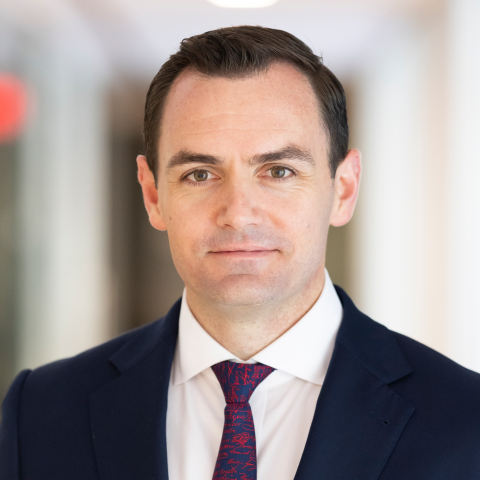
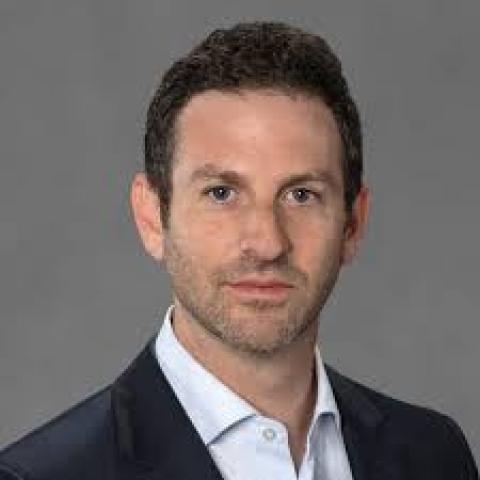
Join Hudson Institute Distinguished Fellow Mike Gallagher for a fireside chat with Jared Cohen, president of global affairs at Goldman Sachs and co-head of the Goldman Sachs Global Institute, for a discussion on the future of the Persian Gulf.
Listen on Spotify and Apple Podcasts.
Mike Gallagher:
All right. Good afternoon everyone. Welcome to the Hudson Institute and thank you for joining us for what will be a great conversation, a timely conversation on the future of the Gulf in the wake of Operation Epic Fury and the ongoing conflict with Iran.
Most people know me here as sort of the China Hawk, New Cold Warrior, but most people don’t know prior to that, I actually spent the first 15 years of my career as an Arabist. I fell in love with the Middle East when I was in college, the language, the region, the culture. And what I’m excited about today is to sort of bring these two things together because conversations like this remind us of how interconnected these regions are and how those of us who aspire to influence public policy need to have a global perspective and understand the dynamics between regions. On the one hand, you have an increasing level of cooperation between Tehran and Beijing, which I would argue has crystallized into something resembling an axis of chaos that also includes North Korea and Russia. The degree of China’s cooperation with Iran was on display last week as we seized the Touska in the Strait of Hormuz, which among other things was reportedly carrying dual use goods and potential weapons. The president appeared to confirm as much in his public comments on the incident.
And then on the other hand, you have every administration’s desire, every administration in recent history, let’s say, to pivot away from the Middle East, pivot towards the Pacific, either because of a limited amount of bandwidth or munitions or because of a sense that China poses an existential threat, which even Iran doesn’t pose an existential threat to our regions. Part of what’s made this pivot difficult and what has made recent attempts to pivot fail is that, despite good-intention policy, we’ve actually never dealt, in my opinion, fulsomely or conclusively with the elephant in the Middle East, which is the constant threat of a nuclear Iran. Well, one administration, this administration is attempting to deal with it now. It’s obviously a very complex problem, and that’s what brings us here today.
Making sense of all of this normally would require a panel of experts with different specialties and expertise. You need a military guy to talk about weapons and munitions and long-range precision fires. You need someone who understands capital markets, finance and energy. You need some token tech person to understand the future of warfare and the technological changes we’re seeing on the battlefield. But what we have here today is maybe the only human on planet earth who combines all of these superpowers into one.
Jared Cohen brings a unique in-depth expertise on geopolitics, on capital markets, on technology, on the future of warfare. And that is why we’ve invited him here today. He is a good friend of mine. He currently serves as the president of global affairs at Goldman Sachs, as well as the co-head of the Goldman Sachs Institute. Prior to joining Goldman, he served as the CEO of Jigsaw, he was Google’s first director of ideas. He also served as a member of the Secretary of State’s policy planning staff and is a close advisor to both Condoleezza Rice and Hillary Clinton. Not to mention he’s the author of six bestselling books, including my favorite, Life After Power: Seven Presidents and Their Search for Purpose, which I unintentionally gave to every member of Congress the week before I left Congress and people interpreted it as a reflection of me leaving power.
Jared Cohen:
Very good for book sales.
Mike Gallagher:
Yeah, exactly. At least 450 people bought this book. He’s a graduate of Stanford. He’s a Rhode scholar. He has a master’s degree from Oxford. Please join me in welcoming Jared Cohen.
Jared Cohen:
But you forgot the . . . We do need a politician with a PhD and some expertise on Harry Truman.
Mike Gallagher:
This is true. Yes. Yeah, Eisenhower, Truman, yes, but both. Obscure early Cold War history is my jam. Okay, you just came from the region. You’re constantly traveling to the Middle East. You commented to me as we walked up that this was the most interesting trip you’ve taken out of hundreds recently. Maybe just give us a flavor of the conversations you’ve had. How do our partners and allies feel about the current conflict? If you were sort of advising the Trump administration based on the recent trip, what would be the key takeaways?
Jared Cohen:
Yeah, just a few small things I could start off with.
Mike Gallagher:
Yeah, solve the Middle East for us.
Jared Cohen:
So, as you mentioned, I spent last week in Saudi Arabia, Qatar, and the UAE. I don’t know how many times I’ve been to the Middle East, at least 50 plus, going all the way back to right after 9/11. This was a unique trip just because I’ve watched it since after 9/11, the region has mostly taken steps forward. And the net benefit has been, you’ve seen the region shed a lot of its darker past and march in a more positive direction. I think if you saw after October 7, it revealed this interesting moment where the Middle East started to look like a tale of two countries. You had countries whose economic futures seemed divorced from whatever happened geopolitically in the region, and then you had countries that were besieged by Iran’s proxies, didn’t have a lot of economic wherewithal, who just couldn’t extricate themselves from the geopolitical baggage of the present and the past. And you could feel that when you went to the wealthy Gulf countries. All they’d ever wanted was their economic interest to drive the geopolitics and not the other way around. And they were really having their moment.
And then this happened, and it proved that it’s not quite a region yet that we can describe as a tale of two countries. And these wealthy Gulf countries have been kind of sucked back into the geopolitical messiness of the region. I’m still very long-term bullish on the region, but what was interesting about this particular moment is just how much it seemed to catch everybody by surprise.
The other thing that I think was sort of fascinating about this moment is I’ve always thought that GCC was a little bit of a solution in search of a problem. And there’s been more GCC coherence around Iran as a common enemy in this particular war than anything that I’ve seen before. I’m not prepared to say that the war has kind of made the GCC great again, but that’s really a function of the fact that different countries are in different situations. I think what I was struck by on this trip is no matter who I spoke to, regardless of which country, everybody kind of started with the same one or two observations.
And the first thing everyone said, again in different ways was, if you look at the current situation, you have to treat it as if Iran now believes it has kind of the economic equivalent of a nuclear weapon. It’s not that they didn’t realize they had this much leverage over the Strait of Hormuz, but even they could not have imagined that they had so much unilateral leverage over this narrow waterway in a way that could impact the rest of the world. And the reason they mentioned this is that they add on to that a corollary that given they view this as more valuable in some respects than a nuclear breakout in the traditional sense, they’re not going to give it up so easily.
And this matters because, at least in my kind of world, a lot of the focus right now is: will the Strait reopen? When will the Strait reopen? What’s the timeline on this? And I think it’s really important to understand that, absent the regime collapsing, which maybe it will surprise us, but I don’t think there’s a lot of evidence that the regime is on the precipice of collapse. I don’t think we’re going to go back to a situation where the Strait of Hormuz is open, but without the Iranians still possessing a meaningful amount of unilateral leverage. So yes, goods will at some point go through it again, and it might look normal on the surface, but now that they know they have this leverage, you can’t take them out of it.
And so, they may not like a situation three years from now where a country wants to sign the Abraham Accords; they may close the Strait of Hormuz. And it’s much easier for them to resume closure of the Strait of Hormuz down the horizon than it will be for the US to move a bunch of battle and naval capacity from the Indo-Pacific and the Caribbean back to the Persian Gulf. So, re-imposing a blockade of the blockade, I think, will be much more difficult.
The second thing that they all mentioned, it was pretty interesting, which is if you look at the current quagmire we’re in right now, both the US and Iran kind of have the same theory of change in this geopolitical game of chicken. The US, through this blockade, is in fact bringing the regime to its economic knees. There’s no doubt about that, but there’s a theory of change that will eventually cause the regime to crumble or cry uncle. The problem is the Iranians have the same thesis: that if they drag this out long enough, the US will cry uncle. And the problem is they can both be . . . Both those theories of change can be true, but it doesn’t change the fact that somebody’s going to swerve first.
And then the last thing that they all mentioned is as governments that have dealt with the Iranian regime in lots of different iterations, they make a very clear point that there is no monolithic regime in Iran right now. And the observation that they make is until the . . . I mean, they say it’s sort of de facto a military dictatorship under the Revolutionary Guard, but they’re lacking a despot at this stage. And until they reckon with the fact that Mojtaba Khamenei is at best physically incapacitated, at worst, something closer to unconscious or at least a cactus, until that gets reckoned with publicly, nobody’s going to stand up and assert themselves as being in charge. And until that’s the case, it’s very hard to negotiate against a regime that doesn’t in effect have anybody in charge.
Mike Gallagher:
I want to plant a flag there on the regime and what comes next, and come back to it. But before we do, we often talk about the Gulf countries or the wealthy Gulf countries, obviously these are different countries with often different interests. Did you pick up in your trip sort of material differences or messaging differences between Riyadh, Abu Dhabi, and Doha?
Jared Cohen:
So, this is one of the things I’ve spent a lot of time thinking about, particularly in my almost four years at Goldman is the nuanced differences between each of these countries. And when I say the wealthy Gulf countries, I’m talking about the countries that possess 40 percent of the $14.2 trillion of sovereign wealth in the world.
Mike Gallagher:
And this makes them geopolitical swing states to use a term you’ve used or . . .
Jared Cohen:
I think it’s part of what makes them geopolitical swing states. So, to kind of go back to the context here and why I’ve been so focused on the Gulf in the last several years is ever since COVID, or even if you go back to before COVID, you could always kind of count on the economic temperament of the US and China, calming the geopolitics down when it would heat up. It would get a little spicy on tech, but by and large, the economic interests of both countries that were intertwined with each other would temper things. And then after COVID, you just saw this paradigmatic shift where all of a sudden we went from the economic interests driving the geopolitics of the bilateral relationship between the US and China to just the other way around. And it became short-term domestic pressures on both sides, driving short-term geopolitical thinking at the expense of medium and long-term economic consequences.
And I think that led to this kind of zero-sum framework that we would apply to something that many people looked at as a second Cold War, but really possessed very few of the attributes of a Cold War. The US and the Soviet Union were never economically intertwined in the way that the US and China are. Yes, you have two countries, yes, they’re adversarial, but the nature of the economic entanglement, I think makes it something we’ve never seen before. We’ve never had a situation in modern history or really any part of history where America’s third-largest trading partner is also its most formidable adversary.
And because that’s not a Cold War context where one side is trying to defeat the other side’s system, you end up with this competitive coexistence or whatever you want to call it, but in that context, you have countries that have a differentiated part of the supply chain, which the Gulf countries do, an abundant amount of flexible capital that they can deploy as they see fit, which the Gulf countries do. They’re attractive for some kind of nearshoring, offshoring, and friendshoring, which some of them can be. And they’re led by individuals that have a global agenda independent of Washington and Beijing, which the Gulf countries certainly do. And they possess a number of the key ingredients necessary for the AI revolution, which the Gulf countries certainly do.
And that economic wherewithal allows them to engage in anomalous behavior where the economic interest can drive the geopolitics, while the kind of mother of all relationships, the US and China is kind of stuck in a geopolitical temperament. And it’s not like a non-aligned movement during the Cold War where these countries block together. You’re seeing these countries very much go it alone. And so to your question, Mike, about the Gulf countries and the nuanced differences, this is where you really started to see them break from each other and exhibit different paths.
And so, before this shift happened, let’s call it kind of before the mid-20-teens, when you had sort of younger leadership come into power in some of these countries, we would sort of treat the Middle East as this monolithic blob. And people in my industry, you’d go for a week and pop in one capital, ask for money, go to another capital, ask for money, go to another capital, and ask for money. And then that changed over time. And now the way that I sort of view it is you have to think of these countries kind of through the lens of people, and that’s a good way to understand their ambition. So Saudi Arabia is unique in that it has 35 million people, right? So, their entire future rests on being able to uplevel that human capital and transform it in a direction where you see more thought leadership, more entrepreneurship.
They know it’s not going to happen naturally, which is why they’re obsessed with bringing in a knowledge economy. A lot of the social reforms, a lot of the big kind of giga projects that you’ve seen in the news, that’s much more of a Saudi for Saudi thesis than it is turning Saudi Arabia into the French Riviera. If you look at Qatar and view that through the lens of people, they built all this modern infrastructure in advance of the World Cup. The World Cup was kind of the IPO for a modern country. And then they were sitting on all this infrastructure, but they only had 350,000 Qataris, and they didn’t want to copy what Dubai was doing. They didn’t want to copy what Abu Dhabi was doing. They couldn’t copy what Saudi was doing.
And so they developed this thesis that they needed to proliferate their number of national champions because what they saw was if they needed to bring another two to three million semi-permanent or permanent residents into the country over the next five years, if you want to work in aviation and you get a great job at Qatar Airways, you’ll move your whole family to Doha to get that great job at Qatar Airways. They just didn’t have enough of these types of companies. They had Qatar Airways, Qatar National Bank, Qatar Energy, et cetera. So that’s a big part of their thesis, taking these national champions that mostly connect different parts of the world and using that to entice high-quality human capital.
In the case of UAE, out of all the countries, they’re the only ones that were very reliant on outside human capital coming in. And that human capital was part of kind of a business contract of sorts where the UAE provides the stability, the regulatory environment, and the livelihood, and that human capital ensures that the UAE maintains its first mover advantage as the place that everybody wants to live. And what they were really after was kind of emerging as the world’s greatest investor.
And then Kuwait, even though they had the first sovereign wealth fund, 1953, they kind of fell behind. And then the Emir dissolved parliament a couple of years ago, and now they’ve been kind of busy redefining the definition of a Kuwaiti citizen, and it’s a more complicated story, but they want to do it with Kuwaiti.
So those are four very different narratives of how they’re thinking about it. And it’s very much a function of each of these countries’ history, between the relationship between the merchant families and the rulers. So, just to double click on the UAE as an example, in the UAE, the merchant families and the ruling families were kind of co-architects in the evolution of that country. It’s just that in modern times, the merchant family is the international business community. Whereas in Saudi Arabia, the merchant families were more subordinated to the state. In Qatar, they’re more co-opted by the state. And in Kuwait, they were a check and balance on the state. So that same trend line falls through all the way into modern history.
And so, if you look at how this is playing out in the context of the war, a lot of the anxiety you see and a lot of the agitation that you see from each of these countries, it is largely a function of how they view people. So, the Saudis, for instance, are very much focused right now on the fact that war or peace, rain or shine, COVID or no COVID, they still have millions of pilgrims coming into the country, keeping that economy going. But I think for the UAE and Qatar, it’s very challenging right now not being able to attract people into the region. I will tell you, having just been there, there’s no evidence that there’s a war going on on the ground.
People are going about their daily business. There are no ballistic missiles. There are no drones. There were before. It’s very safe in the airport. You won’t feel it, but the Iranian propaganda machine is so effective that they’ve really figured out how to spook everybody. So, your classic example of somebody can evacuate an entire building just by calling it a bomb threat. And they’re just doing that time and again every single day. And they’re getting right at the heart of what these countries care about, which is attracting people.
Mike Gallagher:
Well, through what mechanism? It’s just like online, how sophisticated is the propaganda?
Jared Cohen:
So, they understand perception versus reality. So, let’s take data centers as an example. You blow a small hole with a Shahed drone in a data center. It’s a big deal because I’m sure the people spending CapEx in Silicon Valley on data centers in the Middle East, among the things that made them worried about doing that, I doubt a Shahed drone was top of their list, but they do a very good job getting that imagery, getting it out to their Telegram channels, getting it picked up by the mainstream media. But also, because the early chapters of this war did see large numbers of ballistic missiles and drones being fired and hitting the airports and hitting . . . There was a period where it wasn’t safe. Now when they say we’re going to target banks, we’re going to target tech companies, we’re going to target . . . You sort of have to take them at their word. And in a game of international business meets risk aversion, nobody wants to lean into risk and be on the wrong side of that. And Iranians understand that very well.
Mike Gallagher:
Yeah. Does that people-centric lens to explain the behavior of the Gulf States, is it leading them to different desires or messages in terms of how the conflict ends, or is it all sort of, please deal with this. We don’t want missiles fired at us. It’d be nice not to have a nuclear-armed Iran.
Jared Cohen:
I think it’s changed over time. I’ve been talking to them, people in all four of those countries every day, almost since the war started. And I would say they’ve now largely arrived at a similar conclusion, even if tactically their timelines and patience and recourse look different. And if you look at where we’re at right now, Pakistan did something very interesting, not in this last negotiation where nobody showed up, but in the first one, they gave the US and the Iranians a totally different version of the ceasefire. And so the next day, the US was sitting around waiting for the Strait of Hormuz to reopen in exchange for the 10-day ceasefire in Lebanon, and the Iranians were sitting around waiting to collect a toll. Neither happened. But it worked, and you ended up with a sloppy peace as I would describe it, which means no more ballistic missiles, no more drones, at least for the time being, being fired at the Gulf countries, but nothing else is really resolved.
And I guess you have a shaky ceasefire in Lebanon, but Hezbollah is still firing at Israel, so it’s not really a ceasefire, even a shaky one. So, you have this sloppy peace. And what that means is you’re at this fork in the road in the negotiations. And there’s this assumption that I think is incorrect that people said some countries in the Gulf want to make sure that now this is started, you have to have the Iranian regime defeated, and they have a temperament to stay the course and see this through. I think there may have been parts of the war where that was true, but now that things are playing out the way that they are, and now that even though the regime is getting weaker by the day, there’s still no evidence, again, of it becoming fragile, meaning it’s not on the precipice of collapse, I think this fork in the road gives you two paths.
One, which I think is the bias of the GCC countries, which is to take the sloppy peace and convert it into an enduring ceasefire. Why? Because that buys you time to be able to diversify if you can, catch your breath if you can, and figure out what it looks like to coexist with an Iranian regime that’s not going anywhere. I think that’s the burden hand. Or do you try to address all the fundamental root causes of this war and all the things that, as you mentioned in your opening remarks have not been dealt with vis-a-vis the regime. And I think the US is kind of going more for the latter right now. The Gulf countries are biasing towards the former. . . If I had to guess where this ends up, I can tell you where I think it’s going. The timeline’s a little harder to predict, but where I think this is going is absent US boots on the ground, which I don’t think we’re going to do. Absent incremental progress, which I don’t think we’re going to get.
I think you end up with a strong ceasefire, and you end up with a sloppy peace instead of a just sloppy peace and no strong ceasefire. What do I mean by a sloppy peace? Basically, a bunch of half-solutions on all these issues. So, the Strait of Hormuz is opened on the surface. Things are getting through, but the Iranians, as I mentioned before, maintain that leverage to be able to close it at any time. And some of the Arab countries obfuscate that by offering multilateral oversight over the Strait, which is what it is right now anyway, with Oman on one side and Iran on the other side.
You end up with a half-solution on ballistic missiles. The Iranians probably have one to 2,000 ballistic missiles. They can only fire 20 to 25 in any given day. They’re probably going to keep those one to 2,000 and you get some loose agreement that they don’t fire more of them. Okay, fine. A half solution on Lebanon, which you have right now, half a solution on highly enriched uranium, which means from a physics perspective, you take the existing uranium that Trump calls nuclear dust in Isfahan, and you put it in some state that’s harder to navigate, but then you still have the suspected highly enriched uranium at Parchin Mountain and other places, and I think tie a bow on some kind of resolution there. And the list goes on.
The reason that’s, I think, appealing to the Gulf countries is I think some of them feel like in the next couple of years, particularly Saudi Arabia and UAE, just buying a little bit of time is enough for them to diversify. So if you take the UAE as an example, the UAE got attacked more than any other country. They took more missiles than the aggregate of all of the GCC countries, and they certainly got hit more than Israel, even, but they’re only 50 percent reliant on the Strait of Hormuz. So what they explained to me is if you can’t take Iran out of the Strait of Hormuz, you’ll take the Strait of Hormuz out of the United Arab Emirates. What that means is you spend the next two and a half to three years finding a way to take it from 50 percent to 0 percent and treating the Strait of Hormuz as a commercial afterthought. And they can do that.
They have pipes into Oman. They’ll do parallel piping. The value of a strong ceasefire is the pipes then don’t get hit by Shahed drones or missiles. And they’ll build up the port in Fujairah, which by the way, historically is what always made sense anyway. The only reason you had the port built up in Dubai in the first place is you had Sheikh Rashid in the 1950s, who had this crazy idea of being a visionary before any kind of wealth to dig out the creek, but it always made sense to do it in Fujairah. So, I don’t think that’s as controversial.
And then the Saudis, for the Saudis, it’s going to be an interesting story. They have history on their side. They’ve been through different trials and tribulations before. So, when they built the East-West pipeline during the Iran-Iraq war, people thought they were crazy, including in Saudi Arabia, and it ended up making them more resilient. When the 12-day war happened, Prince Abdulaziz, who chairs OPEC and as the energy minister made a decision that they were going to rapidly accelerate the process of trying to diversify and do extra-territorial storage of their crude outside of the Red Sea, and they’re really glad they did that.
What you’ll see the Saudis do is more pipelines, more investment in large infrastructure, railway to move things over to the Red Sea. And a big thing that I came away with from this trip that I was skeptical of before, I was very worried about a double choke point in the Red Sea and in the Strait of Hormuz, because the logic was for the last two years, the Houthis had been attacking the Red Sea, and the Strait of Hormuz was always the elusive thing. And so why would they just stop doing the thing that had a lower barrier of entry? I left my trip convinced that you’re not going to see a double choke point. I think a lot of it has to do with the fact that the STC has evaporated and fled to Abu Dhabi. And so you have a more unified hybrid of the official Yemeni government and what was the opposition.
The Saudis are now paying the salaries of 200,000 soldiers in Yemen, which range from qat-chewing nomads to special forces and everything in between. And there’s some dialogue, and there’s some dialogue now. But I think the bigger issue with the Houthis is because there’s nobody in charge in Iran and all the people were killed that they dealt with, they don’t have that dialogue. So they don’t know that they can get pummeled by the coalition and be guaranteed that they get a resupply.
And so, I think what you’re going to see Saudi do is focus a lot on changing the way they think about storage. So right now, they store about 45 million barrels. They’ll take that up to 450 million barrels. And they’ll use some of that for commercial purposes, and they’ll use some of it as strategic barrel reserve. But the combination of storage, infrastructure build out, diversifying to the Red Sea, there’s always been this debate between the Vision 2030 crowd and the invest at home in more infrastructure type projects. The only difference now is that debate is settled, right? So, they’re doing a bunch of things that huge portions of the Saudi royal family wanted to do anyway. It’s just that the crisis has accelerated that path.
Mike Gallagher:
Okay. But all of those outcomes and what the Gulf States decided to do depend in part on the nature of the regime that emerges in Iran. We planted a flag there and now we’re coming back to it. Help us structure in a simple way that the possible outcomes, right? As I see it, there’s military dictatorship with or without the facade of a grievously injured supreme leader. They’re sort of new-ish. . . The Venezuela outcome where new leader agrees to play nice with the US for a period of time. And then there’s like the Arab spring. . . That was not Arab, but there’s like Middle Eastern spring.
Jared Cohen:
It is 3 percent Arab.
Mike Gallagher:
Yeah, exactly. There you go. Yeah. Hope, like democracy and yada, yada, yada. Am I missing a possible general direction outcome? How would you rate the likelihood of these three? What should we be looking for along the way?
Jared Cohen:
So, I lived in Iran for part of 2004 and 2005. And the thing that I was struck by then, I see unchanged since I was living there all the way up to the present, which is the Iranian people—
Mike Gallagher:
You were studying there, or what brought you there?
Jared Cohen:
Well, I had told the Iranian embassy in London that I wanted . . . I was an archaeology student at Oxford, and I wanted to go study the glory of Persepolis. And then they gave me a visa to go to Iran and I ended up studying the opposition. They eventually kicked me out in 2005, never to be seen or heard from again.
Mike Gallagher:
Did you leave for bringing a brush or something to dust?
Jared Cohen:
I thought about it. But it was an interesting time to be there because you had this demographic boom where the country was largely under the age of 30. I’m amazed by how little has changed since then, which is that Iranians still hate their regime. The regime probably doesn’t have more than 15 percent support of that. Most of it is kleptocratic, the IRGC ecosystem, and a small portion is religious zealotry. So Iranian people have always been able to tell you what they don’t want, what kind of regime they do want. They’ve never been able to tell you the name of somebody inside the country whom they want to lead them. The regime has very effectively crushed the opposition generation after generation after generation.
Every time you have these protests from 1999 to 2009, all the way up to right before this war, they never produce new leaders. They never produce a name. And if you compare and contrast Russia and Iran, it’s very interesting. Part of the reason I think Putin ultimately made the decision to really take Alexei Navalny’s life is I think he always had this view that unless you had Caucasian Russians between the ages of 15 and 35 protesting in Moscow and St. Petersburg, he wasn’t worried about it. And that was the exact demographic that rallied around Navalny, and I think he didn’t understand it and it totally freaked him out.
Iran has never had any of that. And during the Green Revolution in 2009, the best they could come up with was Mousavi, who had been Ali Khamenei’s prime minister when he was president of the Islamic Republic in the 1980s. So, they lack an opposition. The second issue you have in Iran is just, it’s the complexity of how that regime is architected. You have the political leadership, you have the traditional military leadership, you have the IRGC leadership, you have the Basij, you have the Bazaari class, which is my favorite way to understand the Bazaari class.
You ever go to a developing country, and you go to these busy markets, people just don’t leave you alone trying to hawk you and sell you stuff. You go to an Iranian market, and you couldn’t pay somebody to sell you something. It’s like nice stuff too. I remember going to this chess store in Isfahan. I wanted to buy a chess set. I could not get the guy to pay attention to me. And I was asking this friend of mine who I was with, and he was explaining to me that in all these bazaars, it’s all a front, and the person selling the chess set is really like the importer exporter for some part of the Revolutionary Guards.
And so, it’s all like a big facade. So, you have this very multifaceted, multi-layered regime that’s hard to understand. And this has been my problem with how the US has negotiated with Iran in the past, which is we’ve always acted as if the president and the foreign minister is like an equal counterpart. So when the Secretary of State is negotiating with the Iranian foreign minister, that’s like the Secretary of State in the US negotiating with the assistant deputy press secretary for the State Department.
So that’s another problem, is that they’ve used their superfluous structure to their advantage. Another is they’ve just been willing to kill their own people en masse over and over and over again, and every generation forgets what happened to the previous generation, they go to the streets, the regime clobbers them, and then they don’t protest again until the next generation decides to. It’s a tragic situation on repeat. Now, the issue you have now is when the war started and the US did a decapitating strike on multiple layers of each of those categories of leadership, they suspended the centralized regime as we know it, and they set in motion this decentralized war machine.
They literally divided . . . the way it was described to me, they literally divided up the country into grids, armed each of those grids, they had their pre-approved instructions. They had autonomy and decision-making. And for the first two-thirds of this war, that decentralized war machine was basically doing everything. And there was no political leadership, centralized leadership that could stop it in its tracks. And then you ended up with the negotiations in Pakistan, which created a 48 to 72-hour pause that I wouldn’t say reassembled the centralized leadership, but revealed some of the factions in that centralized leadership. So, you have, on the one hand, Ahmad Vahidi, who runs the Revolutionary Guards, you have Esmail Qaani, who runs the Quds forces, you have Mohammad Bagher Ghalibaf, who’s the speaker of parliament. I think we make too much of any one of their influence. I think that any . . . You also have a bunch of people we’ve never heard of before who are beneath the surface.
The reality is we don’t know who’s in charge of the regime. We also know that because of the decentralized nature of how they’re fighting, they’re not operating with the same information and clarity about how much economic, military, and infrastructure damage has been done to their country. And it’s convenient for them. If you’re playing for time, which they’re doing . . . And I suspect, by the way, that they’re going to try to get this all the way through the midterms in some form. We know that after the 12 Day War, part of the reason the Iranians didn’t respond is that they thought that they would get a different outcome with the midterm elections and then end up with a situation that was more favorable.
So this is my problem with a lot of the projections around oil prices, for instance. You look at base cases and worst cases and benign cases, and they all look at the straight reopening in June, what if it reopens in July? None of them account for a situation where the Iranians try to drag this through the midterms. And none of it takes into account a situation where they do a kabuki dance where they open it and then close it again, open it, then close it again. I think what they’re going to want to do is get this US blockade at some point off their back and sailing off to other parts and other geopolitical theaters. But again, as I said before, they can close it again right away. So, all these things make it impossible to negotiate with them. All these things make it very difficult for them to negotiate with themselves. The Pakistanis told me that they spent more time negotiating between the Iranians than they did between the Iranians and the Americans, which doesn’t surprise me since they sent 20 decision makers among 60, and the US as one decision maker.
Mike Gallagher:
Well, okay. So that one decision maker in the administration obviously does not want Iran to get a nuclear weapon, nor does the Trump administration want Iran to have an economic nuclear weapon, as you described it earlier. Are there any tools we have in our kit that we are not using, or we are not making full use of right now, diplomatic, economic, otherwise? I mean, it seems like we’re using all of our military options at this point.
Jared Cohen:
I mean, it feels like we’re using all of our military options. It feels like we’re using all of our economic options. Multilaterally, there’s four countries that have . . . So, let’s play out the diplomatic piece a little bit. There’s four countries that have leverage over Iran. China, Pakistan, Russia, and India. I think we could probably do more to lean on India, but India’s right now largely acting out of its own economic interest. Russia’s busy in Ukraine for all the reasons this group understands.
Pakistan’s trying to negotiate, but let’s be clear, they’re not a neutral arbiter here. They have their 2025 mutual defense pact with the Saudis. Their country is 10 to 15 percent Shia, so they’re entangled with the Iranians. They have 60 to $75 billion of infrastructure commitments from the Chinese. They’re always trying to court the United States. So, they’re entangled and conflicted all over the place. So then you get to China, and the president’s supposed to go to China in . . . I’ve lost track of when the trip is, but it’s supposed to be within single-digit weeks.
Mike Gallagher:
It’s asymptotic. It’s always approaching.
Jared Cohen:
Always approaching, and maybe one approach. But what’s interesting with China, they seem to have bought themselves about 110 days based on purchases of strategic barrel reserves. So if I’m trying to estimate how long the Strait of Hormuz can on the surface stay closed, again, with the caveat that I don’t think it’s ever going to reopen the way that it did before, now that the Iranians know they have this leverage.
Then a good way to think about this is right now China’s sitting back, they’re not being that vocal. But as it gets closer to that 110 days, you could see China getting a little more vocal. I would watch . . . I think if you’re China, it’s in your interest to have the President of the United States go to Beijing and have to engage on figuring out a way to have China play a helpful role in calming this down, because if that’s the case, then you have less leverage on tariffs and trade and so forth.
And my observation about how China has played the Trump administration from a strategic perspective, and you may have a different view on this, I see a strategy where they’re playing for time. I see them playing for time on trade. I see them playing for time on this war. So, I’m always looking for evidence that they’re no longer playing for time, but I think China probably has the most leverage here over Iran. And what’s interesting is they’re willing to take a hit on this.
Before the war, they were getting about 1.35 to 1.65 million barrels of oil a day. That was roughly 13 percent of all their seaborne crude imports. And Iran was sending 90 percent of its seaborne exports to China. In aggregate of all of China’s energy needs, when you think about their alternative energy resources, their coal, their gas, et cetera, it’s not that much. It’s probably two, 3 percent at most, but it’s still meaningful, especially on top of Venezuela.
But I think there’s another quagmire here, which has to do with the blockade, because everyone was surprised by the blockade. I think the Gulf countries were surprised, I think China was surprised, I think people in this country were surprised. For a couple of reasons. One, it would’ve made a lot of sense to do it at the beginning.
So, I think even proponents of the blockade realized that, given its working in terms of the economic damage to Iran, might have been better to do it earlier on. But there’s a second-order effect of this that has to do with Taiwan, which is if you look at . . . I think you and I may disagree on this, but hear me out. I’ve always thought Taiwan is more of a math problem than it is a military problem. You have 93 percent of high-end chips come from Taiwan. TSMC’s roughly 8 percent to 13 percent of daily energy consumption, and Taiwan imports 98 percent of its energy resources.
So, it’s not that I don’t think the CCP is serious or credible in their ominous threat to one day take or reunify Taiwan. I just think that they probably assume they can do it by blockading energy resources rather than amphibious landing or an aerosol.
We can debate that another time, but the point is they did a simulation of an energy blockade December 29 and 30, and here you have a situation where the world’s largest economy and largest military has set a precedent of a blockade and set a precedent of a blockade in a way that directly gets in the way of your ability to import energy from Iran. And I think one of the challenges of this framework of a competitive coexistence between the US and China is the slippery slope of precedent-setting gets very, very dangerous.
And having studied the markets, there are two things the market is really bad at. The market is very bad at managing multiple cascading conflicts all happening at once. So, with so much naval power concentrated in the Persian Gulf, with so much focus on the Persian Gulf, if something was to blow up in the Indo-Pacific or in the Western Hemisphere or somewhere else, I’m not sure the market would know what to do with it. But the second thing the market struggles with is cumulative memory. Whenever the market gets microdosed with geopolitics, it reacts in the moment and then waits for the next microdose and then forgets about everything that happened before. So you can imagine three, four years from now, the war is done, the blockade’s done, nobody remembers, and all of a sudden we’re focused on Taiwan again. The market won’t remember the slippery slope of precedent setting, but I think the CCP will.
Mike Gallagher:
Okay, two questions, and then I’m going to make a game time decision as to whether to do audience questions, then close with the famous lightning round, or lightning round then audience questions. Okay, so this may seem like a bit of a detour, but I view you as a geopolitical person.
You like history, you collect obscure presidential memorabilia, you write books about presidential history, and yet you’ve gone into the tech world, become fluent and highly successful. Now you’ve gone into the finance world and become fluent and highly successful.
Do you think our national security community suffers from a disconnect between the financial community? Is there a way to bridge that gap? In the way that your analysis seems to have been dramatically improved by being part of all these worlds? It’s rare for someone in the pure DC think tank universe to get exposure to Wall Street and things like that.
Jared Cohen:
Well, I think these three spheres are not mutually exclusive. I think that’s . . . And what’s interesting is whenever I talk to students at universities, they really understand this. So, they’re inventing majors and honors theses that actually certainly blend the geopolitical and the tech world.
I think the next step is you are going to start seeing at the university level a student driven intellectual movement to merge markets, technology, and geopolitics. I think we’re not quite there yet. There’s always a little bit of a lag on this. It’s a total function of randomness that I ended up in being a 3G, government, Google, and Goldman.
And it’s literally just a function of I’m like a curiosity chaser, and I like platforms that allowed me to chase my curiosity. So, when I was really interested in geopolitics, the State Department was the biggest platform in the world to do that.
As I got more interested in technology, that platform wasn’t big enough to scratch that itch, so I went to Google. And as I got more interested in the impact of markets, Google was not actually that big of a platform, and Goldman’s the biggest platform for all three of those.
So there’s a randomness to it, not really a . . . I’d love to say it was like a premeditated science and a stroke of intellectual navigation, but far more random. But I do think that for the same way that today, and I think this is really a phenomenal shift that everyone in this room certainly understands, which is we used to treat technology as this thing over here, and geopolitics is this thing over here. That really doesn’t happen anymore.
Mike Gallagher:
That’s right.
Jared Cohen:
I mean, it’s one of these things. I think it’s a remarkable piece of evidence for how the geopolitical community has evolved, and by the way, also how the technology people have evolved. The same way that there’s a post 9/11 generation that is you and me, and it got us thinking about geopolitics in a certain way. I think that there’s a post-technology shock generation that I see with founders in their 20s and early 30s that woke up and realized that there was a whole alternative system pushing for a totally different vision of technology, and they look at the competition between the US and China as existential, whereas the generation that came before them was busy boycotting defense contracts and things like that. So, I think that’s part of the evolution. But it hasn’t happened yet on the market side.
I don’t know what the catalyst is going to be, but I think there’s a little bit of a burden of responsibility in all three areas. I think we at Goldman Sachs want to make sure that we’re well-positioned to have an opinion about things that can contribute to understanding the direction of travel and geopolitics we do.
I think a good example of this, Mike, was when you were in Congress, it was before people were talking about critical minerals and rare earths outside of niche circles. And we looked at . . . It wasn’t obvious to us that we had expertise on this, but we had a commodities business, and we traded all 50 critical minerals and 17 rare earth elements. So, we understood how they moved. We understood how they traded. We understood how that market looked.
We did business on both sides of the geopolitical tension, and we covered mining, refining, and processing companies on the banking side in both China and ex-China, so we understood the value chain.
We certainly covered this industry in the US, and so we understood the gaps. Just by virtue of putting all these pieces together, we were able to tell a story of what was happening with critical minerals and rare earth elements that I think we could actually only tell in a credible way by virtue of having studied the market and participated in the market.
So, I think there’s going to be more examples like this. I would love to see, for instance, healthcare companies do this around pharmaceuticals. I still don’t think we really properly understand the pharmaceutical ecosystem in a way that blends markets, technology, and geopolitics.
Mike Gallagher:
Yeah. And to think, if you just stuck with the initial lie that got you into Iran, instead of a 3G you could have just been a swashbuckling archeologist going around the world in search of adventures.
Jared Cohen:
I mean, I still can.
Mike Gallagher:
Yeah, that’s true. There’s still time. That could be your fourth platform. Okay, we’re going to do audience questions for eight minutes. I have to preserve five minutes for the lightning round. That is most essential. Yes, sir.
Jared Cohen:
And if you could just introduce yourself too, that’d be great.
Audience Member Ken Moryiasu:
Hi, Ken Moryiasu from the Hudson Institute. You said the most interesting line I thought that the UAE has concluded that if you can’t take Iran out of the Strait of Hormuz, you take the Hormuz out of the UAE. Does this apply for China? Do you think this applies to China? Do you think that China is trying to move the Strait of Hormuz out of China? If so, where will China get its energy?
Jared Cohen:
No, I don’t think they are and I don’t think they have any interest in it. I think if anything, they’re going to see Gulf Arab countries lean into their transactional relationship with China to try to take market share from Iran. I mean, that’s the pragmatic thing to do. It’s very interesting. For every one of these countries, China is their largest trading partner.
That’s not going to change anytime soon, nor do I think they’re looking for that to change, but it’s a different type of partnership. What they always say is, "Look, with China, it’s transactional with the U.S, it’s strategic." And their view is for all the reasons that make them geopolitical swing states, there’s room for both. The technology story has been the one exception to this. I think that these Gulf countries have found that they can’t really swing in both directions when it comes to technology.
They have to choose sides. This is why it was so disheartening for them when the Biden administration at the 11th hour passed the Diffusion Rule, because their feeling was they burned the bridge with the Chinese because the US asked them to. And then they sat on the US side of the bridge and were denied a visa upon entry to continue my bridge metaphor. But when it comes to energy, they get to call a lot of the shots. And I think it’s in their interest to keep selling energy to China and I think you should assume that they will. I just think you should assume that they’ll try to pick off market share from Iran and offer something more reliable.
Mike Gallagher:
Other questions right there and then we’ll go . . . Yeah. Sure. And then we’ll go there and then . . .
Audience Member Ali:
Thank you. My name is Ali. I’m with the American Institute for Economic Research. My question is on the coming Trump’s visit to China, and what do you think, what are the Americas versus China’s leverage over this Middle East crisis, but also China’s long-term strategy of macho politics. What do you think of that? Thank you.
Jared Cohen:
So, what their strategy is vis-à-vis the US is kind of a function of the current state of this geopolitical game of blockade chicken. By the time that meeting happens, if it happens between President Trump and Xi Jinping. As I said at the beginning, both countries have a theory of change that they’re causing enough economic pain to the other to get them to cry uncle. They both are causing economic pain. I think the US blockade is certainly causing more economic pain in Iran than kind of the prospect of jet fuel, choke points, and so forth.
But we have a different political system, and that political system impacts our timeline in a very different way. And so, it’s still unclear to me who’s going to swerve first. I think that we, in the case of Iran, I think we underestimate sometimes just how little they care about their people, their economy, their regime.
They have a very inelastic definition of survival. And as a result, that means that they. . . The analogy I like to use is every time we set a deadline, that deadline is like, to use a soccer analogy, the end of regulation play, they want to get it into injury time, and then want the whistle to go off, and they’re perfectly happy with the tie because they feel like by not losing, they end up winning. And so, it’s hard for me to know what leverage the US is going to have over China. China certainly has plenty of domestic vulnerabilities, economically speaking. They have demographic challenges. They still haven’t been able to solve the problem of how much members of the Chinese population save as a percentage. They haven’t figured out the property sector. They don’t want to push stimulus out to the provinces because they don’t totally trust the governors.
That being said, we’re seeing this in the equity markets. The Chinese economy is doing very well and bouncing back, I think much more than many anticipated, but these things can change quite quickly. I think the challenge for the US and the vulnerability for the US is twofold. One, the US is showing up in Beijing with China still having some leverage post-Liberation Day, with supply chains that they just own.
Refining and processing of critical minerals and rare earths, pharmaceuticals, energetics, legacy chips, handful of others. And I think they feel like time is on their side. And the second is that if this war is stuck in a maritime equivalent of trench warfare, I think they would view that as a second point of leverage. But it’s very hard to know who’s going to have more leverage over the other until we get some resolution on how the war plays out between now and that meeting. If it is the exact status quo, I think it gives the Chinese a lot more leverage.
Mike Gallagher:
Here we go here and then you had a question. Okay. And then I may have to cut it off of that. The lightning round is critical.
Audience Member Prav:
Yes. Hello. My name is Prav. So, my question is this month there have been a lot of oil leaks and oil exclusion. There was one in Jaipur, HPCL. There was one in Australia, Geelong, few have been in Russia. I think four of them. There was one in Romania and also one in Texas as well. So all these seemed, one too many for one month. I mean, according to your experience, do you think this is a coincidence or do you think it’s done on purpose? Could you shed some light?
Jared Cohen:
The armchair psychology of oil leakage is, I will confess, outside of my area of expertise. So it’s hard for me to know if it’s a coincidence or not. To be honest with you, I’ve not tracked it or followed it. I’m much better equipped to talk about the coincidence or convenient coincidence of submarine cables and subsea cables accidentally getting tripped or having anchors dragged 100 miles to sever them, but oil leakage is not as much, not my area.
Mike Gallagher:
Right. Yep.
Audience Member Stephen Snyder:
Stephen Snyder, independent researcher. What will happen with NATO after the recent disputes between the EU leadership and Trump over the lack of support, as Trump alleges that the EU has given in to the US operations in Iran?
Jared Cohen:
I mean, my view on NATO is we’re kind of at a point where you’re going to continue to have noise over NATO, but I think it’s kind of status quo. I think the demanded percentage of GDP that they spend on defense is going to probably continue to climb higher. You’re going to continue to see some transatlantic friction over it, but I’m not sure I see any material change in the works in terms of the posture of the US. I don’t think it’d be in the U.S’s interest. And I think that’s all you’ll see is just kind of a little bit more noise, but I think the status quo is probably what you’ll continue to see.
Mike Gallagher:
Okay. We have to do the lightning round. I’m sorry. If you have questions, you can send them to me, and I’ll ensure Jared answers them. Okay. Here we go. The lightning round.
Jared Cohen:
I’m ready.
Mike Gallagher:
Life before power or after power? You wrote the book on it.
Jared Cohen:
I think life after power can be more meaningful based on the history because you end up pursuing things based on your principles without it being corrupted by the pursuit of accolade.
Mike Gallagher:
Was there a subject in the book that you almost tackled that just hit the cutting room floor for space reasons?
Jared Cohen:
In Life After Power?
Mike Gallagher:
Yeah.
Jared Cohen:
Or in any of your books? I mean, I feel like I could have gone a little more into Gerald Ford as a kind of different sort of accidental president. I wrote a book on the eight times in history a US president has died in office called Accidental Presidents, and I focused on the ones that died because that kind of denied the voters of their choice. Whereas I didn’t really consider. . . I know people consider Ford an accidental president. I don’t consider him an accidental president. He was plucked from Michigan’s 5th District by Richard Nixon not elected to the vice presidency. And then when Nixon resigned, not elected to the presidency, I’m not sure that makes him an accidental president in the same way as the bullet of an assassin.
Mike Gallagher:
Interesting.
Jared Cohen:
Or a sort of natural causes taking the life of a president. But enough people thought it did that I would’ve gone back and maybe done a little more on him.
Mike Gallagher:
Most undervalued geopolitical swing state.
Jared Cohen:
I mean, I historically would’ve said Australia, but I feel like we show them a lot of love now.
Mike Gallagher:
Yeah.
Jared Cohen:
I think South Korea is going to be . . . South Korea is much more complicated than Japan, but just given the technological role they play, the role they play on weapons, and how much they can kind of be difficult from an alignment perspective, there is a part of me that thinks we need to hug them a little closer.
Mike Gallagher:
New York or DC?
Jared Cohen:
New York. Sorry guys.
Mike Gallagher:
And when you’re forced to leave New York because of Mamdani’s regime, where are you going to move?
Jared Cohen:
I love New York. I’m never leaving New York.
Mike Gallagher:
If you had to leave New York, you were forced.
Jared Cohen:
I’d go to my weekend house in Westport.
Mike Gallagher:
Okay. All right. I’ll take it. Two of your former or current bosses are noted musicians. Condi Rice is a concert-level pianist, and David Solomon is a longtime DJ. Which of them would you rather have play at your birthday party?
Jared Cohen:
Time and place for piano, time and place for DJ.
Mike Gallagher:
So, Condi does like the pre-party cocktails and then late-night DJ Solomon’s on the ones in the twos.
Jared Cohen:
Your words, not mine.
Mike Gallagher:
Okay. Do you have a favorite . . . I am obsessed with half-baked ideas. These are things that you secretly think are a good idea, but they’re not ready for prime time. For example, I pioneered the annexation of Greenland, and that became a real idea. I also pioneered pull-up bars at airports. That became a real idea. I have a habit of speaking these into existence. Do you have a good half-baked idea that you’d want to share with us here today?
Jared Cohen:
Well, I am trying to go to every country in the world.
Mike Gallagher:
Interesting.
Jared Cohen:
By the time I’m 50. Yeah.
Mike Gallagher:
Well, how close are you?
Jared Cohen:
I’m pretty close. I’m 72 percent of the world.
Mike Gallagher:
Okay. Well, there’s probably one that’s really difficult.
Jared Cohen:
I’ve done all the hard ones. You’d be surprised if I told you, I still have to go to Jamaica. I still have to go to St. Lucia. I still have to go to Saint Vincent and the Grenadines.
Mike Gallagher:
You should say, Jamaica and St. Lucia.
Jared Cohen:
I’m saving Greece for last, and I have a very specific reason for this. I’m going to do this by the time I’m 50. So I have a little over five years. And part of the reason I’m saving Greece for last, people can’t believe I haven’t been to Greece, but I’ve been actively avoiding it because if my 195th country is the Comoros, nobody’s coming to my birthday party. If my 195th country is Greece, I can convince friends to come to my birthday party.
Mike Gallagher:
I love this. Listen, happy to come for that, if I’m invited.
Jared Cohen:
No, you’re invited. You’ll get an invite.
Mike Gallagher:
Okay. Last question. You have three children, beautiful children, very polite, very fun. The world is changing rapidly. It does seem like the game has changed since you and I were in school a little bit, the pace of technological change. What advice are you giving them that I can steal and give to my four children?
Jared Cohen:
I think the main thing that I try to nurture with my . . . I have three daughters. They’re 12, 9, and 6. The main piece of advice that I try to nurture in them is trust their curiosity, double down on their curiosity, and resist all the forces that tell them they should do something else.
Mike Gallagher:
I love that.
Jared Cohen:
And curiosity always wins.
Mike Gallagher:
Curiosity always wins. Ladies and gentlemen, the great Jared Cohen. Thank you.
Jared Cohen:
Thanks.
Join Hudson Institute for a conversation with US Ambassador to the EU Andrew Puzder and Senior Fellow Harold Furchtgott-Roth on America’s interests in reducing the harmful effects of CS3D and CSRD.
Join Hudson Institute for a conversation with Lazarus, founder of Lazarus Consulting and former speechwriter to the Commander of the US Southern Command.
Join Hudson Institute for a conversation with the author on the eve of the book’s release. Babb, Director of The Promised Land Project at the Macdonald-Laurier Institute and an associate fellow at the Institute for National Security Studies in Tel Aviv, will discuss the book’s central argument and the practical ways Jews and non-Jews alike can embrace Zionist ideas in their lives.
Join Hudson Institute Senior Fellow Ludovic Hood for a panel with David Wurmser of the Jerusalem Center for Security and Foreign Affairs; David Makovsky of the Washington Institute; and Senior Fellow and Director of the Center for Peace and Security in the Middle East, Michael Doran, as they discuss the state of the race and potential paths forward for the United States–Israel relationship.