Caption
Migrants storm a barbed-wire fence as they attempt to cross the land border with Spain's African enclave of Ceuta near Fnideq in northern Morocco on September 15, 2024. (Getty Images)



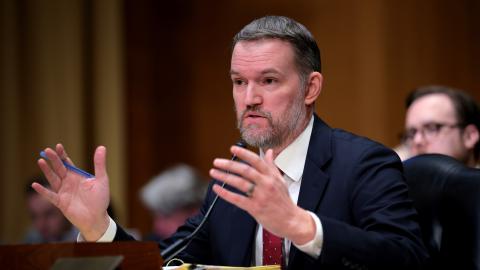

“The year 2025 will be remembered as the year of the tariff,” wrote Ambassador Jamieson Greer, the United States trade representative, in a Financial Times op-ed at the end of last year.
In its first year back in office, the Trump administration wielded tariffs to strike new trade deals at negotiating tables around the world. Representatives from the White House made stops in Geneva, Madrid, London, Kuala Lumpur, and Busan—and that was just for talks with the People’s Republic of China.
The US also sought new terms with numerous friendly nations, culminating in the Turnberry Agreement between the United States and the European Union and including framework deals with key allies Japan, the United Kingdom, and the Republic of Korea.
In the new year, trade remains at or near the top of the White House’s international agenda, from ongoing regulatory disputes with Europe to the impending review of the United States–Mexico–Canada Agreement (USMCA) and negotiations between Presidents Donald Trump and Xi Jinping. The Supreme Court’s ruling on the use of the International Emergency Economic Powers Act has injected yet another complicating dynamic into trade discussions. If 2025 was the year of the tariff, what will 2026 be known as?
The National Security Strategy argues that rebalancing global trade relationships also means “consolidating our alliance system into an economic group.” How does the administration intend to pursue this objective? Please join Ambassador Greer for a fireside chat with Senior Fellow Peter Rough on what’s next for US trade policy.
Listen on Spotify and Apple Podcasts.
John Walters:
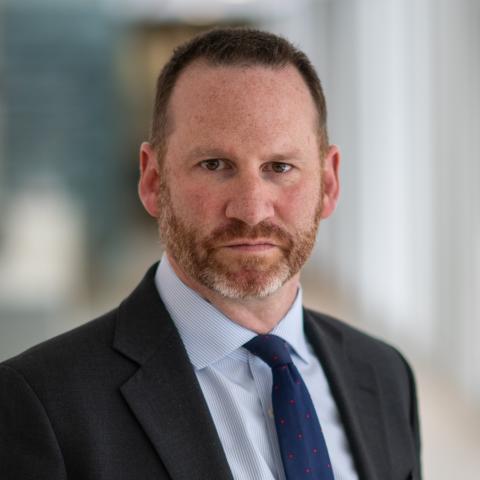
Good morning. Welcome to the Betsy and Wally Stern Policy Center here at Hudson Institute. I’m John Walters, president of Hudson. Today, it is my honor and pleasure to welcome United States Trade Representative Ambassador Jamieson Greer to Hudson.
No one disputes that President Trump has dramatically reshaped US trade policy during his first turn back in office. Ambassador Greer has played a central role in creating and executing the Trump trade agenda. He took up his role at USTR after serving as chief of staff to Ambassador Robert Lighthizer during Trump’s first term. In addition to his government service now, Ambassador Greer was a partner in a Washington law firm where he practiced and focused on international trade and national security issues. He also served in the United States Air Force Judge Advocate Corps earlier in his career, which included deployment in Iraq. On behalf of all of us, let me thank Ambassador Greer for his service to our country.
We are honored to have him join us for today’s fireside chat with Hudson Senior Fellow Peter Rough, who also directs our Center for Europe and Eurasia. Now, please join me again in welcoming Ambassador Greer and Peter Rough for this important conversation.
Peter Rough:
Thank you, John, and welcome to all of you. Welcome to the senior official who is commonly referred to in Washington as the nicest man in town, Ambassador Jamieson Greer. It’s a real pleasure to have you here. Welcome to Hudson.
Ambassador Jamieson Greer:
Thank you. It’s good to be here. Good to see some friendly faces in the crowd. Lots of folks, some senior deans of the trade policy bar, right? It’s a way of saying you’re old, but glad to see there are a lot of folks I’ve learned from. And really grateful to be at the Hudson Institute, which has been always a really great forum for discussing trade security and a variety of things. So, thank you.
Peter Rough:
Great. Thank you. Well, when I originally approached you for this, I thought I would ask you a great opening framing question. For example, what is the Trump trade doctrine? And then the president preempted that with his own piece in the Wall Street Journal where he laid that out. So I thought I would skip past that open-ended question and go to something that I know is near and dear to your heart, to the president’s heart, to the administration’s work, and that is manufacturing.
In the 1950s, manufacturing as a percentage of the private sector economy made up some 35, 36 percent. Over the intervening decades, it shrunk down to some 10 percent. And in your own op-ed, in the Financial Times in December, you listed manufacturing as one of three criteria by which you would measure the success of your trade policy. Just this week, the Institute for Supply Management came out with its latest index of manufacturing activity, which registered, I think, its third straight growth month, January, February, March, after years of stagnation.
Are we to surmise that this is the beginning of an enduring trend, how we turn the corner on manufacturing activity, recognizing that trade policy is just one of several policies that lean in and affect manufacturing, but where do we stand on that?
Jamieson Greer:
Thanks. And your point there you just made is really important, that the trade policy is just one pillar of what the administration is trying to do to revitalize manufacturing in the United States. It includes permitting, it includes energy policy, it includes tax policy, right? With the Big Beautiful Bill last year, allowing for full expensing and variety of other things was very important. And so we have seen indicators over the past year that manufacturing was going in the right direction. We saw manufacturing productivity go up in a huge way last year. We saw overtime hours for manufacturing go up. We saw wages for manufacturing, non-supervisory workers, so line workers went up. Factory starts and construction is going up. So all of these things have been going up, which is really exciting. And the number I was waiting for to go up was the manufacturing jobs number, which we finally got to positive growth for February after having been negative since I think in 2023.
So, all of these indicators have been going exactly the right direction. An interesting indicator as well is that over the past two months, January and February, US exports overall, not just manufacturing, they’ve been over $300 billion goods and services together in January and February, highest exports on record for the United States. So, I would say things are. . . We have turned the corner; things go in the right direction.
Peter Rough:
And you think we can continue this positive trend?
Jamieson Greer:
I think so. I mean, obviously we have events in Iran, so we have a disruption in the energy market. We have plenty of supply in the US, of course, on energy, but there is a price impact. Hopefully that’s something that as the war is resolved, as the operations continue and the president achieves his objectives, that’s something where the market fundamentals can come back into play.
Peter Rough:
I read recently that in the year 2025, you logged over 100,000 miles in the air, making you a real frequent flyer. I don’t want to compare you to George Clooney as a member of the Trump administration from Up in the Air. That’s probably not a positive comparison, but nonetheless.
Jamieson Greer:
Right. Maybe the Artemis astronauts.
Peter Rough:
There you go. That’s right. And most recently, as part of that travels, you were in Cameroon and Yaoundé for the World Trade Organization’s MC24. Your British colleague, Secretary Peter Kyle, described it as a major setback for global trade because there is no agreement on reform or even on extending the moratorium on e-commerce. You yourself were quoted anonymously by another official in Reuters as saying that there would be consequences if that near consensus document, which the Brazilians in the end torpedoed wasn’t adopted, we didn’t get an agreement. Are there going to be consequences? Where do we stand? How do we feel coming out of Cameroon?
Jamieson Greer:
So yes, there are consequences, right? People try to construe that as a threat. It was not a threat. It was a description of reality. If the WTO fails to adjust to how the world trade system needs to change, then the consequences are that the WTO becomes even less relevant than it already is. So those are the consequences. They’re happening right now.
In the lead up to MC14, which was this big ministerial meeting you do every two years at the WTO, the United States prepared in good faith in how to approach this. We put forward a lot of ideas on reform. We saw some ideas that other countries had about reform. We glommed onto that. We put out papers to the WTO. And after we put out some papers suggesting areas for reform, other countries rushed to put in their own views, which is how it should happen, by the way.
And then we put forward a very sensible proposal for an outcome at MC14, namely that this renewable moratorium on tariffs, on digital goods, which the whole world has observed for 30 years, we said, “Well, let’s just make this permanent. Let’s make it open-ended.” Because normally every two years at this ministerial, there’s a big fight on whether to renew it, and it always gets renewed. It’s just used as a bargaining chip. It’s a total waste of time, and it shows how irrelevant the WTO has become, that they have to have this discussion every two years. So, our view is, “Listen, let’s just use this almost as a litmus test. Let’s do something that everybody should be able to agree to, don’t require anyone to change anything in their national laws or their policies, and let’s just see if people will agree to this.” We showed enormous flexibility.
A lot of countries were hesitant, so we said, “Fine, let’s just extend it for four years instead of two. We’ll just double the period of extension.” But even that, at the last minute, Brazil and Turkey, they just couldn’t bring themselves to do it. So, this is just a symbol of how backward the WTO is and how unable it is to respond to something normal, let alone really challenging things we have to come in the future.
Peter Rough:
Well, I want to come back to the WTO a bit later in the conversation, but let’s stay in Cameroon because on the sidelines of that ministerial, you met with Wang Wentao, who’s essentially equivalent of the Secretary of Commerce in the Chinese system, for preparatory meetings leading into the president’s trip to China in May. I know you and Secretary Bessent were also in Paris to meeting with the Chinese vice premier. Where are we in the preparatory talks leading into May? How should we think about the president’s trip to meet Xi Jinping in China next month?
Jamieson Greer:
So right now, the United States and China, I would characterize our economic and trade relationship as stable. I know that’s a boring word. I know it’s a word you’ve heard me and others say before, but that’s what it is right now. The alternative, I don’t think is one that people want to deal with right now, which is what we are not looking for is massive confrontation or anything like that. At the same time, we have to protect our national security, we have to protect our economic security. And so, we’ve settled into a stable situation with the Chinese where the United States continues to maintain substantial tariffs on Chinese goods, primarily on a lot of the advanced goods and a lot of the manufacturing. And this is not really in the nature of wanting to, again, have a fight with the Chinese or anything, but we have a domestic challenge with respect to our huge trade deficit that’s exploded. It’s structural with the manufacturing jobs and production we’re trying to reshore here. China’s a big part of that. Other countries are too. So we have a situation where we still maintain high tariffs on China.
Our trade deficit in goods with China went down by $130 billion last year, went down by 30 percent. Now, people say some of that might be coming in through other countries, transshipment. Certainly there’s some of that. But even with other countries since April, our deficit’s gone down by about 17 percent. So we’re seeing real change there. When we think about what to expect for the president’s meeting in March, we’re looking to maintain that stability. We’re looking to ensure we can continue to get rare earths from the Chinese. When we were with the Chinese in Paris, we talked about rare earths. We talked about moving forward, what stability looks like. We’ve talked about something like a board of trade, a US-China board of trade, which I’ll just say is government-to-government. So, think tank and business people don’t come to me and say, “I want to be on the board of trade.” It’s me. It’s me, okay? But we’re looking at that kind-
Jamieson Greer:
. . . with me, okay? But we’re looking at that kind of mechanism where we can work with the Chinese to figure out what are the non-sensitive goods we should be trading with each other, get a handle on that, figure out what those flows should look like. And then you’re in a better position to talk about stickier issues.
Peter Rough:
So, we have the Board of Peace and the Board of Trade. Might there be a Board of Investment as well that’s been bandied about in the press as a less-developed concept than the Board of Trade? How are conversations on that if it’s real at all?
Jamieson Greer:
There have been discussions about that. Again, we don’t want to get to any premature discussions. I would say right now, between the US and China, there tend to be discreet issues on investment. Maybe there’s a Chinese investment in the US or American investment involving Chinese companies where there might be roadblocks or things like that that you can talk about. But I would say it’s different in nature than the Board of Trade, which is going to be very concrete about the exchange of goods. And whereas with investment, I don’t think we’re at the point in our relationship with the Chinese where we want to talk about big investment programs either way. We really need to get that trade deficit under control. We need to make sure our national security is in a very good place vis-a-vis the Chinese. And if there are discrete investment questions that could be discussed at a potential Board of Investment.
Peter Rough:
Your recently released 2026 National Trade Estimate report on foreign trade barriers which makes for riveting reading. I suggest you all check it out at ustr.gov, spells out how the PRC utilized some of its positions on critical minerals in the past years. Where were we, or where are we on PRC critical minerals? I noticed the Chinese made noise about so-called dual-use critical minerals vis-à-vis Japan. Did any of this come up in the preparatory talks? Do you expect any of this to feature with the president’s trip to China?
Jamieson Greer:
Well, we almost always talk about rare earth with the Chinese, and we did in Paris as well. We certainly talk about minerals or materials that have to go through third countries. It’s rarely the case that rare earth just goes straight from China to the United States. It often goes to a third country, whether it’s Japan or elsewhere, for some kind of further processing or manufacturing. So, to the extent it impacts a US supply chain, we speak to the Chinese about it.
It would be nice not to have it come up at the leaders' meeting. It’d be nice if we could resolve it at the minister’s level and the staff level. And hopefully we’re in a position to do that, but of course, the president, as he has in the past, he will continue to advocate for US access to rare earths with the Chinese and even with President Xi.
And I would say, not to go into great detail, but we are making large strides in the United States with respect to domestic self-sufficiency for rare earths. We’re working with partners on this, talking about stockpiling, doing deals, not just mining facilities, but processing, refining, manufacturing, and talking about pricing mechanisms to make sure it can be economically sustainable.
Peter Rough:
Well, your 2026 trade policy agenda has just that component in it. The president charged you with negotiating a plurilateral agreement, the agreement on trade and critical minerals with like-minded partners to establish a common border-adjusted price mechanism. Can you talk about that component of it a little bit, the relationship the US is looking to forge with like-minded partners on the critical minerals rare earth?
Jamieson Greer:
Yes. So, for example, right now we’ve developed an action plan with Mexico that we signed a few weeks ago. And so, we’re working with them to identify a handful of critical minerals.
And just to orient everybody, there are about 60, 6-0, critical minerals subset of that are rare earths. And so, working with Mexico will identify a handful of critical minerals that we might have in our countries and talk about how to increase supply on a market-based basis. And then we also want to talk to them about . . . and other countries, about a pricing mechanism. We use the word price floor. What we’re trying to do is create a situation where when production increases in the United States or among our partners, and we finally can start producing at scale, other countries, whether it’s China or others, don’t come in and dump.
This is what happened 2010, 2011, and 2012 when the Chinese tightened rare-earth supplies. The Japanese started ramping up production, and we started ramping up production. And then the Chinese came in, flooded the markets with below-price rare earths, and made it economically non-feasible for market-based operations to continue. So, our view is we need to have some kind of a price mechanism, and it could take a lot of different forms. I don’t really want to get into detail on that today, but it will protect new production from the impact of non-market prices.
Peter Rough:
Which leads me nicely into my next area in question, which is the national security strategy, which speaks of, and I’m quoting, “Maintaining economic preeminence and consolidating our alliance system into an economic group.” It goes on to say, “The United States must work with our treaty allies and partners to counteract predatory economic practices and use our combined economic power to help safeguard our prime position in the world economy and ensure that allied economies do not become subordinate to any competing power.” When you read that as the USTR, how do you think about operationalizing that national security strategy guidance?
Jamieson Greer:
Well, we’ve been doing that over the past year. So, if you look at the agreements on reciprocal trade that we’ve negotiated, we have about nine of these that are published, we have a handful of others in the pipeline, and then we have some broader framework agreements that one day will be nailed down into tighter arrangements.
We have provisions in there, not just related to tariff rates with each other, but we have in there ideas that we need to be more aligned on economic security. We haven’t had those kinds of things in trade agreements before. We have them now. Should we need to use them? We have language in there about rules of origin and making sure that if we have an agreement with another country, that the benefit of that agreement is for us and that country. We want to make sure that third countries aren’t able to use our trading partners as an export hub. And so, as we move forward with these agreements on reciprocal trade, we’re laying the groundwork that if we needed to, we could leverage these types of provisions.
Peter Rough:
I’m pleased to see the EU ambassador here gracing us with her presence this morning because I took note in late January that the Slovak commissioner for trade, Maroš Šefčovič, had a piece in the Financial Times, you probably saw it as well, titled the WTO Needs an Overhaul. And as I read this piece, it could have, quite frankly, been written, at least parts of it, by Jamieson Greer.
He wrote about over the past three decades; several WTO members have dramatically expanded their share of global trade while keeping their markets largely closed. He talked about structural trade imbalances and chronic overcapacities. And while he said the certainty provided by MFN remains indispensable, he also went on to say, “But has MFN has, as currently applied, genuinely fostered openness and a level playing field among WTO members, or has it become a straitjacket that cements the status quo and enables free riding?” Do you think Europe can be a partner on WTO reform?
Jamieson Greer:
Well, yeah, especially since Maroš took my paper from December and put his name on it, said it was an op-ed.
Peter Rough:
So, it was your piece?
Jamieson Greer:
I’ve talked to him about it already. So, I think that there is a lot of overlap in these views. And as much as the US and the EU have, I would continue to say, major trade issues and things to discuss, I think there has been movement in the past year where we talk together about things like structural imbalances, we talk about non-market practices, we talk about dealing with import surges from other countries. So, this is a good change, right? I think it’s happening certainly at the commission level, the European presidency level. Different member states have different views, but I think that there is a world where we can have more discussion on this. But it does mean you have to have a discussion in a smaller group.
So, when we talk about plurilateral agreements or changing MFN . . . When we did the GATT, we started out with 23 members, and it was smaller, it was more lean. And whether you agree with the outcomes of certain GATT negotiating rounds, it functioned reasonably well.
Fast-forward to the WTO, we invite the whole world, including non-market economies and big economies that have status approaches to trade, not just China, India and others. A lot of this became really challenging for us, and it became impossible to have a lot of movement forward or progress. And so, we probably have to get back to smaller groupings and more like-minded countries.
Peter Rough:
The joint statement last August with the Europeans filling out the Turnberry Agreement that the president struck with Commission President von der Leyen said that, “The United States and the European Union commit to addressing unjustified digital trade barriers.”
Then came the European DMA investigation announcement into cloud computing, among other steps that led to a mid-December tweet viewed around the world from your office expressing some dissatisfaction with EU and EU member states on “continuing course of discriminatory and harassing lawsuits, taxes, fines, and directives against US service providers.” Where do we stand now that we are sitting here in almost mid-April on digital trade between the US and the EU?
Jamieson Greer:
I would say that this is a fragile issue. So, in the Turnberry Agreement, where it talks about . . . What was the wording again? I should know it all.
Peter Rough:
The United States and the European Union commit to address unjustified digital trade barriers.
Jamieson Greer:
Unjustified digital trade barriers. So that means something different to me than it does to the ambassador here or to others in the commission, which is a problem. This is a big issue. We have a situation where US companies who are large tech companies, and that is the nature of how they have developed, who offer essentially free services, many of them to EU citizens at the retail level and then offer a lot of productivity gains at the enterprise level to businesses in Europe. This is a huge productivity gain, and to businesses in Europe this is a huge productivity gain and welfare gain for Europe. They have introduced laws like the Digital Markets Act and other laws that don’t even think about consumer welfare. They just make a prima facie decision that bigger is bad and therefore we’re going to take action. And it’s a huge problem. It disproportionately affects US companies. There’s a set of talking points that every European ambassador comes in with and they just say, “Well, this is not discriminatory, it applies to everybody equally.” Yeah, but only if they make above a certain amount globally, et cetera, and have business models that happen to track US company business models. So we’re not fooled by any of that. I keep telling these European officials, “We’re not fooled. You can give us these talking points, and we still won’t be fooled.”
And so, we’re very concerned about this. We are having discussions with the European Commission, I would say, really for the first time ever, on DMA. We’ve always been stonewalled; we’re having to have these discussions. Steve Forbes put out an op-ed today saying, “Jamieson, just move forward with the section 301, do it now.” So, there’s a lot of pressure out there to take action. Obviously, our goal is to have an outcome where US companies can operate without discrimination. They can operate as freely as European companies do here in the United States. And if American companies don’t have that opportunity, then we will control European service providers in the United States.
Peter Rough:
I also took note of the EU Parliament’s recent vote on the Turnberry Agreement, and it came with what’s been described, I think it even describes it itself as a sunrise clause, requiring the US to respect the 15 percent tariff ceiling before Europe lowers its own tariffs on American goods. And a suspension clause, which allows the suspension of tariff preferences if, for example, the US imposes tariffs above the agreed 15 percent limit. How are you reacting to those provisions, and do they alter your ability to utilize section 122 or section 232 tariffs moving forward?
Jamieson Greer:
Well, they don’t alter my ability to use any domestic laws that we have at all. There’s nothing in the Turnberry Agreement that says anything about that. So that’s just a unilateral thing the EU has decided to put in there, the parliament. It’s interesting when I see conditions like this, I always hear, especially from . . . I had breakfast with a group of European ambassadors last week, a very pleasant, very cordial meeting. And one of them said, “Well, we’re really worried about uncertainty in the US market.” My response is usually, “The US consumer is certain, they’re always strong, robust, and they will be. So, you have that.” But when you have conditions like these, that’s what creates uncertainty. So, it’s funny to me when I have Europeans come and say you’re creating uncertainty, and then they pass something like this with all kinds of conditions around it.
There’s also a sunset clause that folks had proposed. And I think, do you really want to voluntarily time limit this agreement with President Trump? That doesn’t seem like a wise thing to do. That’s actually good for me because then that frees up action for me. So, I think the conditions are unfortunate. My hope is that during the trilogue process, some of those will be taken care of. We’ve recently made some adjustments on our steel-aluminum approach in the United States that I think allays some of the concerns that the Europeans had. So, we’ll see what the trilogue process produces. The fewer conditions, the better for stability. If they want to have more conditions, then we’ll have our own conditions as well.
Peter Rough:
Let’s go to the USMCA review, which is a hot topic in the trade world. And in preparation for that review in the bilateral and trilateral talks that you’ll be hosting, and I think have kicked off formally with the Mexicans, you had a public comment period that opened in September. There were 1,500 public comments that came in. I’m sure you’ve painstakingly gone through every one of them, but can you give us a general feel for what kind of public reaction you got to USMCA joint review and what those kind of tenor of comments had in them?
Jamieson Greer:
Sure. Well, almost everyone suggested changes to the agreement. So that’s our baseline, is that things have to be changed. There were a lot of folks who expressed support for the agreement. There were a lot of stakeholders that suggested it hadn’t gone far enough away from NAFTA. So, there’s a variety of views on all of this. With respect to the Trump administration, President Trump has been clear that he is dissatisfied with a lot of the outcomes of USMCA. So, while we certainly focus on the provisions, the nature of the provisions, the rules of origin, all these different things, the President is constantly looking at outcomes. And so, his view, coming back into office, looking at USMCA, at the end of the day, we had significantly more imports of cars from Mexico. Those kinds of things surged. Steel and aluminum from Canada and Mexico, there was essentially a gentleman’s agreement that we wouldn’t have hard quotas on Canada and Mexico and that they would stick to historic levels of shipments of aluminum and steel, and they didn’t hue to those.
So, when the President sees that and he sees the data, it makes it more difficult for anyone to go to him and say, USMCA is working how you intended, when he intended to have more balanced trade with Canada, Mexico, and he intended to have more here. And certainly, USMCA did incentivize more auto production in North America, which is a great thing, including in the United States, which is a great thing. His section 232 action has really done a lot of controlling for that issue. Steel and aluminum action is controlled for that issue. So, we have a lot of other things in USMCA. We have a bunch of load-bearing pillars that people don’t think too much about because they function, right? They work out okay. And if we get rid of them, I just have to go back and do it again.
Peter Rough:
That’s a metaphor the President probably appreciates.
Jamieson Greer:
Yeah, I think so. I just have to make sure I have enough ornaments on it, on the load bearing pillars, and gold leaf. So, there are certainly things in there that are valuable, but we do have to have some kind of a protocol or something with Mexico and one with Canada separately, I think, to deal with issues specific to those countries. Our import export profile is different with each country. The labor situation in each country is different. The reasons why we have deficits with these countries are different. So, it necessitates two separate protocols that we can, I think, layer over those load-bearing pillars of USMCA.
Peter Rough:
Like dairy is a bigger issue with Canada than Mexico.
Jamieson Greer:
It’s a much bigger issue. Yeah.
Peter Rough:
And how do you intend to sequence this? So formally, with the Mexicans, we’re in negotiations. Canada kicks off in the next couple of months, maybe in May, or is there no real set roadmap for how you intend to go about getting those separate protocols and then the joint review completed by July 1 altogether?
Jamieson Greer:
Well, remember, the joint review . . . What happens on July 1? This is the question, right? On July 1, what has to happen is the United States tells Canada and Mexico what we intend to do. Do we intend to just rubber-stamp this thing and say, “All right, renewed. Everything’s fine. Let’s hold hands and move on.” Or do we say, “This is not sufficient. We have to have modifications to this agreement. We have to change it.” And so, we’ll enter into a period of . . .
We’ll be on the path to going out, which is actually a 10-year period, but we’ll be in negotiations during that time and try to resolve something sooner rather than later. And so, my own sense is we want to resolve as much as we can. We’ve worked really closely with the Mexicans over the past year, and they’ve resolved a lot of issues. The Canadians, we have some issues with them that haven’t been resolved yet. So, I think . . . I don’t want to get ahead of myself because I have to tell Congress on June 1 what we’re going to do.
Peter Rough:
July 1.
Jamieson Greer:
Well, June 1, I’ll tell Congress June 1, and then a month later, I tell the Canadians and Mexicans what I told Congress a month before.
Peter Rough:
You think Congress—
Jamieson Greer:
I don’t know who wrote this thing.
Peter Rough:
. . . for 30 days?
Jamieson Greer:
Anyway, whatever. Process. Anyway, so I think that we aren’t probably going to be able to resolve all issues by July 1st, but I think we are on track to resolve many of them and to move as quickly as we can.
Peter Rough:
Great. Well, we have such a wonderful crowd that’s come here to see you. And with your permission, I’ll just go to one or two members of the audience for a question. I’ll start with my colleague, David Feith in the back. David, if you could introduce yourself for everyone.
David Feith:
Sure. Thanks, Peter. David Feith, senior fellow here at Hudson. Ambassador, thanks for visiting. You talked a bit about China and rare earths. Curious about China and pharma, how we’re doing on that. We’ve seen some actions from the administration. We saw 232 tariffs on some pharma last week, but not on generics, which is where a big part of the problem lies. How are we doing in pharma? Do we need to move towards something like rules of origin in trade in drugs? I’m curious. Thanks.
Jamieson Greer:
Sure. Thanks, Dave. And so first of all, part of the President’s entire trade program is about securing supply chains for critical products. It’s not just automotive, it’s not just metals, it’s not just rare earths, it’s semiconductors, and it’s pharmaceuticals. So, in the near term, the administration has been quite successful in generating investment in the United States, particularly with branded. You make the difference there between generics and branded. So, we have vast amounts of investment committed from pharmaceutical companies, and it’s more than just committed. I know people like to kind of throw out investment numbers and that kind of thing, but we have concrete in the ground, and superstructures going up on new pharmaceutical facilities in North Carolina, in Southern California, in Indiana, in Georgia, and fill and finish facilities, new R&D across the board. So that is a hugely positive development. We have them coming in, companies from Switzerland, companies from Denmark, companies from France, companies from Japan.
So, we’re seeing that happen, which is really, really encouraging. The generics, I agree with you, is a more challenging issue. People will say, “Well, we get a lot of our APIs from India.” That may be true, but the key starter materials they’re getting from China. And I know they want to change that. I’ve had a lot of conversations with the Indians about how to square this circle as well. My sense is if we can figure things out in the critical minerals world on how to re-shore and how to do a-
Jamieson Greer:
. . . world on how to reshore, and how to do a broad agreement on trade and critical minerals, whether we use price floors or other things. And you have a plurilateral, that’s a really good blueprint for doing something on a plurilateral basis on pharmaceuticals. So I agree with you. I don’t think we have the full answer yet, but we’re moving forward on that.
Peter Rough:
We’ll go to my colleague, Tom Duesterberg here in the second row.
Tom Duesterberg:
Ambassador, thanks for your leadership on a whole bunch of really tough issues. One of the overarching goals of the Trump administration, as articulated by yourself, but also the economic team, is rebalancing in one sort or another. And rebalancing in trade, as you’ve talked about today, is part of that project. I wonder if you can comment on your efforts to build a coalition to address directly the problem of overcapacity, which we’ve been dealing with a number of years. And of course there’s one major outlier in this world. But you have mentioned in the past some sort of a coalition of like-minded countries to address this. The WTO has proven it’s incapable of solving the problem. So, could you comment on where we’re at on the rebalancing issue and overcapacity issue?
Jamieson Greer:
Yeah, thank you. And I agree with you. I think that this issue is at the heart of a lot of what we’re dealing with in the global trading system, and with the United States in particular as the consumer of last resort for the whole world. So, one thing we’re doing now, as I’m sure you know, is we’ve initiated a section 301 investigation on structural overcapacity. And obviously China is at the root of this, but I will say that other countries are as well. We have other countries that have engaged in overcapacity. And you have others that are, I guess, accomplices to some degree, where maybe China or Vietnam or somebody ships to a third country, and it displaces that production within that country, and then it has to go to the United States. So, from a unilateral perspective, we’re imposing tariffs to try to control this.
Obviously there’s a leak around the edge of some time. We now have a section 301 to address it. In a lot of our agreements on reciprocal trade, this is quite kind of blunt force, but countries are agreeing that we can keep a 15, 20, whatever percent tariff on them really did control for this issue, or the spillover of it. And they, in turn, are agreeing to open their markets as much as possible to us. That’s why I mentioned at the top, this figure of $300 billion in exports from the United States in January and February of this year, which is historic, and, frankly, better than I thought it was going to be.
So, through our agreements with these countries, we’re trying, on the one hand, to control imports and expand exports, and it’s working. Other countries have come along in acknowledging the issue. You mentioned Marisev Chovich, who has put this out in an op-ed when we were at the WTO, a lot of people are talking about.
So, I would say a lot of people agree with us on the diagnosis, but as always, the Americans, we kind of shoot first, and then try to lead people to take the hill. We’ll see. We might just be up there on top alone, but we’re a big market. And so, I think we can handle being alone for a little bit, but people are coming along, because they know the problem is an issue, and they’re trying to find ways to fix it. Many of them, when I say, “All right, well, what about,” you used the word coalition. I said, “What if we get together and try to do something?” They say, “Well, what about the WTO rules?” Well, and I say, “What about them?” But they’re more concerned than I am.
Peter Rough:
I’ll take one last question here in the front row. And if you could introduce yourself, that’d be great.
Natasha Srdoc:
Natasha Srdoc, co-founder of America’s Roundtable International Leaders Summit. Thank you for your leadership in protecting American interests abroad. And I would like to follow up on February 21, 2025 memorandum by President Trump, where he said, “Defending American companies and innovators from overseas extortion and unfair fines and penalties.” And he announced reporting requirement, actually the process, where it includes the United States Trade Representative, in consultation with the Secretary of Commerce, to establish a process that allows American businesses to report to the United States Trade Representative foreign tax or regulatory practices that disproportionately harm United States companies.
So basically, we know that there was the Foreign Corrupt Practices Act that was really discriminating against American companies, which could not compete against those countries and companies that were able to bribe foreign officials. So we’re trying to, obviously, address the demand part, extortion that is actually asked by foreign government officials, even by friendly countries, so in Europe.
So how would you go . . . Is this reporting practice established, reporting process already established? And how would you go about, for example, the European Union being a customs union, and how to maybe apply reciprocal terrors to certain countries that are part of the EU, or would you have other tools in your toolbox to address extortionary practice by certain countries?
Jamieson Greer:
Sure. Well, a couple things here. So, when you talk about what’s our process, so we just finished up our compilation and we just published a few days ago, the National Trade Estimate, which my office puts out. And so, this year, when we put it out, we made a very explicit request for companies to indicate discrimination, particularly in the digital space, for example, which is where we run into trouble with Europe. So that’s one way that we do it. We also just have an ongoing discussion with stakeholders on this.
So that’s that. You mentioned the FCPA and all these different things. And I know the Department of Justice has taken their own approach to it. I don’t really get too involved in that, except to say that corruption is a huge issue overseas, and it makes it hard for us to compete, because we try to live up to high standards of the rule of law. And we think it’s good for foreign countries, too.
How do we move forward with the EU? We talked about this a little bit earlier. What we want is an outcome, right? With the EU, we want an outcome where our companies can compete fairly, and not feel like they’re constantly going to be subject to new fines, or compliance requirements that change. Sometimes that’s what we get. We’ll have companies that have good faith negotiations with Commission officials. Commission officials say, “Do this, this, this.” The companies do it and they say, “Well, actually what we meant was X.” And they move the goalposts a little bit. That’s a challenge. So ideally, we get to a situation where the Europeans have some kind of more reasonable approach on all of these things. We’ve never really gone to the Europeans and say, “Repeal all your laws and adopt US laws.” That’s not really our approach.
It’s a sovereign organization, et cetera, but we do want to have a situation where our companies can compete fairly. And if they can, then we’ll just take enforcement actions.
Peter Rough:
Last question, because we haven’t really touched it much. And like that question on DOJ, this might also be a little bit outside of your remit, but in particular, Japan and South Korea have made major FDI commitments to the United States, wrapped into broader trade negotiations. Is the US generally pleased at the pace and speed at which some of those FDI promises are being implemented?
Jamieson Greer:
Well, the president wants everything done yesterday, right? And so, there’s never really a situation where the president’s like, “Hey, everything’s fine. Everything’s exactly on the timeline I want.” With Korea, there was some delay in that country taking some of the actions necessary to move forward. They’ve moved on that. We have some related specific trade issues that we’re finalizing with them as well. I know that both the Japanese and the Koreans are speaking with the commerce department on how some of those investments might look. And again, these are things that are focused on, to Dave Fife’s earlier question, generic pharmaceuticals in some instances, semiconductors in some instances, Taiwan has a similar investment commitment. So, to the extent that these investments are going forward, we’re trying to focus them in key critical sectors.
Peter Rough:
Well, you’re not only a very nice guy, but I think we’ve seen that you’re rather talented as well. It might be a little mawkish or melodramatic to say the country depends on you, but I do think the country—
Jamieson Greer:
Thanks.
Peter Rough:
. . . depends on you. And I’m very grateful that you took the decision to go into the Trump administration. One only hears positive things about you around Washington. I’m glad to report, and I’m thrilled that you took the time out of a very busy schedule to come to Hudson today. So please join me in thanking Ambassador Jamieson Greer for his time in Hudson today.

This forum will bring together American and Czech officials, defense experts, and industry leaders in Washington, DC.
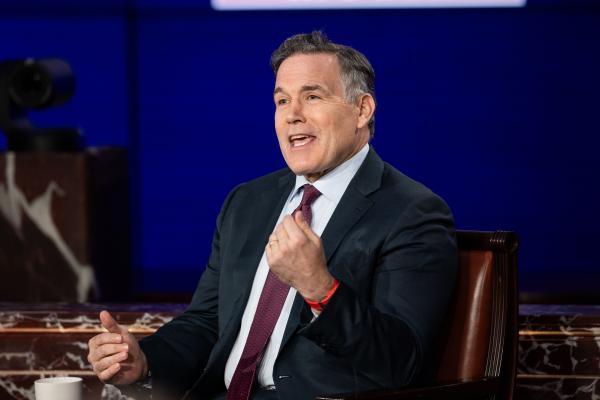
Join Senator Dave McCormick (R-PA), who recently visited Japan and Korea, and Distinguished Fellow Mike Gallagher for a fireside discussion on United States–China relations, the role of allies and partners in America’s Indo-Pacific strategy, and how the US can harness technology, industrial capacity, and allied strength to prevail in the defining strategic competition of our time.
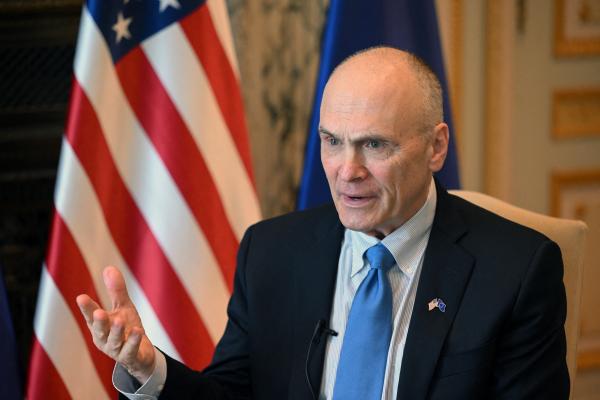
Join Hudson Institute for a conversation with US Ambassador to the EU Andrew Puzder and Senior Fellow Harold Furchtgott-Roth on America’s interests in reducing the harmful effects of CS3D and CSRD.
Join Hudson Institute for a conversation with Lazarus, founder of Lazarus Consulting and former speechwriter to the Commander of the US Southern Command.